Right Mindfulness


This is the direct path for the purification of beings, for the surmounting of sorrow and lamentation, for the disappearance of pain and grief, for the attainment of the true way, for the realization of Nibbāna: namely, the four dwellings of mindfulness.
DN22
When we follow the Gradual Training, which includes Renunciation, developing remorse-free Sila, skillfully guarding the sense doors, practicing moderation in eating, and dedicating ourselves to wakefulness and alertness, unskillful qualities of mind and behavior are greatly diminished. This sets the stage for the practice of Right Mindfulness.
To reach this stage, the coarse afflictions of body, speech, actions, and livelihood have greatly decreased. By being constantly alert and mindful of our thoughts and actions in daily life, disturbances have been significantly reduced. We have now gained enough tranquility and can address more subtle forms of desire and aversion, specifically clinging to the Five Aggregates.
Right Mindfulness: Introduction
Here a disciple dwells contemplating the body as body, ardent, fully aware, and mindful, having put away covetousness and grief for the world; he dwells contemplating feelings as feelings, ardent, fully aware, and mindful, having put away covetousness and grief for the world; he dwells contemplating mind as mind, ardent, fully aware, and mindful, having put away covetousness and grief for the world; he dwells contemplating dhammas as dhammas, ardent, fully aware, and mindful, having put away covetousness and grief for the world.
DN22
Right Mindfulness is the practice of dwelling and contemplating within one of the Four Dwellings of Mindfulness: contemplating the body in the body, feelings as feelings, mind as mind, and phenomena in phenomena, having subdued desire and aversion for the “world.”
Remember, the “world” refers to everything within our experience—sights, sounds, smells, tastes, touches, and mental objects, not the physical things of the world.
By fully dwelling and contemplating in the Four Dwellings of Mindfulness, the Tathāgata declares that one can attain complete liberation within a maximum of seven years.
For whoever develops these four dwellings of mindfulness in such a way for seven years, one of two fruits can be expected: either final knowing here and now, or if there is a trace of clinging left, non-returning...
DN22
Although the instructions for Right Mindfulness appear simple, the Tathāgata declares that he could expound on the topic of mindfulness continuously for one hundred years and never repeat himself.
So how is Right Mindfulness different from the mindfulness of practicing Sila, Guarding the Sense Doors, Mindfulness in Eating, and the practice of Wakefulness?
In the previous stages of the Gradual Training, we practiced mindfulness in reference to the objects of the "world." That is, we are mindful and directing attention to our movements, actions, speech, thoughts, and how the mind makes contact with the "world." With regular mindfulness, experiences are perceived as events happening "out there" in the world, and we are using mindfulness not to get lost in desire, aversion, and delusion.
In contrast, with Right Mindfulness, experiences are no longer seen as the result of external occurrences but as creations or formations of the mind, unfolding within the mind itself.
However, for Right Mindfulness to be present, whether walking, sitting, standing, or lying down, one must contemplate the nature of the Five Aggregates, seeing them as impermanent, subject to suffering, and without self. Through contemplation, desire and aversion toward what is called the “world” are subdued. As attachment fades, the mind inclines toward dispassion, and from dispassion arises liberation.
Right Mindfulness: Overview of the Practice
The purpose of Right Mindfulness is to establish the conditions for directly knowing the true nature of experience. What we ordinarily take to be reality is, in fact, experience structured through the Five Aggregates.
We must see clearly, again and again, that our experience of body, feeling, perception, mental formations, and consciousness is neither substantial nor dependable, neither truly satisfying nor something that can rightly be regarded as me or mine. These processes arise and pass according to causes and conditions, the unfolding of past karma meeting present circumstances.
This knowing develops gradually. We begin with what is most concrete—the body—and then move toward feeling, mind, and finally Dhammas.
We begin the practice by remaining mindful, grounding attention by dwelling Body as Body, without allowing raw sensations to proliferate into fabrications or delusive mental states. With sustained attention, we start to discern craving, clinging, and becoming, along with the arising and passing of phenomena.
As Mindfulness steadies, it matures into Investigation. Rather than grasping at objects in experience, we attend to sensations, emotions, and mental states as conditioned and impersonal. When pleasure arises, we notice how craving attempts to prolong it. When pain arises, we observe how craving attempts to resist or escape it.
Over time, the practice ripens into insight. Seeing the Aggregates as processes rather than possessions reveals the futility of clinging to them. Awareness becomes balanced, no longer driven by the impulse to crave or reject, and the mind settles naturally into stillness. This calm and clarity support a deeper understanding of impermanence, unsatisfactoriness, and not-self.
Each aspect of the path supports the others: Mindfulness steadies, Investigation reveals, Concentration stabilizes, and wisdom penetrates. When clinging is fully understood, the chain of becoming ceases. The mind is released from the compulsion to construct or defend a self, and suffering comes to an end.
Right Mindfulness: Prerequisites
The material and sections that follow assume the presence of Right View and address Right Mindfulness at a supra-mundane level.
As long as the Five Aggregates are taken to be self or owned, the purpose of practicing Right Mindfulness at this level is not yet understood.
This training is therefore intended for those who have seen that nothing in experience stands as “me” or “mine.” If this has not yet been seen, the instructions that follow may have limited relevance or remain merely conceptual.
Right Mindfulness: Right View
Before we begin the practice of Right Mindfulness, it is essential to establish a clear foundation. There needs to be Right View of several key principles from the start, because they shape how mindfulness is applied and how the practice unfolds. These include:
-
The Importance of Wise Attention
-
How we use Dependent Arising to guide our practice
-
How we dwell in one of the Four Dwellings of Mindfulness
-
How we contemplate
-
What it means to subdue desire and aversion for the "world"
-
Why Right Mindfulness, or Sati, is dwelling in memory.
-
The importance of seeing all phenomena rise and pass away
-
How the sense of self is fabricated and how this obscures clear seeing
At its core, Right Mindfulness is about establishing the causes and conditions for clear seeing. It is not about gaining anything new but about gradually letting go, relinquishing wrong views, and releasing the unwholesome tendencies that distort perception and fuel unwise attention. When these are released, clarity and wisdom appear naturally.
While an initial understanding of these concepts is important, there is no need to hold on to them tightly, analyze them endlessly, or treat them as something heavy to remember and bring into each moment of practice. A simple familiarity is enough at the start. As practice deepens and as insight makes these points clearer and more relevant, we can revisit them at the appropriate time to ensure our practice stays aligned with the teachings.
Thus, contemplation, the subduing of desire and aversion, abiding “body as body,” and every aspect of mindfulness practice are not ends in themselves. They arise naturally as the result of the causes and conditions created by practicing Right Mindfulness correctly.
Let us now look at each of these key concepts.
Right Mindfulness: Wise Attention
Disciples, I do not see even a single thing that so contributes to the arising of unarisen wholesome qualities and the decline of arisen unwholesome qualities as wise attention (yoniso manasikāra). When one attends wisely, unarisen wholesome qualities arise, and arisen unwholesome qualities decline.
AN1.16
The discourses remind us over and over again that there is nothing with greater bearing on success in the practice than wise attention; it is the “forerunner,” the turning of the mind toward truth.
The Meaning of Wise Attention
The Pāli term yoniso manasikāra literally means attention that goes to the origin or source. Yoni means "womb," "source," or origin; manasikāra means attention or mental engagement. Thus, wise attention is attending to things in terms of their causes and conditions, not merely in terms of their superficial appearance.
When the teachings say that wise attention attends to the origin of suffering, they are pointing to a radical way of seeing. Rather than clinging to phenomena as “mine” or “me,” one attends directly to the arising and ceasing of experiences, feelings, perceptions, and thoughts to discern how suffering is born and how it ends.
How Wise Attention Works
Wise attention is not passive observation; it is directed and sustained attention that discerns how suffering arises and ceases. When mindfulness is guided by wise attention, it naturally sees:
-
There is suffering.
-
The cause is craving.
-
There is the cessation of craving.
-
This is the path.
When one attends unwisely, unarisen taints arise, and arisen taints increase. When one attends wisely, unarisen taints do not arise, and arisen taints are abandoned.
MN2
This means that we must direct attention in a way that reduces suffering, not in a way that feeds it. Unwise attention feeds craving, conceit, and wrong views. Wise attention, on the other hand, sees impermanence, suffering, and non-self, leading to dispassion and peace.
Wise Attention and the Nature of Experience
To develop wise attention, we attend to experience at the source, at the level of the bare aggregates, without adding interpretations, stories, or judgments. When we stay with the aggregates at this simple level, we see feelings, perceptions, and mental states as they arise and pass away. Their conditioned nature becomes clear: each depends on causes and conditions, and each passes on its own when not clung to.
This seeing allows the mind to discern the chain of causation. Through such knowing, the mind learns not to cling but to let go, seeing that suffering is not caused by the world but by our attention and attachment to it.
The Three Qualities of Perception in Wise Attention
True, wise attention is imbued with insight into the nature of experience:
-
Impermanence: All phenomena arise and pass away.
-
Suffering: What is impermanent and clung to brings unease.
-
Non-self: There is no permanent self in these changing processes.
When the mind attends in this way, craving and delusion weaken. The result is wisdom, knowing things as they really are.
Guided by Right View and Right Intention
Wise attention does not stand alone. It is supported by Right View, Right Intention, and Right Effort. Without these, attention may still be sharp, but it will not lead to liberation.
Right View guides attention to recognize the Four Noble Truths in all experience:
- There is clinging.
- Craving is the cause of clinging.
- The end of clinging is the relinquishment of craving.
- This is the path that leads to the end of clinging.
Right Intention inclines the mind to the cessation of craving, to letting go. Right Effort is not getting entangled in suffering and instead using the path to realize its cessation.
Wise attention is the mother of all wholesome qualities. It is how mindfulness becomes Right Mindfulness, how ordinary perception becomes wisdom. By training attention to turn toward the origin of suffering, which is craving, and by seeing the rise and fall of all conditioned things, we begin to truly progress on the Gradual Training.
When a noble disciple attends wisely, they abandon what is unwholesome and develop what is wholesome. They abandon what is blameworthy and develop what is blameless. In this way, their mind inclines toward Nibbāna.
AN4.37
Right Mindfulness: Developing Wise Attention
Developing Wise Attention begins with a simple but powerful insight: it’s not just what we attend to that matters, it’s how we attend to it. When attention is shaped by craving, aversion, or distorted views, even the most ordinary experience becomes a source of stress. But when attention is directed wisely, toward the root of dissatisfaction, it begins to dissolve it.
The root of suffering lies in our desire and clinging to the Five Aggregates: form, feeling, perception, mental formations, and consciousness. We cling to them, hoping they will provide lasting satisfaction. Yet the more tightly we cling, the more suffering we create.
To develop Wise Attention, we must first learn to recognize craving and clinging, not with judgment, but with clarity. We begin to see that it is the very act of clinging to expectations that sustains dissatisfaction.
Once we are able to clearly recognize craving and clinging, we begin to contemplate its nature. To break the habitual tendency of regarding the Five Aggregates as having substance or permanence, we must examine them from many perspectives, again and again, until it is seen that what the mind craves and clings to is impermanent, unstable, and insubstantial.
We need to see directly that these objects of attachment are mind-made phenomena, bodily, verbal, and mental formations. They do not endure, they are not reliable, and they are not under our control. Through repeated contemplation, the truth of impermanence becomes unmistakable: everything in experience arises and passes away; there is nothing continuous, nothing that lasts.
With this recognition, the mind begins to understand suffering more deeply: what is impermanent and unstable cannot provide lasting satisfaction. What is unreliable should not be taken as “me, myself, or mine.”
Gradually, the mind begins to perceive phenomena as not-self. At first, it sees the Five Aggregates as “me,” “myself,” or “mine.” Over time, however, the mind recognizes that when it stops seeing them this way, the stress tied to clinging fades. It becomes increasingly skilled at perceiving things as not-self.
As insight deepens, we begin to recognize how the mind fabricates countless delusional behaviors and creating a self where none exists.
As mindfulness becomes subtle, we see that no act of will is required for wise attention, for discernment and memory are natural qualities of consciousness itself. When awareness abides fully in the body, free from desire and aversion, it naturally knows the arising and passing of feelings, perceptions, intentions, and thoughts.
And, friend, wisdom and consciousness: Are these states conjoined or disjoined? And is it possible to distinguish between them to describe them separately?
Wisdom and consciousness, friend: These states are conjoined, not disjoined. And it is not possible to distinguish between them to describe them separately.
What one understands, that one knows; what one knows, that one understands. Therefore, these states are conjoined, not disjoined. And it is not possible to distinguish between them to describe them separately.
MN43
Wise Attention: Distinguishing Old and New Karma
Wise attention depends on a simple but essential ability: knowing the difference between old karma and new karma. When this isn’t understood, we react to what has already appeared, and those reactions become new karma.
Old karma is whatever has already ripened and is now showing itself through the body, feelings, perceptions, mental habits, and consciousness. These are the results of past intentions manifesting as pleasant or unpleasant experiences. Once something has appeared in experience, it cannot be changed.
New karma is created through our present reactions to what is already there. When the mind clings, rejects, judges, or identifies with an experience, new karma forms.
Wise attention does not try to reshape what has already appeared. It attends directly to the conditions that allowed it to arise. By seeing clearly the causes and conditions that supported its appearance, the mind learns not to participate or add fuel to those causes and instead allows them to fade on their own.
When investigating causes and conditions, the point is not to trace them back through an endless chain of past events. That search has no end. What we’re trying to understand is how the process shows itself right now in our experience.
For example, a strong emotion may appear without any obvious cause, yet we can trace its presence as a sequence unfolding in the moment—from a subtle intention to a feeling, to a shift in perception, to a swelling mood. By tracing the emotion back to its origin as it happens, we see how conditions gather and support each other until a full emotion takes shape.
In other words, effort is not spent on changing old karma or searching for its distant origins. It is placed on attending directly to present causes and conditions. We see how these causes arise in the mind itself — beginning as simple feelings, then becoming craving, and finally turning into clinging to the forms that appear in our experience.
As mindfulness strengthens, old karma still appears, but we stop feeding it. The mind becomes more at ease, more open, and less entangled. In this way, wise attention gradually quiets the entire karmic process.
Wise Attention: Using Dependent Arising to Guide Practice
In the supra-mundane path, instead of creating more karmic activity, Right Intention is inclining the mind to let the machinery of fabrication settle down. This requires understanding how Dependent Arising functions and how we can use it to guide our practice.
Once a mental process has already taken birth, it must run its course. Formations that have appeared in experience will age and fade. Nothing can reverse that momentum. Because of this, the discourses tell us to direct attention to that part of experience in Dependent Arising before birth, to the links that give rise to experience, where change can take place.
For example, if there is tension or an emotion in the body, if you take tension itself as the object, the mind slips toward the physical side. Even though the roots of that tension are entirely mental, the focus moves to the felt tightness, which is already the formed product. That keeps attention where birth and death have already expressed themselves and where the cycle has already taken shape.
The problem is not that tension should not be noticed, but that working directly on the tension makes the mind believe that the physical sensation is the thing to fix. The mind then tends to press, adjust, or manipulate. Even when trying to stay equanimous, there is the subtle holding of the object. That pulls the practice into the area where nothing fundamental can be changed.
When Conditions Cease, Objects Do Not Arise
In the teaching on Dependent Arising, when one of the conditions needed for something to appear in experience is absent, that thing simply does not arise.
If we shift attention back to the causes, instead of dealing with the tension, we notice the feeling tone that led to it, the perception that framed the area, and the way attention held that frame. These are the activities that created the tightening. When they calm, the tension softens on its own without any direct work on the physical side.
An essential point in practice is that we do not work on what has already appeared as an object in experience. Once something has taken shape there, it belongs to the birth and death side of Dependent Arising, and working on it only keeps the cycle going. Instead, we work within the mental side of experience, attending to the causes and conditions that gave rise to the object in the first place.
All Objects in Experience are Old Karma
Everything that appears as a cognized object in experience is the result of past causes. It is old Karma, already on the side of birth and death. The moment something is perceived as a thing, it has already formed through contact, feeling, perception, and attention. It is already a constructed result that will arise, change, and fade.
This includes thoughts that have already appeared, emotions that have already come forward, tension in the body that is already present, and any perception or mood that has unfolded before we even notice it. These are simply the residues of past conditions. Working inside what has already taken shape cannot free the mind. It only builds more involvement, more clinging, and more becoming. For this reason, we do not chase results in experience. Instead, we direct our attention to the root conditions that shape the whole cycle.
This is also why the practice is not aimed at obtaining tangible results. Anything that can be pointed to as a result is already something in experience. Clinging to a state, a mood, or a meditative quality only strengthens the sense of being established in something. Instead, practice requires checking again and again that we are working with the cycle before life and death, at the root causes and conditions.
Using Dependent Arising in Practice
Rather than becoming involved with what has already appeared, we use Dependent Arising as a guide to see where practice is effective. Each link shows how experience is constructed and where release becomes possible.
-
Developing Right View weakens ignorance at the very root.
-
Understanding karma gives us clarity about volitional formations and how intention sets the whole process in motion.
-
We contemplate how consciousness shapes the sense of a “me” living in a world. We see that in each moment, the mind constructs an inner stance, creating a “me in here” and an “out there” to be known, managed, or defended. Without this mind-created boundary, there cannot be craving and clinging. It is the root of suffering.
-
Through direct seeing, we come to see that this sense of existence is dependent on nama-rupa, the mind binding itself to form. The mind (nama) recreates a mental version of the body (rupa) and clings to it as something owned. The body solidifies the “me in here” and an “out there” to be defended and to obtain satisfaction in the "world".
-
By contemplating, we see how the six bases are taken up as my eyes, my ears, my body, and my mind. This is how contact with the world becomes possible.
-
Contact then sets the tone of each moment.
-
We discern how feeling arises in dependence on that tone and how craving follows, moving toward the pleasant and away from the painful.
-
With wise attention, the aggregates show themselves as fabricated. Yet the mind still clings to these fabrications as me, myself, or mine.
-
From here, becoming gains momentum. We become aware of the drive or energy that tries to settle into the aggregates, trying to take birth as a particular identity or state of existence.
-
Once birth has taken place, what appears is old karma. If attention is placed there, the cycle is simply fed and the pattern of birth and death continues.
For this reason, training on the supra-mundane path rests on the links that arise before any moment of experience has taken shape. With attention placed there, the mind no longer feeds becoming. It no longer fuels craving, clinging, or the movements that keep the cycle turning.
It is by knowing and seeing the conditions that the destruction of the taints is achieved.
SN12.51
Therefore, the emphasis of the practice is not on what has already appeared, but on what is giving rise to the appearance. This is why the training rests on clear seeing of intention, attention, contact, feeling, and craving as they arise. This is how the chain is weakened before it can produce new Karma.
With the fading away of ignorance, volitional formations fade; with the fading away of volitional formations, consciousness fades, and so on, until this whole mass of suffering fades.
SN12.23
The crucial point in Dependent Arising is that fading takes place because the conditions upstream are no longer being supplied. When the causes are not fed, nothing new forms. Nothing is pushed forward. This is the heart of not fabricating.
This is how we can use Dependent Arising as a practical framework. The links reveal clearly where change is possible and where it is not. When attention stays with cause rather than result, the cycle slows, weakens, and eventually stops. This is wise attention and the core of the supra-mundane path.
Right Mindfulness: The Four Dwellings of Mindfulness
Now let us look at why there are Four Dwellings of Mindfulness and why the Tathāgata taught them in that specific progressive order.
The four dwellings—body, feelings, mind, and mental phenomena—are how insight into suffering naturally unfolds. The Tathāgata chose these four because they encompass the entire field of human experience in relation to suffering: the physical body, the propagation of feeling, mental states, and the underlying patterns and structures that condition suffering.
There is a purpose in how these four dwellings are to be developed. The Four Dwellings of Mindfulness do not function like four separate techniques that you switch between. They are how experience reveals itself when the mind grows steady and simple and stays at the root of what is happening. Each dwelling opens into the next, and the training is about learning how to stay at the root of each layer without drifting into reaction or fabrication.
Let's look at how the progression actually unfolds in practice, one dwelling preparing the ground for the next.
Dwelling Body as Body
Training starts with the body because the physical side of experience is the simplest and most stable. At this stage we learn to stay with the direct sensory field, the shifting textures and pressures and movements that make up the form aggregate. We are not examining the anatomical body. We are staying with the raw feel of form without letting the mind rush in to add labels, identity, or meaning.
With this stability, we begin to see that what we once assumed to be a purely physical body is actually constructed in the mind, conditioned by contact, feeling, perception, mental formations, and consciousness.
When the mind stops running away into thoughts, memories, or projections, the raw sensory ground holds together long enough for subtler layers to become clear.
Dwelling feelings as feelings
Once the raw sensory field is familiar and calm, a more subtle layer of experience naturally starts to become visible. Each sensation arrives with its own feeling tone. Pleasant, unpleasant, or neutral. This tone is not a physical sensation; it is the mind’s immediate response to sensation.
We do not need to search for feeling tones. They show themselves when the mind is not busy chasing or resisting what it feels. Staying at the level of form without being pulled into objectification makes tone unmistakable.
This is the opening of the second dwelling. The work here is simple: know feeling tone as feeling tone without falling into craving or aversion.
Dwelling mind as mind
When feeling tone is known clearly, the mind’s reactions and moods become obvious. We see how the mind leans forward toward pleasant, pulls away from unpleasant, and drifts or dulls with neutral. We start to notice the quality of the mind itself. Is it bright, heavy, contracted, restless, open, or steady?
These states were always there, but they were hidden under reactions. With the feeling tone known, the third dwelling opens. Now the work is to dwell in the mind as mind, without getting mixed up in the state that appears.
Dwelling Phenomena in Phenomena
Finally, as the process of experience becomes clearer, our attention turns to understanding the deeper causes and conditions, the underlying structures that give rise to suffering. Here we begin to contemplate dhammas: abandoning the Five Hindrances through the cultivation of the Seven Factors of Enlightenment and contemplating the Five Aggregates, the Six Sense Bases, and the Four Noble Truths. These mental phenomena are not theoretical abstractions, but truths to be directly known and penetrated.
The Path as One Movement
The teachings describe Four Dwellings of Mindfulness, but in practice they are one continuous path. We begin with the simplest part of experience, stay close to it, and let the rest unfold. Nothing is skipped, nothing is forced. When each layer is seen precisely, the construction of experience becomes transparent, and release becomes possible.
This is why the training starts with the body and moves inward toward the structure of the mind. It is a movement from the obvious to the subtle, each step grounded in clear knowing and steady presence. If we attempt to skip ahead, say, contemplating dhammas without establishing mindfulness of the body, we will lack the stability and clarity needed for genuine insight.
Disciples, what is the purpose of developing the four dwellings of mindfulness? Their development leads to revulsion, to dispassion, to cessation, to peace, to direct knowledge, to enlightenment, to Nibbāna.
SN47.40
What Does It Mean to Dwell: Body as Body?
When the Tathāgata says, “One dwells contemplating the body as the body, ardent, fully aware, and mindful, having put away covetousness and grief for the world,” what does this mean?
It means that awareness is gathered fully within the body, not held as an image or idea in the mind, but known directly as the body itself. We remain present with the living experience of the body, aware in real time of the arising and passing of phenomena. In this dwelling, the body is no longer something being observed; it knows and experiences itself. Awareness rests in awareness, a natural clarity that appears only when covetousness and grief for the world are continuously released.
This requires direct contact with raw bodily sensation, not fabricated by the mind, not overlaid with concepts, labels, identification, or spatial reference. It is simply awareness, steady and undistracted, free from mental interference.
To dwell in the body as body also means letting go of clinging to anything in experience. We neither become lost in bodily experience nor try to fight it nor resist it. We abide unattached, with clear knowing, and in steady presence.
When one truly abides “body as body,” having relinquished desire and aversion for the world, the body becomes deeply at ease. The mind settles, centered, bright, and content. With few or no bodily, verbal, or mental fabrications remaining, awareness is naturally clear, and wisdom arises.
This is not a fabricated state but a natural unfolding, the simple fruit of letting go of desire and aversion for the "world".
Right Mindfulness: What is Contemplation?
When we dwell continuously in the present, with sustained attention and full awareness within one of the Four Dwellings of Mindfulness, we begin to see things as they really are, free from the fabrications born of desire, aversion, and delusion. We can now contemplate with Right Mindfulness.
Contemplation on the supra-mundane path is the development of wisdom, not intellectual understanding, but direct knowing through directly seeing the arising and passing away of phenomena and discerning how they depend upon causes and conditions.
In an ordinary person, the mind does not clearly see causes and conditions. From contact comes feeling; from feeling, craving; from craving, clinging; and from clinging, becoming, leading to a whole world of existence and ultimately to suffering. Because of ignorance, this process remains unseen, and there is clinging to the Five Aggregates, mistaking what happens in experience as “me” and “mine.”
The purpose of contemplation is to see directly, with wise attention, how the mind fabricates the world through craving and clinging, how it personalizes experience, giving it false substance and permanence, and thus creating stress and suffering.
Through direct seeing, not through conceptual thought, the mind must see that all conditioned phenomena are impermanent, arising and ceasing according to causes. It must see that attachment to what is impermanent brings dissatisfaction and that since all phenomena depend on conditions, none can rightly be held on to as “me” or “mine.”
Contemplation requires remaining with the bare aggregates before the mind adds meaning or interpretation. Only then can we see how fabrications arise through causes and conditions and how they naturally pass away without suffering when we do not cling to them.
Seeing thus, the instructed noble disciple becomes disenchanted with form, feeling, perception, formations, and consciousness. Being disenchanted, he becomes dispassionate. Through dispassion, the mind is liberated.
SN22.59
When seeing is direct, unobstructed, and complete, disenchantment naturally arises. The mind grows weary of clinging to what is impermanent; it no longer delights, having seen the futility and suffering involved.
As the mind sees the relief from not clinging, dispassion arises. This is not indifference but serenity, the cooling of the fires of desire and the release from the fever of craving. When craving fades, the mind becomes bright, balanced, and temporarily liberated.
Contemplation is the combination of several skills
-
The ability to recall the Tathāgata’s teachings, even from a long time ago, and apply them correctly, which also includes remembering our experiences of having practiced and contemplated these teachings.
-
Contemplation requires the sustained, real-time, all-encompassing attention of Right Mindfulness to be able to see from start to finish the arising, changing, and passing away of phenomena without labeling, judging, or getting entangled.
-
The mind needs to directly see that any feelings, perceptions, desires, clinging, and intentions that arise in the mind lack substance, are unreliable, and are the result of causes and conditions. They are not "me, myself, or mine". That clinging to them causes suffering.
-
The mind must see directly that phenomena never remain still; they are constantly changing. It is craving that makes them seem lasting. Through clinging, the mind tries to hold experience in place, driven by the desire or expectation that things should be reliable, predictable, substantial, or satisfying.
-
Contemplation requires seeing the full arising, changing, and passing away of each phenomenon. The mind must recognize the entire causal sequence and see directly that stress fades when no clinging takes hold, when we do not follow the desires or expectations tied to the Five Aggregates.
Contemplation Requires Discernment
We use the Four Noble Truths to guide insight and develop wisdom into the nature of stress and dissatisfaction by contemplating suffering, its cause, and the way to its cessation.
Contemplation requires the ability to probe: to direct attention to a particular area of experience where there is stress or dissatisfaction, to investigate it thoroughly without getting entangled, and at the same time keep a wide awareness so that all experience is included and attachment does not arise.
For example, when tension or stress arises in the body, or when unpleasant sensations are noticed, we need to investigate the root cause: craving and clinging to the Form Aggregate. Clinging creates a tightening or narrowing of awareness and tension.
To investigate properly, it's important to expand awareness and see the whole picture in a detached way. If we focus or stare at the tension or unpleasant sensations that arise, this becomes unwise attention; we are paying attention to the fabrication of formations and not the origin or source of these formations. Which is desire, aversion, and clinging to the Five Aggregates.
To release clinging, the mind must see the entire causal process, from the initial rise of stress to the letting go of craving, to the relief that follows, and the practice that made that release possible. When this is seen repeatedly, the mind develops confidence and wisdom. It begins to let go on its own whenever mindfulness is present.
This clarity can only be cultivated when we abide with a mind free from covetousness and grief for the world, steady enough to observe the whole sequence without being pulled into it.
So while the above instructions may seem complicated, they can be summarized as simply “abiding in awareness, with wise attention, not clinging to anything.”
Right Mindfulness: How to Contemplate?
To understand contemplation, let’s look at how the Four Noble Truths can be applied to aversion.
Aversion often appears as tension or agitation in the body and mind. Instead of resisting it, we begin by recognizing suffering as it is, a felt sense of unease. Then we see its cause: craving. In the case of aversion, it is the craving for the discomfort to end or the craving for a more pleasant state to replace it. This push and pull intensifies the suffering.
As practice deepens, we look further and see that the real craving is the clinging to the Five Aggregates—the body, feelings, perceptions, intentions, or consciousness—as “me” or “mine.” This is where aversion takes hold.
We see that when we no longer feed this craving, suffering ceases. We see that letting go of craving softens the mind’s resistance, and as a result, the body and mind naturally settle.
Furthermore, we rely on the path, Right View, Right Intention, Right Effort, and Right Mindfulness, to stay present without clinging or reacting. We release the urge to fix or escape and observe each experience arise and pass with wisdom.
Contemplation is seeing causes and conditions, recognizing how craving shows itself in experience through the links of Dependent Arising. It requires discerning how ignorance, formations, consciousness, contact, feeling, craving, and the other links function together as a single unfolding process that shapes experience.
Wise attention is observing this process, understanding it, and allowing the whole stream to gradually calm. It is not about suppressing reactions on the surface but about seeing the conditions that make those reactions arise in the first place.
Contemplating Without Getting Entangled
When we contemplate, the task is simple: stay at the bare aggregates and remain aware of phenomena as they arise, change, and pass away, without getting entangled with anything in experience. We attend carefully so as not to be captured or swept away by craving or aversion, the mind’s pull and push that wishes for things to be otherwise.
We don't hold objects in experience to get rid of greed or aversion toward them; doing so is just another form of clinging, and it only creates more entanglement.
If clinging appears, there’s no need to fight it or suppress it. Rather, we notice the craving behind it and gently loosen our grip and let it pass away.
We need to see that interacting with objects in experience only fuels more greed and aversion by giving them additional weight. Instead of engaging with what has already appeared, contemplation turns toward the underlying craving and the causal chain it sets in motion, the chain that leads to clinging to the body formation, to feelings and perceptions, to intentions, and even to consciousness itself.
We begin to see how craving and clinging bind the mind to suffering. Each moment of awareness is an opportunity not just to let go, but to investigate deeply: What is this feeling? How does it arise? What conditions sustain it? How does it change? And what remains when it passes away? Not by holding on to things or through logical conclusions, but through directly seeing them arise and pass away on their own.
Thus, every moment of non-entanglement becomes a training ground. We learn not only to release but also to know, and through knowing, the mind grows disenchanted, detached, and free.
We must see that when the mind is free of greed and aversion, it doesn't interfere with experience; all phenomena arise and pass away on their own. Thoughts are like waves in the ocean; they arise and dissolve back into it. If we don’t resist or stir up a storm, phenomena will naturally subside as we let them go and let them be.
But if we start thinking, “Oh, tension has arisen; I must not react,” that itself becomes more getting lost in phenomena. Practicing in this way only increases suffering, as the mind chases after objects. Instead, we look for the root cause, clinging to the aggregates.
Instead of labeling our experience, we use the Four Noble Truths to guide our practice and see things directly and simply as a single process:
This is suffering. There is craving. There is the passing away of craving. Everything is impermanent, not-self, only the unfolding of conditions.
When we abide in one of the Four Dwellings of Mindfulness without holding on to thoughts or phenomena, it diffuses their power. This allows the body to remain relaxed and the mind centered, stable, peaceful, and luminous.
Examining Our Expectations
To contemplate with Right View, we also need to examine the mind's assumptions and expectations for experiences to be a certain way. Is there an expectation for experiences to be reliable, substantial, and satisfying when all phenomena experienced are fabricated by nature? The mind must clearly see that if it takes anything in experience as "mine," it can only lead to stress and dissatisfaction.
So, for example, if we take tension to be “mine,” entanglement has already begun. When we hold on to that tension, the entanglement deepens. Trying to deal with greed or aversion at this surface level does not touch the real cause, which is the underlying clinging to the aggregates, taking them to be me or mine.
Investigation is not conceptual; it is the uncovering of deep-rooted assumptions that exist in how we perceive experience. These assumptions shape our perceptions with desire or aversion.
Contemplation involves observing the desire, aversion, and delusion that sustain them. It is recognizing the mistaken view that there is something enduring and personal within experience. With insight, the impermanent, unsatisfactory, and not-self nature of experiences gradually becomes apparent.
There may also be aversion, a fear of what the investigation might reveal. For example, if we experience something emotionally or physically unpleasant, the ingrained reaction is to want to change it, to make it pleasant. But this is not true investigation; we have not investigated the nature of this unpleasantness, which is desire and aversion.
Finally, if there is the absence of thought, a dark, dull, and drowsy state without any awareness. For example, when we are not quite asleep, but there’s a blank dullness. If we remain in such dullness, our contemplation will be ineffective and will not evolve. This experience of absence of thought is not contemplation or Right Mindfulness and must be cleared away whenever it occurs.
Right Mindfulness: Understanding Craving
And what, disciples, is the noble truth of the origin of suffering?
It is that craving which leads to renewed existence, accompanied by delight and lust, seeking delight here and there, namely sensual craving, craving for existence, craving for nonexistence. This is called, disciples, the noble truth of the origin of suffering.
And what, disciples, is the noble truth of the cessation of suffering?
It is the remainderless fading away and cessation of that very craving, the giving up and relinquishing of it, freedom from it, non-reliance on it; this is called, disciples, the noble truth of the cessation of suffering.
SN56.11
Recognizing craving is of the utmost importance because it is both the cause and the cessation of suffering; therefore, we must recognize craving not just conceptually, but by actually seeing how it manifests within our experience.
Craving is often mistakenly portrayed as a surface emotion, a desire for pleasure, comfort, or escape. However, the teachings point to something far deeper: craving is the force that animates the entire structure of experience.
It is not a faint current beneath the senses; rather, it is the very energy that keeps the aggregates active, that builds and sustains a world, and that repeatedly pulls the mind toward becoming.
When the Second Noble Truth states that suffering is rooted in craving, it is describing the whole of the practice: to know craving and realize its cessation through the Noble Eightfold Path.
Craving is hidden under the surface
Just like suffering, craving is usually concealed. As long as the senses are active, objects continue to appear in experience, and attention is absorbed in sights, sounds, thoughts, and moods. With attention directed outward, craving stays hidden. It drives each moment, but its momentum is masked by the constant stream of sensory activity.
Only when attention turns toward experience itself—toward the Five Aggregates—does the depth of craving begin to show. When the senses are not being fed, this restless energy starts to become visible. It is constantly searching for something to grasp. Without external objects to land on, it appears as tension, emotions, and bodily, verbal, and mental formations.
If we don’t look deeper, all we notice are these internal manifestations. But when we learn to recognize craving, we see that it is behind all constructed experience. All tension, emotions, and formations arise, shaped by it.
By working with craving directly, rather than getting lost in its manifestations, our practice becomes much more effective.
To understand craving and penetrate the teachings, we can use the teachings on Dependent Arising as a guide. Dependent Arising not only shows how suffering arises but also how craving infuses each link as the underlying momentum of experience.
At the same time, Dependent Arising points to the path of cessation. Each link contains the potential for release when craving is no longer fed. Seen in this way, craving is not a momentary desire but the underlying force that drives the unfolding of experience and the sense of a solid world.
Let us now turn to how, based on ignorance of suffering, the whole chain is set in motion by craving.
Volitional energy as craving in motion
Volitional energy, the second link in Dependent Arising, is craving in motion. It is the accumulated momentum of unfulfilled desires seeking an outlet through intention. Each moment of craving leaves an imprint. Each imprint adds a slight tilt toward seeking, grasping, resisting, or becoming.
Over countless moments in this life and across countless lifetimes, these tilts have gathered into a powerful current that drives intention in the present.This is not a collection of mild desires waiting quietly in the background.
Every craving, even the faintest one, generates a push or pull. It produces a leaning, an inclination, a movement toward something or away from something. These movements accumulate. They form a momentum strong enough to shape the ongoing construction of experience, moment after moment.
Volitional energy is the total weight of craving for sense pleasure, craving for existence, and craving for escape from existence. Because these cravings remain unresolved, there is built-up pressure for an outlet. That pressure expresses itself as intention, as the impulse to act, to choose, to think, to feel, and to become. This is why intention arises even before thought appears and why the mind is never truly still on its own.
This momentum is what keeps the entire chain of Dependent Arising moving. It fuels the unfolding of the aggregates, it recreates the sense bases, and it drives consciousness to seek a place to land. It is craving in motion, the energy from the past expressing itself in the present, dependent on present circumstances, into the next moment of becoming.
Consciousness, the craving to establish itself into a world
Dependent Arising describes consciousness as circling, landing, and establishing itself on experience. This settling is not passive. Beneath it is a powerful drive, the craving to secure a place to stand, to build the sense of a self living in a world.
Consciousness is like a constant fire spreading from one little world to the next. It reaches outward because it depends on an object to create the feeling of existence.
When the mind becomes quiet, even for a moment, notice how quickly consciousness moves toward a thought, a memory, an image, or a sensation. This movement is not subtle. It is a strong pull seeking something solid to rest on, something that confirms, even briefly, the continuity of being. The mind searches for a world to inhabit and for a self to be within that world. This is craving at work, generating the very platform of experience and repeatedly rebuilding the sense of existence from moment to moment.
Name and form: the recreation of form in the mind
Name and form give structure, shape, and meaning to the flow of experience. They create the sense of solidity, a body, and a world—something consciousness can inhabit and form a self around.
This process is not passive. The body and the world, the “me in here” and an “out there” are continually recreated based on craving. When craving is light, the body feels light. When craving is strong, the body becomes dense and heavy, filled with tension or emotion, unable to settle.
The more craving there is, the more firmly the mind builds the boundary of “me in here” and “the world out there.” Without this boundary, craving has nowhere to land. It cannot take hold because there is no “someone” separate from “something” to want, resist, or cling to. When we stop creating this inner–outer division, craving loses its support, and suffering cannot establish itself.
In order to create this inner–outer division, craving shapes how sensations are formed into the sense of a body. Mental impressions are arranged into labels, interpretations, and patterns. All of this is driven by craving—the push to form a livable world and a self that can occupy it.
For example, when the mind feels a vague uneasiness, notice how quickly it produces explanations, memories, or imagined scenarios. It does not tolerate uncertainty. It creates shape from the unformed. That fabricating force is the same craving that moves through every link of the chain.
The six sense bases as the field of craving
The internal and external sense bases are the channels through which craving engages with the world. Without the senses, craving has no ground to stand on and no avenue through which to seek satisfaction. The senses exist as fields of possibility, shaped and sustained by the drive to meet objects, to feel, to know, and to confirm the sense of being.
Craving shows itself as an eagerness for contact. There is a pull toward stimulation, a need to touch, hear, taste, smell, see, or think something. This eagerness is not a surface habit. It is the force that keeps the senses active, alert, and reaching outward. Without this pressure, the senses would not rush toward their objects in the way they do. They would not prepare themselves in advance. They would simply rest.
A clear example is how the eyes move; even when the mind intends to be still, the eyes shift from object to object, attention leaps outward on its own, and it searches for shape, color, movement, and meaning. This reaching is not random; it is craving expressing itself through the sense bases, rebuilding the world in each moment, and looking for something that can satisfy the underlying desire to exist and to experience.
Contact and feeling carry the momentum forward.
When contact arises between sense base, object, and consciousness, feeling inevitably follows. Pleasant feeling invites holding, unpleasant feeling invites resistance, and neutral feeling invites drifting or dullness. These are not simple reactions; they are the stage on which craving becomes visible. Feeling acts as the spark that ignites the next movement of the cycle. What seems like an emotional response is actually the life of craving continuing to build the world.
For example, a faint feeling of unease can blossom into a full emotional world. Thoughts appear, narratives form, images arise, and the sense of self becomes entangled. None of this happens passively. It is a fabrication driven by craving seeking existence.
The same happens with joy. A pleasant sensation blooms into desire, imagining, anticipation, and attachment. Craving expands the moment. It builds layers upon layers of meaning and identity.
Craving as clinging, becoming, and the birth of tension
When craving finds something to hold, it hardens into clinging. From clinging, becoming arises. The sense of a self trying to maintain itself appears. This is where craving becomes most recognizable through tension, emotion, stress, anticipation, and the restless activity of trying to secure something that will not stay still. What most people call craving is only this final stage, where the underlying current breaks the surface.
The world is maintained by craving moment by moment
What we ordinarily call the world is not static. It is reconstructed continuously. The sense of a stable environment, the sense of a stable self, and the sense of continuity—all of these arise through craving’s pressure.
Without craving, the world would lose its solidity. It would appear as a fluid field of sensations without ownership or center.
This is why seeing craving directly is transformative. When attention shifts from the objects of experience to the processes of experience, especially bodily, verbal, and mental fabrication, the real magnitude of craving becomes clear. It is not a minor impulse. It is the force that builds everything.
Seeing craving as the root of experience
The path requires learning to see craving not as a particular desire but as a force that animates the whole system. This recognition shifts our practice from trying to manage the objects that appear in our experience to understanding the engine that drives them.
Craving is not simply wanting the pleasant or resisting the unpleasant. It is the underlying current that creates the sense of a world, the sense of a self, and the entire structure of experience that unfolds moment by moment.
When this current is clearly seen, enchantment loses strength, and the mind no longer feeds the cycle in the same way. Dependent Arising becomes a living map that shows both how suffering builds itself and how the cycle can weaken and cease.
This is the path to freedom.
Right Mindfulness: Subduing Desire and Aversion
The Gradual Training is, at its core, the systematic practice of addressing desire and aversion, seeing craving from its coarse manifestation to its most subtle traces. At this stage of the practice, addressing desire and aversion is essential, because without calming desire and aversion, Right Mindfulness cannot take root.
Craving is the energy generated whenever the mind leans toward what it wants or pulls away from what it fears or dislikes. It is the momentum behind seeking, resisting, and shaping experience according to desire or aversion.
A mind constantly pulled toward what is pleasing or recoiling from what is painful remains clouded and fragmented, unable to see things as they really are.
In the practice of Right Mindfulness, we train to recognize this craving energy and how it manifests as clinging to the Five Aggregates: form, feeling, perception, formations, and consciousness, the structures of experience.
At its core, subduing desire and aversion for the “world” is seeing how, because of craving, the mind constructs an “in here” and an “out there.” When this construction is released, craving has nothing to hold onto. There is no “someone” separate from “something” to want, resist, or cling to.
By subduing this deeply embedded craving, both toward the "external" world and our internal processes, the body and mind begin to settle. This settling is not only stillness; it is a clarity free from distortion, a condition necessary for insight to arise.
Only when desire and aversion are subdued can mindfulness become steady, and only then can we begin to see with wisdom the impermanent, unsatisfactory, and selfless nature of all phenomena.
What is Subduing Desire and Aversion?
The mind of an ordinary person is afflicted by craving based on desire or aversion; it is agitated, restless, and clouded by craving, which distorts perception and prevents clear insight. Only when these obstacles are temporarily subdued can we dwell in an unobstructed awareness, enabling us to see things as they really are.
When the Tathāgata says, "having subdued desire and aversion for the world," he is referring to the mental purification needed to see clearly and to contemplate body, feelings, mind, and dhammas without distortion.
Desire is the mind's longing for satisfactory experiences. Aversion is resistance or irritation toward experiences that are unsatisfactory. These two are the twin roots of craving that prevent the mind from seeing things as they really are. When these are present, the mind shapes experience based on preferences and on making things personal.
At the surface, craving is the reaction to feelings. It arises when a pleasant feeling is met with desire, an unpleasant feeling with aversion, and a neutral feeling with delusion.
Craving is an impulse: "I want," "I don’t want," "I want to become," "I want this to end." It has mental energy associated with it. Dependent on craving, there is clinging. Clinging is when the mind doesn’t just reach out but holds on to something, identifying with it and binding to it.
On a deeper level, craving is embedded throughout the entire cycle of Dependent Arising, shaped and sustained by past karmic volition.
To subdue desire and aversion, we must recognize and address the root cause of the mind’s reactive tendency to chase after pleasant feelings or reject unpleasant ones, not by trying to control what is already present in our experience, but by examining and working with the causes and conditions that give rise to the experience in the first place: craving for sense satisfaction, craving for existence, and craving for escape from existence.
Addressing Greed and Aversion at the Level of the Self
Modern practice often treats greed and aversion as something a self must learn to resist, as if there is a separate agent standing outside the process who must remain steady. This misses the real purpose of the training. The aim is not to strengthen a self but to understand and calm the flow of conditioned energy that appears as craving, clinging, and becoming throughout the chain of Dependent Arising.
Simply trying not to react to individual feelings or impulses leaves this deeper energy untouched. The momentum of old habits, volitional formations, and latent tendencies continues to feed the process. True practice means seeing and subduing this energy at its source, understanding ignorance, formations, consciousness, contact, feeling, craving, and the whole of Dependent Arising as an interconnected stream of craving. The practice is using wise attention to see and gradually calm the whole movement, not suppressing surface reactions.
If we work only at the level of sensations or thoughts that have already appeared, we address only the tip of the iceberg. The deeper layers, the formations and conditioning that arise before the “birth” of conscious experience, remain unseen and continue to drive the cycle. The training is not about building a self who resists greed or aversion, but about penetrating the dynamic process itself, seeing how craving moves, and letting it fade naturally by removing the conditions that sustain it.
But how is this done? What does “subduing” really mean? Is it suppression, non-participation, or something else entirely?
The Three Levels of Letting Go
In the discourses, abandoning unwholesome states happens in three levels:
-
Temporary subduing. This involves not eliminating desire or aversion but refraining from giving them fuel. For example, by simply letting go of craving or not clinging in the first place.
-
Cumulative abandoning. Through wise reflection, we investigate the drawbacks or dangers of these states and see through their illusions, not by thoughts but through direct experience. Instead of fueling the reactivity of craving, we redirect our attention to its root causes: the views we hold, the perceptions we cling to, the feeling-tones that ignite craving, the underlying energy of craving for delight, the intentions shaped by this craving, and the becoming that seeks to exist. This is the work of wise attention.
-
Final uprooting. This involves complete destruction of the defilements, achievable only through liberating insight (Arahantship).
At this stage of the practice, to subdue desire and aversion means:
-
We recognize the craving energy already present beneath experience, which appears as bodily, verbal, and mental formations, and we release it instead of following it.
-
When tension, emotion, or any movement arises, we do not work with the surface expression. We look directly at the clinging beneath it and the craving that fuels that clinging, and we soften our hold and release the craving energy behind clinging.
-
We notice the craving behind desire and aversion, especially the tendency to cling to the body and to the feelings and perceptions tied to the body. We gently loosen this attachment.
-
When craving tries to grasp an object, we refrain from staying with the object and turn toward its cause, which is craving and clinging.
-
When phenomena appear, we neither grab them nor push them away. We acknowledge them as the unfolding of past conditions and allow them to fade naturally.
-
We avoid building stories, judgments, or identities around what arises. Such proliferation is simply craving shifting into a different form.
Thus, subduing does not mean suppression or force; it means non-participation.
If we attempt to subdue greed or aversion at the surface level, we end up wrestling with old karma. We engage with the very fabrications that craving created, and by doing so, we give them strength.
Instead, we use wise attention to see the craving beneath those fabrications. It is craving that keeps them alive. When craving is released, the fabrications lose support and settle on their own.
So when the pull or push of desire or aversion appears, we do not hold it, feed it, or fight it. We let it pass through the mind like a cloud crossing open space, present yet not owned. We do this by releasing the craving that keeps the cloud from moving on.
We are learning to see the entire causal flow, how each phenomenon arises, shifts, and fades. From this clarity comes the ability to refrain from participating in it. As participation drops away, the force of desire and aversion loses its strength.
Subduing also involves investigating craving
To subdue craving, we need to contemplate the views that fuel it. For example:
- “Why do I want this tranquility to last indefinitely?”
- “Why am I averse to this discomfort?”
We are not trying to cultivate equanimity toward the discomfort itself; we are looking into the root causes of why the discomfort arises in the first place.
Often, this inquiry reveals an underlying belief: “I cannot be happy unless things align exactly with my desires.” This belief is rooted in ignorance, and it gives rise to craving and clinging.
This leads to a crucial insight: the very act of wanting things to be different from their current state is itself a cause of stress and dissatisfaction. When the mind seeks predictability, control, or permanence in experience, it sets itself up for suffering.
Recognizing this is liberating. We begin to see that the impulse to shape experience to our liking is futile. Through direct observation, we realize, “Wanting this to be otherwise is the root of my unease.” Seeing this clearly, we release desire, not for the objects in our experience, but for wanting anything from experience itself.
That release is subduing.
We realize that Right Effort isn't about controlling outcomes but about nurturing the conditions that prevent desire or aversion from arising.
Contemplating Desire and Aversion: Some Practical Examples
To help discern desire or aversion, consider the following examples:
-
Subtle craving for progress: wanting to "feel something happening" in practice. Notice the dissatisfaction when nothing happens, and release the view that something must happen.
-
Comparing today’s practice to an ideal: recognize the aversion toward the present moment, and release the view that there is such a thing as ideal practice.
-
Feeling discouraged by wandering thoughts: the expectation that the mind "should" be still.
-
Wanting abiding to be peaceful all the time: recognize the subtle clinging to tranquility and aversion toward disturbance.
-
Pushing away boredom or neutrality: how the mind subtly rejects the absence of stimulation.
-
Tightening up to hold concentration: notice the aversion to the natural fluctuation of awareness.
-
Noticing a pleasant breath and wanting to hold it: perceive that as desire and gently release the desire.
-
Noticing tension and wanting it to cease: view that as aversion, and remain curious about its nature. The nature of all phenomena is to pass away, ownerless.
-
Seeing restlessness and the urge to move: see that as a craving for escape.
In other words, it's not the contents of experience that are the problem; it is our expectations of it and wanting to change it. We need to become aware of this reaction and release our expectations for things to be a certain way or not.
Since desire and aversion are in the expectations, not in their manifestations, when we practice without expectations, this brings lasting relief.
It’s important to understand that subduing greed and aversion must be done at the level of the bare aggregates, not at the level of full-blown experience. Working directly on “experience” after it has already been shaped by perception, meaning, and reaction only creates more entanglement. We end up chasing after individual leaves rather than tending to the trunk.
As we release the insight, "This is not mine, this I am not, this is not my self," is the wisdom that dismantles the illusion of ownership and control. When this insight is clearly known, the compulsion to cling or push away loses its power.
Subduing is the Ongoing Process of Letting Go
Subduing isn’t a one-time act; it’s a continuous process of softening and letting go with wisdom. Instead of forcefully removing desire or aversion, we repeatedly release the mind’s tendency to cling to experience.
Right Mindfulness is the work of purifying the mind not through suppression, but through clear seeing, gentle disengagement, and inner stability.
With practice, as we let go of craving, we see bodily, mental, and verbal formations gradually calming and fading away. The fires that fuel desire and aversion begin to extinguish, giving rise to a state of coolness, ease, and peace, free from agitation and dissatisfaction.
When we refrain from getting entangled in experience, desire and aversion are naturally subdued. The body softens and relaxes, and the mind settles and becomes stable, centered, and peaceful. With no bodily, verbal, or mental fabrications obscuring awareness, pure knowing emerges, and true wisdom can arise.
Effort and Desire in Practice
To subdue desire and aversion, we apply Right Effort, not as forceful striving, but by developing the right causes and conditions. Wrong effort, by contrast, is effort driven by anticipation, wanting things to be a certain way, rooted in the craving for results.
It is natural to want to see the fruits of our practice: to witness a reduction in desire and aversion, to see the calming of bodily and mental formations. But the very act of seeking these outcomes is itself a subtle form of desire.
Desire for results divides the mind. We become split, caught between the present moment and the imagined future. This division gives rise to new bodily and mental formations, influenced again by craving and resistance. As a result, awareness is clouded, clarity diminishes, and stress and dissatisfaction increase.
Instead, with Right Intention, we relinquish all craving for outcomes. We trust in the Tathāgata’s instruction and practice accordingly, without clinging, without waiting. When the causes are fully established, the results will naturally be known. No extra effort, no additional act of will is needed.
Right Effort is also understanding that everything in experience is old karma. Trying to address what has already arisen is wrong effort. Instead of trying to alter experience, we use wise attention in order not to create any new karma and simply observe results as they unfold in memory without getting entangled, letting them pass away.
Seeing a form with mindfulness lost, attending to the pleasing sign, one experiences it with a covetous mind and remains holding to it. Such feelings grow there. From manifold forms arising, there is desire and discontent, and the mind is overwhelmed by them. Thus one accumulates suffering. This is called the cessation of nibbāna.
SN35.95
Wise Attention: The Role of Memory

Why Memory Is Crucial for Developing Wisdom
In the Pāli language, the word "sati," often translated as "mindfulness," literally means memory or recollection. This is an important detail, as it points directly to the true function of mindfulness in the Tathāgata’s teachings. Rather than merely observing or focusing on the present moment, sati is the inherent capacity of the mind, when seeing things as they really are, not to lose track of what is happening.
Memory is crucial for developing wisdom. Why is that? Because liberation comes from seeing causes and conditions clearly. We must be able to see how things arise, how they change, and how they cease. We must see how contact leads to feeling, how feeling can lead to craving, and how craving becomes clinging. Without memory, without the ability to recognize patterns, we cannot see the unfolding of Dependent Arising, the chain that binds beings to suffering.
So a skillful way to understand and use sati is to see it not as focusing on the present moment, but as remembering experience as already arisen, as past karma. In other words, we need to be backward-looking instead of looking forward. This subtle shift in perception avoids getting entangled in past karma to more clearly see our reaction in the present.
When we try to observe the present moment and an observer is fabricated, this sense of “self” interferes with what is perceived. Because of this, we unknowingly begin to cling to, analyze, or try to change what is happening. In doing so, we are really attempting to alter past karma, which cannot be changed.
If instead we treat each experience as something that has already occurred, already fading, the urge to manipulate it disappears. We simply watch it pass through awareness, like sitting in the back seat of a car, facing backwards, seeing where the car has just traveled, seeing past karma.
This way of seeing keeps the mind from clinging and brings calm and balance. Even though all experience is conditioned and fabricated, when we see it as already fading, we no longer react to it or build upon it. This is how we stop creating new fabrications and stop producing new karma.
Misconceptions about Memory
To have Right Mindfulness, we need to be aware of some common misunderstandings about memory. Many think memory means storing information and recalling it on demand, as if it were kept somewhere in the mind like files in a cabinet. But the Tathāgata did not describe memory this way. Instead, he taught that, like all phenomena, memory arises due to conditions, and then it fades away. It is not a permanent thing but a mental process, shaped by intention, attention, and past experiences.
Also, the Tathāgata described experience not as a fixed moment in time but as a dynamic, conditioned stream, shaped by karma, perception, and mental formation. In this stream, memory is not a storehouse; it is the knowing of what has just happened.
Thus, sati is not passive presence, nor is it effortful remembering of content. It is the quality of non-forgetfulness, not forgetting the body, the feelings, the states of mind, and the proper attention that guides our seeing. It is the ability to stay with the field of practice, to remember what leads to liberation, and to see clearly without interference.
To understand how memory is used in mindfulness, it's important to understand that there are two kinds of memory. The first is what we might call short-term memory, or more accurately, ongoing awareness of what has just happened, which we have just covered. This is the basis of insight. We're not reaching into the past but simply keeping in mind what just arose, tracking experience moment-to-moment as it flows.
This short-term memory is not effortful; it’s simply what happens when the mind does not interfere. When we’re not clinging, whatever arises is automatically seen until it fades away. This is the natural function of sati.
The second is long-term memory, which involves the reconstruction of past events. This kind of memory arises not because content is stored, but because certain karmic patterns reappear when the right causes come together. In this sense, long-term memory is a mental object that arises in awareness, just like any other thought or image. It is constructed in the present and should, like all other objects, be seen as impermanent, conditioned, and not-self.
Right mindfulness requires both types of memory. We use short-term memory to follow the unfolding stream of experience. And we use long-term memory to recall the teachings, to reflect on our past practice, and to orient ourselves toward the goal of liberation. But in both cases, the key is that we do not cling. We do not take memory as "truth" or "mine," but as a conditioned phenomenon, something to be known, not possessed.
Continually Remembering to Return to the Object of Contemplation?
In the practice of Right Mindfulness, mindfulness is often misunderstood as an act of repeatedly pulling the mind back to a chosen object. Practitioners may believe that successful mindfulness means constantly reminding themselves to "stay on the breath" or "come back to the present moment." Yet this very effort, the inner command to remember the object, is a subtle form of delusion, adding an unnecessary mental fabrication to experience.
This mental effort becomes an additional process that overlays direct knowing with subtle craving or aversion toward the experience itself. In truth, when mindfulness is established correctly, there is simply the clear, present knowing of what is occurring. The mind knows, "Breathing in long, I know I breathe in long" (MN 118). No internal commentary or forcing is necessary.
Therefore, Right Mindfulness does not involve a separate act of "bringing the mind back." Rather, it rests upon continuous clear knowing, sustained by wise attention and supported by right effort. This allows awareness to remain open, receptive, and free from agitation, providing the stable basis for the deepening of insight.
Let's now cover how the mind hijacks awareness by inserting recalled memory into our experience, resulting in distorted seeing.
Wise Attention: How the Mind Hijacks Awareness
Wise Attention also requires seeing how the mind "hijacks" awareness. Just as clinging to the body constrains our awareness through ingrained perceptions created about the body, clinging to the mind causes awareness to be constrained or "hijacked" by the mind's volitional processes.
Modern individuals are often "stuck" or "trapped" in their thoughts. For example, if you ask someone to focus on the sensations in their feet, they'll likely resort to mental analysis or thoughts instead of directly accessing the raw sensations. Most people aren't aware that awareness doesn't depend on the mind and can be accessed directly.
It's important to understand that the six senses only provide raw data in the form of contact and feelings. It is the mind, because of craving, that takes these feelings and propagates them into a whole world of existence and suffering.
Since craving always arises within the mind, we must learn to discern whether awareness is abiding in the six senses, in its natural, direct mode, or whether it has been subtly hijacked by the mind’s insertion of ingrained memories, interpretations, or projections.
This is how the mind hijacks awareness by overlaying direct experience from the six senses with memory, concept, or projection. What we take to be 'here-and-now' experience is more likely to be the mind’s recollection of prior contact, overlaid with volitional formations. What the teachings calls bodily, mental, and verbal formations that are formed because of craving for sense satisfaction, craving for experience, or nonexistence.
Why is this crucial? To accurately discern contact, feelings, perceptions, and other phenomena, we need to experience them at their source, at the six senses, before they're altered by the mind's volitional formations.
When we direct attention to the objectifications created by the mind while ignoring the underlying sensations present in awareness, we're clinging. This is unwise attention. For example, feeling a pleasant bodily sensation and only noticing its pleasantness (the objectification) obstructs clear seeing. To see clearly, we must discern the difference between the sensory contact itself and the feeling tones and perceptions that label it as pleasant by the mind.
This distinction is vital because many practices require seclusion from the five senses and direct engagement with feelings and perceptions. Practices like Mindfulness of Breathing, Mindfulness of Feelings, developing the Seven Factors of Enlightenment, abiding in Jhana, and the Ten Perceptions all require abandoning clinging to the Five Sense Faculties and working directly with feelings and perceptions.
Working directly with feelings and perceptions, without the mind's interference, becomes easier as we practice mindfulness of the body and Mindfulness of Feelings, as these practices will reduce our attachment to the physical body and the five sense faculties.
The Mind Is Not the Source of Wisdom.
Furthermore, due to our clinging to the mind, we mistakenly equate the process of cognition or objectification with knowing itself. We wrongly believe the mind is the source of wisdom and intelligence.
However, true wisdom and intelligence don't come from cognition; they arise from insight when the mind is free from objectification, what the Tathāgata calls "knowing." This "knowing," along with memory, is inherent in awareness.
"Knowing" doesn't arise because of will; it appears when the right causes and conditions are present, meaning when we see things as they truly are, along with their causes and conditions.
What most people mistake for wisdom or intelligence is an after-the-fact process, where the mind takes an insight and then summarizes it with labels, value judgments, logical deductions, reasoning, verbal summaries, and propagation into thoughts.
Because of this clinging to our feelings, perceptions, and thoughts, most people aren't aware of this inner wisdom and intelligence, paying attention only to the resulting objectification created by the mind.
The problem is that the very process of objectification or cognition inherently involves reducing or ignoring information and relies on logical induction, which is susceptible to corruption and faulty conclusions.
In essence, we wrongly believe we must use the mind to comprehend the world, when in fact, it's our clinging to the mind that obscures clear seeing.
In other words, no matter how much knowledge we have, how precisely we can explain experience, or how many insights we can express, none of these lead to wisdom. Wisdom arises only when the mind clearly sees causes, conditions, and their effects, clearly enough to let go of clinging.
Right Mindfulness and proper attention require us to access awareness directly, preventing our attention from getting trapped or "hijacked" by the mind's volitional objectification processes that "enhance" cognition but ultimately cloud clear seeing.
Practically speaking, this means developing a seeing and knowing that is always aware of the underlying, non-objectified experience. We achieve this by dwelling in one of the Four Dwellings of Mindfulness, fully aware, contemplating, and not clinging to anything.
Since the volitional mental processes that cling to feelings, perceptions, and memories can be very subtle, increasingly subtle levels of Wise Attention and contemplation are needed to ensure we see free of clinging to objectification.
Finally, just as ignorance causes the mind to be constrained within the body and awareness to be hijacked by the mind's volitional processes, awareness itself can be trapped in the "cave" of consciousness. This profound aspect will be explored in a later stage of the Gradual Training.
Right Mindfulness is not about attainments or achieving special states of consciousness. Instead, it is about letting go, letting things be, releasing expectations, attachment, and the craving for existence, for things to be or not to be.
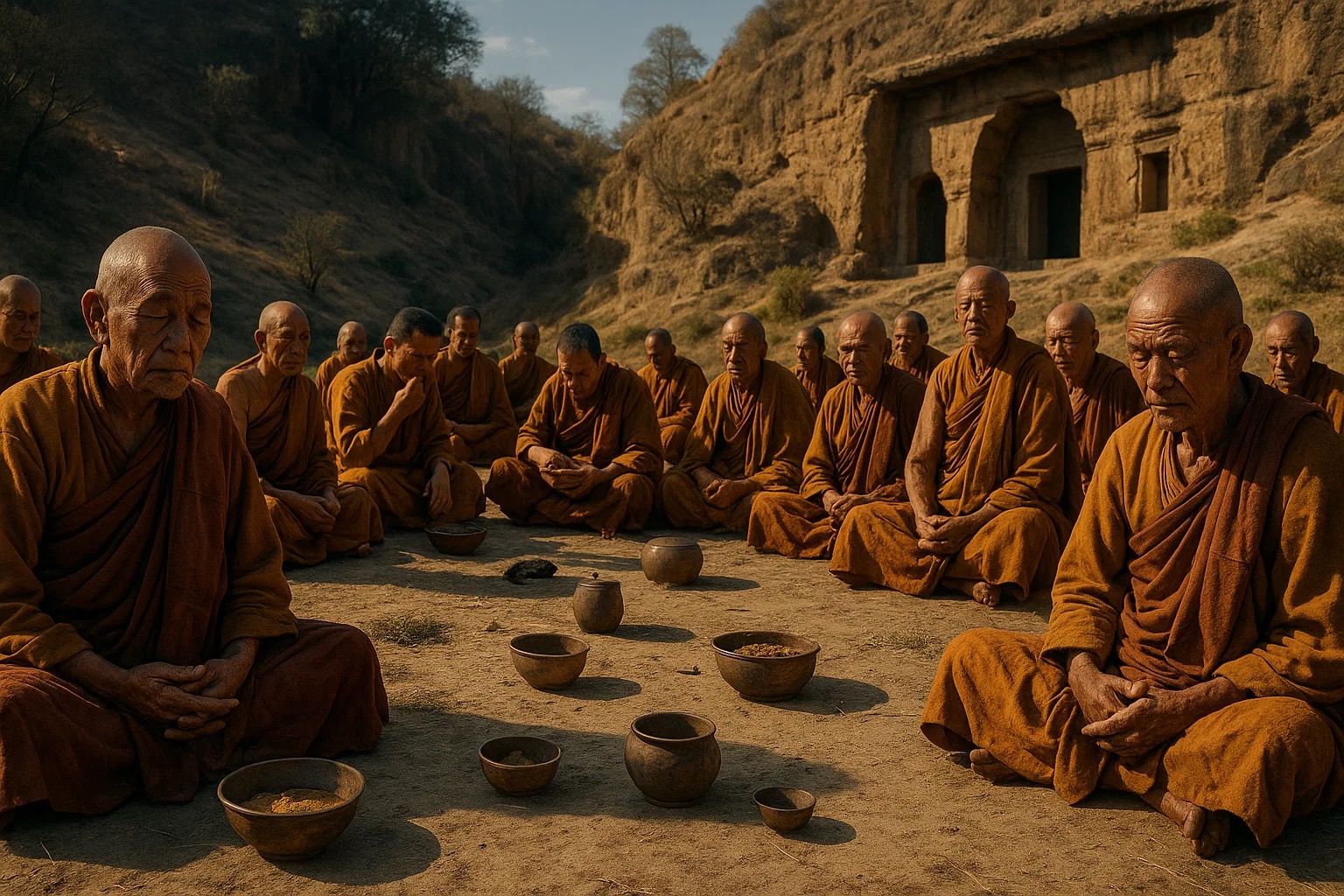
Wise Attention: The Impermanent and Unsubstantial
The discourses teach that to see not-self deeply, we must first train in perceiving impermanence. This is not about holding the idea of impermanence but seeing it directly, noticing that everything in experience, whether feeling, perception, thought, bodily sensation, or even consciousness, arises and passes away. Nothing remains permanent.
The purpose of perceiving impermanence is not simply to conclude that everything changes. It is to uncover how the self-making process clings to what is impermanent and tries to make it enduring and controllable, constructing an entire world of existence. Wherever permanence is perceived, the self-making process has taken root.
We dismantle this self-making process not with ideas, but by attending to experience as it really is: directly seeing that what is impermanent, causes suffering, and beyond control should not be taken as me or mine.
The challenge is that although feelings, perceptions, intentions, and consciousness naturally arise, change, pass away, and cease, the mind is constantly clinging to things existing or not existing, driven by the desire for experiences to be substantial, reliable, and satisfying.
'Everything exists': That is one extreme. 'Everything doesn’t exist': That is a second extreme. Avoiding these two extremes, the Tathāgata teaches the Dhamma via the middle.
SN 12:15
To understand this clinging, it’s useful to examine the cognitive process itself.
Although feelings, perceptions, intentions, and consciousness are always arising and ceasing, the mind rarely stays with this movement. Attention drifts, and when it does, experience is no longer met directly. In the absence of full awareness, the mind fills what is not clearly known with memory, expectation, and desire, constructing a sense of continuity where none actually exists.
When pain is not fully attended to, it may appear constant, even though it is changing. When desire is present, perception extends beyond what is directly seen, adding imagined attractiveness and significance. In this way, the mind mistakes its own fabrications for stable realities, giving rise to unwholesome intentions and actions.
Without Wise Attention, bodily, verbal, and mental formations arise not in response to what is actually present, but in response to what the mind assumes, fears, or craves. These formations reinforce the appearance of permanence, making the body, feelings, perceptions, intentions, and consciousness seem substantial, reliable, and controllable.
Dissatisfaction arises because attention settles on the arising and content of experience while overlooking its change, fading, and cessation. The mind clings to impressions that have already passed, treating them as if they were still present.
To overcome the tendency to make things permanent, we rely on Wise Attention. We learn to see the arising, the change, and—most importantly—the passing away of all phenomena without getting entangled. In this way, we recognize their impermanence and stop taking what appears in experience as me, myself, or mine.
When we interact with and become entangled in formations, we generate new ones. So instead of seeing things as they really are, the natural arising and ceasing, we perpetuate the cycle of fabrication and delusion.
Wherever attention becomes fixed, past intention or karma finds a foothold, and with it the construction of self through craving, aversion, and ignorance. This fuels the creation of new feelings, perceptions, intentions, and consciousness, blocking clear seeing.
Instead, we need to use Wise Attention. By not clinging, we allow phenomena to fade on their own, and the whole process of fabrication begins to calm.
Wise Attention: Seeing Beyond Existence and Nonexistence
This world follows after two views. It either settles on existence or settles on nonexistence. But when one sees the arising of the world as it actually is with correct wisdom, nonexistence does not occur. When one sees the cessation of the world as it actually is with correct wisdom, existence does not occur.
SN12.15
In his teaching to Kaccana, the Tathagata explains that the mind clings to experience in terms of existence and nonexistence. The mind tries to settle in what seems solid and substantial, even though experience is only a stream of changing causes and conditions, arising and passing on their own.
This pull toward existence and nonexistence appears in the smallest movements of mind. A simple judgment of good or bad, pleasant or unpleasant, is already a shift into taking sides. The moment the mind labels, it enters the domain of birth and death, the field shaped by clinging. By fixing any part of experience as real or unreal, as self or not self, as existing or not existing, the mind continues turning the wheel of becoming.
From clinging to things being or not being, an entire world of becoming is created, along with the suffering that comes from holding it.
When we use Dependent Arising to guide our practice, the pull toward these two standpoints weakens. Instead of getting lost in the need to force things into “is” or “is not,” there is the simple recognition that what appears is a process, and when the process ends, the appearance ends as well.
When things exist or don’t exist in the mind, they take on a false sense of permanence, and the mind remains caught in the cycle of birth, death, and suffering.
The training is not about taking on another view or position. It is about attending to experience before it hardens into something that seems to exist. When contact, feeling, perception, and intention are still fluid, they have not yet been claimed as mine or turned into a personal story. Here one can see the cycle before birth, before anything takes shape as an object of attachment.
Instead of clinging to what has already appeared in experience, we attend to the conditions that give rise to experience, the sense of body, to thoughts, to reactions, to the world as it shows itself. Each of these holds together only as long as its causes hold. When those causes settle, the experience settles.
Seen in this way, impermanence is no longer an idea. It becomes direct knowing. Whatever the mind picks up through clinging is already caught in the cycle of birth and death. And it is through seeing impermanence directly that the way out of this cycle becomes visible.
The Perception of Impermanence: Seeing Through Stillness
When there is unwise attention, when we do not see the arising and passing away of phenomena, the mind is clinging to whatever is presently held in awareness.
The mind clings to what is experienced because it fails to see the nature of phenomena as arising and passing away. Instead of wisdom, the mind turns toward permanence, pleasure, or self, which fuels craving and clinging.
It doesn’t matter what the object is. If we’re not seeing its impermanence, the mind starts to cling. A pleasant sensation, a strong emotion, a clear thought, or even a deeply concentrated state—any of these can quietly be taken as “self” if their changing nature isn’t fully known. Without that insight, what’s merely passing through becomes something we identify with.
Sometimes awareness feels still. If our experience appears unmoving, or if we fail to notice its constant change, then, subtly, we may be taking something in experience as permanent, and therefore as self. This is a danger point in practice.
If awareness settles on something that seems unchanging, a stillness, a background, a knower, this too must be carefully examined. When seen clearly as conditioned and impermanent, the practice moves toward release. But if it is not seen in this way, that subtle formation becomes a new place where “I-making” and “mine-making” take root.
Perceiving Impermanence
Training in the perception of impermanence begins with wise attention. This is not a matter of forming theories or arriving at conclusions. It is the direct knowing of change as it unfolds in real time.
We need to see clearly the rising and the fading, the appearing and the vanishing, and the beginning and the complete cessation of phenomena. Wherever the mind lingers and assumes stability, there lies a blind spot, a quiet place where self-making takes root.
To truly see impermanence is to recognize that all phenomena arise dependent on contact and feeling, and it is the clinging to these feelings as if they could last that gives rise to the illusion of permanence.
When this is observed again and again with Right Mindfulness, something shifts. The grip of clinging loosens on its own. The sense of a controller, an owner, an experiencer gently dissolves, not through force of will, but through the natural wisdom that comes from seeing things as they are. This is how perception becomes liberation.
Here, a disciple, gone to the forest, or to the root of a tree, or to an empty hut, reflects thus: Form is inconstant, feeling is inconstant, perception is inconstant, mental formations are inconstant, and consciousness is inconstant. He dwells contemplating inconstancy in these five clinging-aggregates. This is called inconstancy perception...
And what is Ānanda, the perception of inconstancy in all conditioned phenomena? Here, Ānanda, a disciple detaches, lets go, and abandons all conditioned phenomena. This is called Ānanda, the perception of inconstancy in all conditioned phenomena.
AN10.60
When the Tathāgata speaks of form, feeling, perception, formations, and consciousness as inconstant, he is not pointing to a hazy notion that ‘things change.’ He is pointing to something exact: their arising and ceasing dependently, conditioned by causes. Impermanence is not random; it is the natural result of conditionality.
The Perception of Impermanence: Seeing Impermanence Through Causes
Why must we see causes and conditions to truly see impermanence?
To contemplate impermanence is not just to notice that things change. It is to see something deeper, that all experiences arise from causes. Form, feeling, perception, formations, and consciousness are not random events. They do not simply happen on their own. Each arises when conditions support it, and each fades when those conditions end.
What is conditioned cannot be permanent.
When this is seen, we recognize that these processes are not an independent “me,” not a lasting self. This is why the Tathāgata does not simply say, “See change.” He says, “See arising and passing, dependent on conditions.” To see in this way cuts at the very root of the conceit, “I am.”
Why direct seeing is enough
In this practice, we do not need to construct arguments or reach conclusions. We do not need to analyze or define what is happening. What is required is simple and direct: to see clearly.
-
First, notice arising. A sight, a sound, a body sensation, a thought, an emotion—see how each appears, always dependent on conditions such as contact, feeling, attention, or intention.
-
Then, notice passing away. Watch how it fades, shifts, or disappears, beyond control, without substance or core.
-
Observe causes and conditions. Recognize how every experience depends on conditions and how, when those conditions change, the experience is no more.
-
And finally, let go. Not by force, but by wisdom. When something is seen as unstable, not lasting, not self, and not ours, clinging is naturally let go.
Contemplating Impermanence from Every Angle
The discourses teach that to truly understand impermanence, it is not enough to glance at it once or to see it from a single perspective. Impermanence must be contemplated again and again, seen from many perspectives, until its truth is realized beyond doubt that everything is constructed, including the seeing.
At first, we usually observe in a simple way: ‘I am here, the one who is looking, and the phenomenon is there, the thing being observed.’ This is natural at first, but it still carries a hidden assumption of a fixed observer and a fixed object. To deepen wisdom, this frame itself must be loosened.
We begin to experiment. Just as we can walk around a mountain to see it from every side, we can shift how we view experience. For example, we can see a sensation from the outside in, as if observing from beyond the body. We can picture seeing it from above or from the side. Each of these perspectives is fabricated, yet helps to dissolve the illusion that there is only one solid vantage point, only one unchanging self at the center.
With every shift in perspective, new feelings and new perceptions arise, only to pass away again. This repeated shifting reveals how even the standpoint of the observer is conditioned and impermanent.
As awareness matures through this practice, the boundaries of ‘inside’ and ‘outside’ soften. The sense of ‘me here’ and ‘things out there’ loses its hold. What remains is direct knowing: bare experience unfolding without a center, without a self, free from the stress of maintaining the illusion of separation between things out there and me in here.
The Perception of Impermanence: The Process of Becoming
When developing the perception of impermanence, besides seeing it as a process of clinging, it's also useful to see it as a process of becoming.
The self-making process is not a passive byproduct of clinging; it is an active, volitional process. It is the very act of trying to be something, to fix one’s presence in experience, to inhabit and sustain a chosen state. This process is described by the Tathāgata as "becoming," a drive that arises from craving and clinging but has its own distinct momentum: the urge to establish identity and continuity in experience.
It is the effort to assert “I am this” or “I must maintain this state,” whether that state is a mood, a mental quality, a view, or an identity. It is the very creation of permanence.
With clinging as condition, there is becoming. Becoming conditions birth. Birth conditions aging and death.
SN12.2
This is why identity is not just formed from clinging to impermanent things. It is the strategy of trying to become stable in the midst of impermanence. The self-making process doesn’t appear because things arise. It appears because we want to hold a position in them. This is being, and it’s active, effortful, and constant.
The sense of self is a performance: it is constructed and reinforced through every act of trying to land somewhere solid.
This is the reason why simply watching experience isn’t enough. If we do not see the urge to become in each moment, even our practice becomes another self-making project.
The path to freedom requires seeing not only that things change, but that we are actively trying to be something in the midst of change, and that this very effort is suffering.
The Tathāgata didn’t just teach us to watch impermanence. He taught us to see through the strategies of being: establishing in what is impermanent and making it permanent.
Seeing this is not the end of a self, but the end of needing to be someone at all. That’s why nibbāna is not annihilation. It is the cessation of the activity of becoming.
The Perception of Impermanence: Undermines the Entire Cycle
The Tathāgata described Dependent Arising not as a metaphysical chain but as a psychological process. It is driven by a simple misperception: that what is experienced can be held, can be controlled, and is worth identifying with.
But when impermanence is seen:
-
Feeling is not taken as a reliable signal of what’s worth seeking or avoiding.
-
Craving loses its footing because there’s nothing solid to chase.
-
Clinging weakens, because what’s clung to cannot last.
-
Becoming dissolves, because the drive to “be someone” has no ground.
-
Birth of identity doesn’t occur, because there’s no platform for it to arise from.
In short, impermanence is the antidote to every link in the chain.
If a disciple sees impermanence in feeling, perception, and consciousness, they’ll be disillusioned. Being disillusioned, they’ll grow dispassionate. Being dispassionate, they’ll be freed.
SN12.20
The Illusion of Continuity: Fuel for Self
The danger lies not in the arising of experience but in the assumption that it continues. This illusion of continuity, the idea that something stays, is the seed of identity. It leads us to think, "I felt that," or "I was like this before," and thus, "I am this."
Because of not seeing the arising and ceasing of these aggregates, ordinary people have not become disillusioned with them, have not grown dispassionate toward them, and have not been freed.
SN22.81
So long as this illusion persists, the mind keeps investing in stories, plans, and identities, trying to make what is moving into something still. But this effort is painful. The more we try to fix the flux, the more tension and disappointment we create.
Freedom Arises When Change is Known
Liberation is not to stop phenomena from arising; it is to stop fabricating continuity where there is none.
This is why the Tathāgata pointed again and again to the perception of impermanence as the foundation of the path.
Disciples, develop the perception of impermanence. When the perception of impermanence is developed and cultivated, it eliminates the conceit 'I am,' it leads to the uprooting of the underlying tendencies, and to full release.
AN7.46
The path is not to fight experience but to see it clearly. And the clearest truth is all things arise and pass away.
When this is truly seen, in sensation, in thought, in mood, and in identity, the mind begins to let go, not out of force, but because there is nothing worth holding. That is the wisdom of impermanence. It is the beginning and the end of the path.
Whatever is impermanent is suffering. And whatever is suffering is not fit to be regarded as ‘This is mine, this I am, this is my self.’
SN22.59
Wise Attention: I-making and Mine-making
Now we turn our attention to another component of Wise Attention: seeing how the mind creates “I” and “mine,” taking what appears in experience as me, myself, or mine. This I-making and mine-making—the mind’s habit of building stories and behaviors to create the sense of someone behind experience—clouds clear seeing.
It builds vantage points, overlays, and added interpretations that cover up what is actually happening, and this leads to unwise attention.
For this reason, the teaching on not-self is not a claim that there is no self. It is an instruction not to take what appears in experience as me, myself, or mine, because doing so brings suffering. Instead, we learn to recognize I-making and mine-making as a process that, driven by craving, produces suffering.
When we notice these habits as they appear, their illusion and effect fade, and we are less likely to take every feeling or thought personally. This allows the mind to stay calm and clear, so it can look at what is happening without adding extra stories.
Practice is not annihilating a self
The Tathāgata teaches that liberation comes not through annihilating a self, but through the direct insight that what we take to be self—clinging to the aggregates—are impermanent, suffering, and not-self. What arises and passes away is not me, not mine, not myself. Liberation is seeing through this illusion, not by asserting that there is or isn’t a self in any absolute sense.
When self-making is uprooted, the illusion collapses, and so too does the compulsion to cling. It is the cessation of identification, the dropping of the tendency to see through the lens of "I am this body, I am this thought, I am this awareness." When this false sense of “I-making” and “mine-making” is seen through completely, no more becoming arises.
At this stage of the Gradual Training, to develop Wise Attention, we must learn to recognize the subtle ways the self-making process creates a sense of self in how we see the world. We must see that the mind is constantly creating bodily, mental, and verbal formations that create the appearance of ourselves as a person existing in the world.
The fabrication of “I-making” and “mine-making” and continually maintaining it is very stressful.
Contemplating I-making and mine-making
To contemplate “I-making” and “mine-making,” we must first recognize the many ways it can manifest. For example:
-
We see ourselves as being part of the body, inside the body, or belonging to the body, without noticing the constant effort and stress required to maintain that perception.
-
We take the phenomena we experience as “my experience” or “this is happening to me,” unaware of the stress that arises from trying to preserve this sense of ownership.
-
We crave for experiences to be clear, substantial, and firmly owned, only to be disappointed when they are not.
-
We judge or check personal progress, asking, “How am I doing? Am I practicing correctly?” not realizing that this very self-referencing becomes an obstacle and a source of stress.
-
We continually create subject–object relationships, forming an “out there” and an “I in here,” without seeing that the “out there” is mind-made. Without an “I in here” and an “out there,” suffering cannot arise.
-
We conceive of ourselves as existing in the world, in this body, sustaining the notion “I am,” not realizing that letting go of this conceiving brings complete liberation.
To let go of the illusion of “self,” we must directly investigate and see that the five aggregates—form, feeling, perception, volitional formations, and consciousness—are impermanent, and that clinging to them causes suffering, and thus they are not fit to be regarded as “me” or “mine.”
The assumption of self is craving
This assumption, taking on of a "self" is the result of craving: the desire for sensory pleasures, the longing for continued existence, and the craving for non-existence.
When craving grows stronger, it becomes clinging, a deeper attachment to the objects of desire or aversion. This clinging creates strong patterns of identification. There is the assumption: "This is me," "This is what I am," or "This is my experience." The mind tightens around these ideas, fixating on them and reinforcing the illusion of a solid, enduring self.
This clinging gives rise to a powerful momentum, the intention, and the drive to exist and to satisfy our desires. Because craving and clinging keep arising again and again, they keep reinforcing the illusion of a person or self in the background making decisions. We end up mistaking the results of craving and clinging as who we are, not seeing that what we call “self” is actually a chain of reactive processes.
Contemplation is seeing through this self-making process. It is the direct seeing of how the mind continually fabricates a sense of "I" and "mine" by clinging to the Five Aggregates as if they were self. This assumption is a fundamental delusion, sustained by ignorance and craving.
Through sustained contemplation, we recognize that this identification is baseless and that craving lies at the root of “I-making” and “mine-making,” and it is this craving that gives rise to suffering.
Right Mindfulness is the continuous and careful contemplation of the Five Aggregates, discerning them as impermanent, unsatisfactory, and not-self. Through this clear seeing, dispassion arises, and through dispassion, liberation is gradually realized.
The cessation of personality, the cessation of personality, it is said, lady. What, lady, is the cessation of personality as declared by the Blessed One?
It is the remainder-less fading and cessation of that same craving, the giving up and relinquishing of it, freedom from it, and non-reliance on it. This, friend Visakha, is the cessation of personality as declared by the Blessed One.
MN44
Wise Attention: Penetrating I-making and Mine-making
And how, Ānanda, does one reflect upon oneself? One reflects upon oneself as feeling: Feeling is my self. Or one reflects: Feeling is not my self; my self is not feeling. Or one reflects, Feeling is not my self, nor is non-feeling my self; my self feels, for feeling is the nature of my self.
DN15
When penetrating “I-making” and “mine-making,” one of the subtlest challenges is that the self-making process is not simply an object to be observed; it hides in plain sight within the very act of observing.
We are so accustomed to seeing through the self-making process that we fail to notice the sense of “I” is embedded in the observer itself.
Wherever attention is directed searching for self-making, the root can never be found, because the selfing process remains in the background, assuming the role of seer, knower, and owner of experience.
When trying to see through “I-making” and “mine-making,” it's more helpful to shift attention away from the question "Is there a self?" and instead see how the appearance of self arises based on causes and conditions. The sense of self isn't one fixed thing; it's a construction that depends on many momentary processes.
Every time there's contact with a sense object, a feeling arises, and almost immediately there can be craving, a subtle reflex of "I want this" or "I am experiencing this." This craving is one of the key conditions that makes things personal and creates the illusion of a self.
For example, when hunger arises, the usual sense is, "I am hungry."
But when we look carefully, what's actually happening?
-
There is a bodily sensation: emptiness, tension, or slight discomfort in the abdomen.
-
There is a perception: "This is hunger."
-
There is a feeling: unpleasant.
-
There is craving: "I want food."
-
There is the arising of I-making: "I am the one who is hungry."
Now, instead of taking "I am hungry" at face value, we investigate: "This bodily sensation has arisen dependent on conditions, for example, the lack of food or the smelling of a delicious odor.
The perception of hunger is a mental label applied to these sensations. The feeling tone is unpleasant. The craving arises based on the unpleasantness. The thought 'I am hungry' is an additional construction, not the hunger itself."
By breaking it down like this, we see there's no fixed self behind the hunger, only conditions unfolding. The sense of "I" has been stitched together out of these elements.
With contact as condition, feeling arises. With feeling as condition, craving arises. With craving as condition, clinging arises. With clinging as condition, becoming arises.
MN148
The Five Aggregates as "Self"
On an even more subtle level, we take the Five Aggregates as self. Instead of just thinking "I am hungry," the identification occurs at the level of the aggregates themselves:
-
"I feel this experience."
-
"I am the perceiver."
-
"I am the knower of this experience."
-
"I am awareness itself."
The Tathāgata asks us to contemplate the Five Aggregates as not-self. However, even in the attempt to abandon self-making, it's easy to fall into refined forms of identification. For example, contemplating "Feeling is not self" may still carry the implicit assumption of a self standing apart from feeling, observing, or disowning it. This is unwise attention, which subtly sustains the notion of self.
This is precisely what he warned against when systematically analyzing the Five Aggregates in relation to self. Instead, we must see the causes and conditions that give rise to the aggregates.
For example, in regard to the Perception Aggregate, start noticing that perception itself arises dependently:
-
You see a form: perception arises (shape, color, recognition).
-
You hear a sound: perception arises (tone, language, meaning).
-
You feel an emotion: perception labels it as "fear," "joy," etc.
Each time we notice perception arising, we are no longer standing inside perception as the owner. We are seeing it as part of the stream of dependently arisen events. This starts to erode the identification with "the perceiver." When we see that perception depends on contact, we begin to weaken the illusion that perception is a stable self.
In other words, when perception arises, it depends on contact and conditions. Do not take the perceiving as "I am the one who perceives." Instead, see it as another arising and passing phenomenon, not owned, not controlled. Let the sense of being the perceiver be included in the field of investigation.
In the seen, there will be just the seen; in the heard, just the heard; in the sensed, just the sensed; in the cognized, just the cognized. When, Bāhiya, there is for you in the seen just the seen … then, Bāhiya, you will not be 'with that.' When you are not 'with that,' you will not be 'in that.' When you are not 'in that,' then you are neither here nor there nor in between the two. Just this is the end of suffering.
UD1.10
In other words, when the mind no longer constructs the subject–object divide, no longer experiencing things as “out there” or as belonging to “me,” proliferation ceases.
Awareness abides naturally in awareness itself; no “I” can be found anywhere, and suffering falls away, at first for a moment. When all I-making and Mine-making come to an end, this is the complete ending of suffering.
Wise Attention: The Self-referencing Process

“I-making” and “mine-making” are the ongoing mental process, the constant assembling of thoughts, perceptions, feelings, and reactions that form the sense of "I am."
Each time we see a sight, hear a sound, feel a sensation, or think a thought, the experience itself is just an object arising. But quickly, the mind turns inward and adds an extra layer: "How does this affect me? Is this good or bad for me? What should I do about it?" This quick mental turning is called self-referencing. It happens almost automatically and inserts a sense of “I” or “mine” into every experience.
For example, when a sound arises, the ear simply hears. But immediately after, the mind may react, "I don’t like that sound." The sound itself doesn’t say anything about you, but the mind adds self-reference. This creates stress because everything becomes personal.
By learning to see this continual process, we start to loosen it. Instead of letting the mind automatically ask, "What about me?" we train it to simply see, "This is just sound, just feeling, just thought."
And what, Ānanda, is not-self perception? Here, a disciple, gone to the forest, or to the root of a tree, or to an empty hut, reflects thus: The eye is not-self, forms are not-self, the ear is not-self, sounds are not-self, the nose is not-self, odors are not-self, the tongue is not-self, tastes are not-self, the body is not-self, tactile sensations are not-self, the mind is not-self, and mental phenomena are not-self. He dwells contemplating not-self in these six internal and external sense bases. This is called not-self perception.
AN10.60
Wise Attention: Applying the Perception of Not-self
We can lessen “I-making” and “mine-making” and completely let go of conceit by applying the perception of not-self, which simply means seeing in a way that doesn’t take anything in experience as "me," "mine," or "myself."
The perception of not-self isn't about forcing ourselves to believe "there is no self" as an absolute truth. Instead, it's a tool to directly undermine our deeply ingrained habit of seeing everything through the lens of "I," "me," and "mine." For example, "I want this to be me", "I want this to be mine" or "I don't want that to happen".
This habit isn't just an idea; it's built into how we experience each moment. Conditioned by ignorance, the underlying view through which experience is framed automatically takes sights, sounds, feelings, thoughts, and even our own awareness as belonging to or making up a self simply by perceiving them in that way. This act of claiming in the way we see things is the beginning of clinging, and clinging is the root of suffering.
As the perception of not-self develops, this automatic identification is interrupted. We're training our mind to see, "This is a feeling," without adding the "mine"; this is a thought, without “this is me”; this is a perception, without “this is myself.”
The aim is to gradually wear away the automatic reflex that craves, personalizes, and clings to experiences. As this reflex weakens, the subtle ways our mind claims things become clearer, showing how the mind tends to create a "self" even from the tiniest sensations.
So, the perception of not-self functions not to create a new belief but to erode the underlying way our perception distorts things, turning temporary, conditioned experiences into something we own and identify with. By using the perception of not-self, our mind moves towards disenchantment, dispassion, and ultimately, liberation.
How to Use the Perception of Not-Self
For an ordinary person, the habit of “self-making” is so quick and deeply ingrained that it happens automatically, especially with the body, feelings, perceptions, and thoughts. As soon as there is contact—a sight, a sound, a bodily sensation, or a thought—the mind automatically stamps it with “this is me” or “this is mine.”
This identification does not happen in isolation; it’s tied to clinging. We cling to the perception of the thing, the mental label and story around it, and we cling to the feeling it brings, whether pleasant, unpleasant, or neutral. This clinging often appears as a subtle tension in the mind and body, as if gripping something fragile that could slip away at any moment.
At the beginning of the practice, applying the perception of not-self starts with learning to spot the self-making process as it unfolds: beginning with contact and feeling, moving through perception, and culminating in the sense of “mine” and clinging
At first, we simply recognize, “The mind has taken this sensation, sight, sound, touch, or thought as me or mine, and there is tightening or tension that comes with it.” Seeing this clearly is already the beginning of release, because it reveals that the stress is not just from the object, but from the act of claiming and holding. When you see the clinging, you are also seeing the self-making.
The Perception of Not-Self: Seeing What Is Not Fit to Be ‘Mine’
When the discourses talk about not-self, it is described not as a metaphysical truth to be accepted, but as a perception to be cultivated. The perception of not-self changes the way we relate to every experience of body and mind, gradually loosening the ingrained habit to claim them as “mine” or “me.”
The perception of not-self is developing the habit of seeing things as “not fit to be regarded as mine” because they are impermanent, beyond control, and lead to suffering when clung to.
This is not a philosophical statement about reality’s essence. It is a skillful way of seeing, returned to again and again, until the mind no longer clings.
How to Cultivate the Perception of Not-Self
To cultivate the perception of not-self, we contemplate an object or phenomenon with sustained, direct observation, but without clinging, and examine it from multiple perspectives until the truth becomes self-evident in experience. This is not a matter of logic but of direct knowing.
For a bodily or mental phenomenon:
-
Notice it clearly: for example, “warmth in the hands” or “tightness in the chest.” Observe it fully from different perspectives until it is completely known.
-
See its impermanence: it shifts, grows, and fades.
-
Recognize its unsatisfactoriness: it cannot be made to remain pleasant, nor can pain be entirely avoided.
-
See how subtly attention has already taken hold of the object as “me” or “mine.”
-
Let the perception of not-self emerge, seeing the phenomenon as not me, not mine, not my self, not fit to be clung to. This is not a conclusion or a statement being imposed, but the natural loosening that occurs when the phenomenon is seen clearly and completely as impermanent, unsatisfactory, and beyond control.
The perception of not-self is not a thought or an abstract conclusion; it is the fruit of direct seeing from all angles. It is the letting go of holding phenomena in attention as “me” or “mine.”
The Wisdom in ‘Not Fit to Be Mine’
The perception of not-self does not push experiences away. Instead, it lets them be, but without weaving them into the fabric of “me” and “mine.”
They are not fit to be held as mine because they are:
-
Impermanent, beyond lasting control.
-
Unsatisfactory, subject to loss and distress.
-
Subject to change, taking them as “mine” ties you to instability.
Ask yourself, why am I clinging to something that’s beyond my control, prone to loss and distress, subject to change, and that only brings instability and suffering?
Therefore, it is not fit to be regarded as “mine,” “I,” or “self.” This is the perception of not-self: a deliberate, repeated way of seeing that gradually erodes the tendency to cling.
Remember that the perception of not-self is not something to force as a belief nor to recite as a mantra without observation. It is simply clear seeing, cultivated by turning the mind again and again toward the reality of impermanence, unsatisfactoriness, and not-self, until the letting go happens naturally.
Wise Attention: Right View as the Ground
Right View is the ground on which all practice stands. It is the forerunner of the path. Without Right View, there is no practice and no path. For this reason, it is essential to understand the role of Right View and how it conditions Wise Attention.
Right View is not a single instance of knowing gained through insight. It is the ongoing removal of distortions, the repeated establishment of a liberating way of seeing.
In our practice, it is common to see things clearly for a moment, sometimes even deeply, and then later notice that the mind has quietly returned to its old habits. This is not a failure on our part. It simply reveals how strong and persistent habits of wrong view are.
Insight alone does not immediately stabilize the removal of distortion. What gradually changes perception is the steady cultivation of a way of seeing that leads to seeing clearly, which leads to release.
Right View as the Direct Counter to Ignorance
In Dependent Arising, ignorance is not a lack of information. It is the active distortion in how experience is interpreted. It is the assumptions embedded in the way we view things: that what is conditioned is stable, that what is fleeting is dependable, and that what is not self can be taken as self. With this distortion already in place, experience unfolds along a predictable path toward entanglement.
Ignorance comes first because it establishes the lens through which experience is seen. From that lens, mental formations arise, followed by consciousness, and then the entire structure of lived experience. The problem is not that experience appears, but that it appears through a distorted lens.
Right View operates at this same level. It is not a correction applied at the end of the process. It is seeing through a lens without distortions. Where ignorance assumes solidity, Right View sees conditionality. Where ignorance assumes ownership, Right View sees not-self. Where ignorance assumes lasting satisfaction, Right View sees unsatisfactoriness.
Because Right View removes the distortion rather than working with its results, it directly weakens ignorance. When Right View is present, ignorance is not operating in that moment. The chain does not gather momentum in the same way because the underlying distortion in view is no longer present.
This is why Right View is called the forerunner. It determines whether perception feeds further entanglement or supports release. The same sights, sounds, sensations, and thoughts arise, but they no longer condition the same reactions because the underlying view has shifted.
This shift does not happen all at once. At first, Right View appears intermittently. The mind sees clearly for a moment, then slips back into old assumptions. Each time Right View is re-established, ignorance weakens slightly. Over time, the liberating orientation becomes more familiar than the distorted one.
Each moment of Right View is a moment in which ignorance is absent, and Dependent Arising shifts away from entanglement toward freedom.
Right View is not neutral seeing
It is important to understand that Right View is not simply seeing what is already there. Seeing is never neutral. Perception is already shaped by ignorance long before we become aware of it. If we attempt to merely observe experience without addressing the underlying view, we do not arrive at truth; we refine the delusion that is already operating.
This is why unexamined seeing tends to reproduce the same patterns again and again. The mind looks, but it looks through assumptions of solidity, ownership, and continuity. What is seen is already distorted at the level of interpretation.
View activates the whole of experience
View is not something added onto experience. It activates the whole of experience. It determines how the body is felt, how feelings are interpreted, how thoughts are believed, and how consciousness is experienced. Because view is primary, perception is shaped by it.
For this reason, impermanence, not-self, and unsatisfactoriness are not qualities that appear accidentally. They depend on the underlying assumptions that shape how experience is seen. When a view of solidity is operating, impermanence is obscured. When a view of ownership is operating, not-self cannot be recognized. When a view of dependability is operating, unsatisfactoriness remains hidden.
Only when the mind is oriented toward clarity do these characteristics become perceptible. The view makes the perception possible.
At every moment, experience is shaped by the view operating in the background. When the mind holds a view of solidity, experience appears solid. Forms seem substantial, feelings seem owned, mental formations seem reliable, and consciousness seems personal. From this way of seeing, involvement and clinging naturally follow.
When the mind sees with Right View, experience is shaped differently. Mental formations are known as conditioned and insubstantial. Feelings are known as fleeting tones rather than possessions. Perceptions are recognized as interpretations rather than facts. Consciousness is seen as dependent on conditions rather than as a self.
Nothing in the content of experience needs to change for this shift to occur. What changes is how experience is being seen while it is happening.
Liberating View Versus Entangling View
It is important to distinguish between liberating and entangling views.
An entangling view treats experience as something to secure, defend, or define oneself by. From this underlying assumption, perception feeds involvement, clinging, and identification. Even refined attention can deepen entanglement if the underlying view remains unexamined.
A liberating view recognizes that whatever arises is conditioned, fleeting, and not self. From this orientation, perception naturally loosens its grip. The same experiences occur, but they no longer bind the mind.
Developing Right View, therefore, means repeatedly cultivating a way of seeing that leads to release. It means noticing when perception is shaped by old assumptions and gently reorienting the mind toward clarity.
This reorientation must happen again and again. Each time the mind returns to a liberating view, the force of delusion weakens. Over time, the view that once had to be remembered becomes the natural way of seeing.
Insight and Reversion
In practice, moments of clarity often alternate with periods of contraction. One may clearly see impermanence, insubstantiality, and not-self, and then shortly afterward react as if phenomena were solid and personal. This reversion happens because old views have been reinforced for a long time. They are familiar, automatic, and emotionally convincing.
Without Wise Attention, the mind returns to these habitual views, and perception follows. What was seen as a passing process is again taken as fixed. What was known as impersonal is again taken as me or mine. Entanglement resumes, not because the insight was wrong or incomplete, but because the view has not yet stabilized.
Right View as a Living Practice
Developing Right View means more than understanding principles. It means repeatedly checking how experience is being framed right now. Is the mind seeing in a way that leads to ease and release or in a way that leads to tension and involvement?
A liberating view recognizes impermanence, insubstantiality, and not-self as immediate characteristics of experience. An entangling view treats phenomena as lasting, dependable, or personal. The difference is not philosophical; it is felt directly as either ease or pressure in the body and mind.
Each time experience is seen clearly, even briefly, the mind learns a new way of seeing. Each time old views are noticed and released, their authority weakens. Gradually, the balance shifts.
Stabilizing a liberating view
Right View becomes established through repetition and familiarity, not by forcing concepts onto the mind, but by repeatedly seeing how we entangle ourselves through the way we frame experience.
We see that bodily, mental, and verbal formations arise and pass away. We see that whatever appears depends on conditions, and that nothing that arises can rightly be taken as self.
As this way of seeing is returned to again and again, it begins to establish itself naturally. Perception aligns with clarity. The mind no longer needs frequent reminders because the liberating view has become more familiar than the old one.
In this way, developing Right View is not about accumulating insights. It is about ensuring that the way we see, moment by moment, leads away from entanglement and toward freedom.
Linmu: True Right Mindfulness

For most people, the concept of "right mindfulness" and "right discernment" is very vague. Here, I'll use a popular saying from the internet that might help everyone grasp what "right mindfulness" and "right discernment" mean more clearly.
Resaerch has shown that teh order of English characters does not necessarily affect reading comperhension.
After reading this sentence, I believe many people didn't notice that the characters in the sentence are actually jumbled. Strictly speaking, this sentence doesn't convey any meaning, but our brains overlook this fact.
In this example, ignoring the position of each character while reading the sentence is an example of "not having right mindfulness." Because of "not having right mindfulness," various understandings and concepts generated in the mind are also not accurate, which is "not having right discernment." If we had initially paid attention to each character and its position as they are, that would be "right mindfulness," and the various accurate understandings and concepts arising from "right mindfulness" would be "right discernment."
The correct understanding of a sentence is based on having accurate knowledge of the words, just as the correct understanding of the world is based on having accurate knowledge of consciousness.
It's important to note that there is nothing within the body and mind that can observe or be aware of other things. All cognition is the result of interactions between the senses and objects. So, to have right knowledge of consciousness itself, nothing else is needed to know or observe consciousness. It's like a self-illuminating light source; it doesn't need another light to shine upon it.
There's also no need to actively observe; consciousness is always arising, various forms of awareness are also always arising. This world doesn't cease to exist because we don't make an effort to observe it, and our sense of existence and various emotions and feelings don't disappear because we don't make an effort to observe them.
Just as I wrote in "My Meditation Experience":
One day during meditation, I thought, If I don't make an effort to observe, does that mean I won't know what's happening in the present moment? Will I become completely unaware, like a piece of wood?' The answer was very clear, no one turns into a piece of wood just because they're not trying to observe.
So, at that moment, I completely renounced, gave up all active and passive observations and all acts of will. I simply allowed phenomena of body and mind to arise and pass away on their own. The restless me suddenly became calm, and the phenomena of body and mind became even clearer than before, but I was no longer involved in them. My mind remained stable in a state beyond all phenomena.
A form of knowing, one that I had never experienced or seen before, arose: when phenomena of body and mind occurred, there was already knowing within them. There was no need for extra, redundant observation. This knowing was the inherent function of the phenomena themselves. What people call 'observation' is nothing more than another phenomenon arising afterward.
It reminded me of an insight I had years ago when I first started practicing meditation. At that time, I simply paid attention to what arose on a small patch of water's surface. Following a similar feeling now, I no longer actively observed the phenomena of body and mind; I only pay attention to what knowing arises within the scope of body and mind.
Nowadays, my concentration is completely different from what it used to be. When I use this method again, the knowing generated by the phenomena of body and mind is timely, complete, and clear, while I remain relaxed, as if I had just taken a heavy burden off my shoulders.
Just like between a worker and a boss, previously, I kept observing the phenomena of body and mind, like a worker continually doing a job, exhausted but earning meager wages. Now, I've discovered that knowing is the inherent function of the phenomena of body and mind themselves, so I no longer need to do this job. I only need to collect the results of labor from these workers (inherent knowing in consciousness), which is not only effortless but also highly profitable."
If you can understand this point, you won't waste time on incorrect methods of so-called observation. Instead, you'll simply pay attention to what consciousness arises and what knowing arises in every moment, everywhere. You won't miss it, won't overlook it, and won't misunderstand it. Through this, ignorance is eliminated, and right knowing arises. When right knowing arises, the inner logical induction, analysis, summarization, and reflection will remove past misunderstandings, eliminate wrong thoughts, and produce right mindfulness.
Right Mindfulness of the Body: Overview
Up to now, we have covered important concepts of Right Mindfulness. These are meant to clarify and orient the practice. Understanding these principles helps establish confidence and direction, but it is important to remember that Right Mindfulness is not something perfected at the outset. It matures gradually, together with the rest of the path, through repeated practice and refinement. With this in mind, let’s now turn toward the development of the first Dwelling in Mindfulness.
Development of Right Mindfulness of the Body begins simply by Dwelling Body as Body. At first, the task is not to adopt a view about the body but to remain with bodily experience as it is, without adding to it. We learn to stay at the level of form, allowing sensations, posture, and movement to be known directly before they tighten into holding, clinging, emotional reaction, or self-referential activity.
By learning to attend in this restrained way, the processes by which experience is taken up and shaped become visible over time. From this seeing, a more subtle knowing emerges, where the body and experience are no longer taken up as me or mine, not by assertion, but through knowing from direct seeing.
Knowing the Body
When the teachings instruct us to “know the body completely,” they are guiding us to see the body clearly and directly, not merely as it appears on the surface, but as it is experienced and constructed. Like a lump of foam, the body may seem solid and enduring, yet upon closer examination it is insubstantial and fleeting. The discourses point to the fact that much of what is taken to be “the body” is an appearance shaped by perception and sustained by mental activity.
Through seeing this directly, insight gradually deepens into the nature of experience itself. What is ordinarily taken to be a self within a body, living in the world, is revealed instead as an ongoing stream of mental processes, shaped and sustained by craving. Drawn toward existence within the world, these processes organize themselves around form, giving rise to the appearance of a body and a lived world.
Through ignorance, not seeing this process and the suffering bound up with it, the mind clings to form through intention, attention, contact, feeling, and perception. From this clinging, a fabricated perception takes shape, giving rise to the appearance of a self dwelling within the body. Driven by craving, this imagined self continues to seek fulfillment through ongoing existence in the world.
By contemplating the body clearly and directly, seeing its conditioned, insubstantial, and not-self nature, this fabrication becomes evident. As this understanding matures, dispassion and clarity arise, leading to the release of clinging to the body. The body is then known with wisdom rather than delusion, opening the way toward liberation.
Seeing the Body as a Lump of Foam
Just as a lump of foam on the Ganges, whirled about, quickly vanishes, so too, disciples, whatever kind of form there is… should be seen as it really is with correct wisdom thus: ‘This is not mine, this I am not, this is not my self.’
SN22.95
First, we must understand that when the teachings speak of form, they refer to what is experienced as form through the eye and the body. This includes the colors and shapes that are seen and the tangible qualities that are felt, such as hardness and softness, warmth and coolness, and pressure and movement. This is form as it is directly known in experience, not form as physical objects conceived in abstraction.
The discourses teach that form, the bodily aspect as it appears in experience, should be regarded as insubstantial. Like a lump of foam, it may present an appearance of solidity, yet when examined closely, it offers no lasting core or substance.
When we contemplate the body directly, we observe:
-
The body’s sensations shift constantly. They show no stable pattern, arising, changing, and fading without control, like bubbles forming and bursting on the surface of water.
-
The breath appears to move in and out, yet on closer inspection it is known through a combination of bodily sensation and mental activity. What is directly experienced are tactile qualities such as movement, pressure, and expansion, together with perceptions that organize and interpret these sensations. In this way, the breath is understood as a conditioned process, a bodily formation that is known and shaped through the activity of the mind, rather than as a solid or independent object.
-
Tension and pressure continually appear in awareness. They arise from craving operating within nāma, through which experience tightens around rūpa. Yet what this craving engages with is not the body itself, but its own conditioned perceptions and intentions.
The interplay of nāma and rūpa is not a clash between two separate things but a single process driven by craving for existence within form, a repeated creation of “I” and “mine,” an ongoing attempt to establish a self in what is, in reality, only conditioned appearance.
Practice at This Stage of the Gradual Training
At this stage of the Gradual Training, the purpose of dwelling “contemplating the body as body” is to abide in clear, direct awareness with wise attention, allowing the mind to see things as they truly are, free from conceptual overlay and the mental interference that gives rise to delusion.
The aim is the development of mindfulness that neither becomes entangled with bodily sensations nor identifies with the body as “me” or “mine” but remains steady and present, preventing mental proliferation from taking hold.
As this knowing becomes established, the body is no longer experienced as an object standing apart. It is known directly as experience itself. From here, we train in calming the bodily formation, gradually releasing clinging and craving for the Form Aggregate, which in practice means releasing clinging to the body as it is experienced.
This development unfolds through the various practices the discourses recommend:
-
The perceptions of impermanence, suffering, and not-self
-
Contemplation of the Four Elements
-
Contemplation of death
-
Mindfulness of breathing and other related practices
When contemplating the body as body, we turn toward the form aggregate as it is actually experienced, not as an idea but as a living field of sensation. The mind learns to discern causes, conditions, and the results that follow. When this seeing is unobstructed and free from mental proliferation, wisdom arises from recognizing how these conditions come together.
Contemplation of the body deepens insight into nāma and rūpa, gradually dismantling distorted views, emotional bonds, and attachment, until there is a progressive letting go of ingrained assumptions, delight, craving, and clinging to the body. This unfolds gradually and depends on progress along the Gradual Training.
To contemplate in the right way, we remain with immediate experience. We notice when the mind begins to overlay or interfere through bodily, verbal, or mental fabrications. With wisdom, these fabrications are recognized as nāma and rūpa, arising and fading, with no substance that can rightly be taken as self.
When tension or stress appears, instead of holding it or feeding it with attention, we recognize craving at work, the movement of nāma attempting to own rūpa. We see how the mind tries to establish itself in the body. We do not become absorbed in the sensations but observe their arising and passing away while turning attention toward the true source of dissatisfaction, craving, and clinging to the Form Aggregate.
In this way, we neither chase pleasant sensations nor resist painful ones. We discern the process itself, seeing clearly how everything arises and ceases.
No precise instructions can fully explain how to discern desire and release clinging to the Form Aggregate, as this lies beyond the limits of language and conceptual thought. It must be seen and understood directly through one’s own contemplation and development.
By seeing things as they truly are, by discerning underlying conditions and their results, insight arises. As insight arises, the way forward becomes clear. Through continued development, clinging to the body gradually fades.
Right Mindfulness of the Body: The Form Aggregate
To understand Right Mindfulness of the body and to contemplate it correctly, we first need to understand the Form Aggregate and the role it plays in experience.
Form refers to the physical aspect of experience as it is known. The Form Aggregate is one of the five aggregates the teachings ask us to contemplate, the aspect of experience that appears as physical form within awareness. It is not physical matter as such, but physical appearance as it is experienced through contact.
In relation to the six senses, form refers specifically to what is experienced as form through the eye and the body. This includes visible form, such as colors and shapes, and tangible qualities, such as hardness and softness, warmth and coolness, pressure, and movement. The body itself is also form, not as an objective object, but as the experienced body, known through these changing qualities.
What we call the physical world is in constant change, without fixed boundaries or stable edges. Yet experience does not present itself this way. Consciousness, together with perception and attention, organizes fleeting contacts into recognizable patterns. From this organization arises the sense of solid things, stable bodies, and a continuous world.
Understanding the Cognition Process
To understand the Form Aggregate, it is helpful to look closely at how cognition unfolds.
When experience first appears, it appears as contact. The senses receive brief, incomplete impressions. These impressions are momentary and fragmented. Almost immediately, the mind fills in what is missing. It draws on memory, habit, and expectation to assemble something coherent.
We do not remain with pure sensation for long. A few hints are enough for the mind to construct a complete scene. Warmth becomes a hand. Pressure becomes my back. A shifting pattern becomes a body in space. This process happens so quickly that the constructed result feels immediate and given, even though it is largely assembled.
This process is functional in daily life. It allows orientation and action. In practice, however, it conceals how experience is being shaped. Right Mindfulness begins when we start to see what the mind is adding.
What Is the Form Aggregate
The Form Aggregate is the physical aspect of experience as it appears within name and form. It includes the experienced body and all tangible qualities such as hardness, softness, warmth, movement, and vibration.
Form is the physical aspect of experience. When it comes into contact with consciousness, it is known as the Form Aggregate. Feeling, perception, and intention shape how this form is experienced and taken up.
At the level of the Form Aggregate, experience is simple. There is contact and a physical appearance, without story, label, image, or identity. This simplicity is brief. Almost immediately, the mind begins to build.
Several things happen in quick succession:
-
Sensation is labeled.
-
Location is assigned.
-
The sensation is integrated into an idea of a body.
-
Memory and identity are brought in.
-
The experience is related to as me or mine.
Once this has occurred, the raw physical aspect is no longer noticed. What is noticed is the finished construction. In practice, this means we usually encounter the mind’s product rather than the simple physical base the teachings point us toward.
The Form Aggregate Is Not Physical Reality
When developing mindfulness of the body, we are not attempting to attend to physical reality itself, since physical reality as such is not directly accessible. What the senses provide are fleeting contacts, momentary impressions without inherent meaning.
What mindfulness attends to is how these contacts are taken up and shaped by the mind. Through feeling, perception, and intention, these contacts are organized into the experience we call the body. This ongoing shaping is name and form in operation, continually conditioned and sustained by habits and tendencies.
To dwell contemplating the body, therefore, is to stay with this process as it unfolds. We observe how contact gives rise to physical appearance, how feeling tone accompanies it, and how perception and intention quietly construct a body as something familiar and owned. We also see how all of this arises and passes away.
As this is seen more clearly, the sense of solidity weakens. Ownership softens. What once appeared as my body is seen as a conditioned stream of events, impermanent, unreliable, and not self.
The Purpose of Dwelling Body as Body
As with the other aggregates, the training begins by staying close to the Form Aggregate before the mind adds anything extra. We learn to remain with the physical aspect of experience without being drawn into interpretation or proliferation. This does not require effortful analysis, only steadiness and simplicity.
The aim is not to track every sensation in detail. The aim is to stay at this basic physical layer long enough to notice when the mind begins to add outlines, labels, locations, and identity. When the Form Aggregate is clear, feeling tone becomes clear. When feeling tone is clear, reactions become obvious. When reactions are known, the construction of name and form is easier to see.
As attention settles and remains with the physical aspect of experience:
-
Sensations feel simpler.
-
The body feels less like a solid object.
-
Boundaries become less rigid.
-
Ownership weakens.
-
The difference between raw appearance and mental addition becomes evident.
We begin to understand the Form Aggregate as the Form Aggregate. Nothing abstract or mystical is involved. It is simply the capacity to distinguish the physical appearance of experience from the layers the mind places upon it.
By staying with the Form Aggregate without becoming entangled in further mental activity, a stable foundation is established. From this foundation, feeling, perception, and intention become easier to discern. This is why the training begins here.
Dwelling body as body provides the ground for seeing experience as it truly is, and from this clarity, release becomes possible.
Right Mindfulness of the Body: Understanding Name-and-form

To contemplate the Form Aggregate, it helps to understand name and form because this shows how experience is shaped moment by moment, how the mind builds a world that feels personal, and why this leads to stress and suffering.
“Name” includes feeling, perception, intention, and attention. These mental factors meet the material side of experience at contact, which occurs when a sense faculty, consciousness, and the experienced aspect of a physical object come together.
From name and form the six sense bases arise, both internal and external. The internal bases are the living interface between the senses and the Form Aggregate, the experienced side of physical phenomena. The external bases supply the conditions, such as light, sound, or texture, through which form comes to be experienced. Together, these bases make contact possible and allow experience to arise.
Form refers to material conditions, while the Form Aggregate is those conditions as they appear within experience. It shows up as simple sensations and qualities without built-in meaning. It is not purely mental because it remains the material side of experience, yet it exists as an aggregate only when known through consciousness.
Although we are not yet working with name-and-form directly, it's important to understand it so that our practice is in line with the ultimate goal.
The Coming Together of Body and Mind
Because the mind does not fully understand the suffering, impermanence, and insubstantial nature of the body, it continues through craving to cling to physical form, searching for satisfaction in what cannot truly provide it.
This confusion is compounded by the very nature of experience itself. Physical matter is never known directly; what is known is the appearance of form as it arises in consciousness. This interdependence of mentality and materiality is what is meant by nāma-rūpa, the arising of mind and body in mutual dependence.
We encounter the world through sense contact: seeing, hearing, smelling, tasting, touching, and thinking. Our engagement with these experiences occurs through intention, attention, and volition. Yet we mistakenly assume that we are perceiving the world as it truly is, that our experience corresponds directly to physical reality, and that what appears is inherently “mine” or “my reality.”
In truth, what is known is not the thing itself but a mental representation shaped by perception and conditioned by experience, unstable, dependent, and incapable of offering lasting satisfaction. This is why attachment to form and appearance inevitably gives rise to suffering.
Not only does the mind create distorted representations of the world through craving and clinging, but when it tries to interact with what it perceives as an external world, it does so through these very distortions. Conditioned by craving, perception, and intention, the mind mistakes its own fabrications for reality and clings to and acts upon them.
From this deluded foundation, it generates further intentions, reactions, and experiences, constructing an entire world of existence and suffering. What seems to be “the world out there” is actually an appearance that arises within experience itself, shaped by craving, clinging, and becoming.
This is how the cycle continues: perception feeds craving, and craving in turn deepens clinging. Clinging gives rise to becoming, and becoming gives rise to a whole world of existence. Unaware of its own participation, the mind keeps trying to secure itself within its own creations, its thoughts, emotions, and sense impressions, never realizing that these very efforts are the cause of its bondage.
Seeing this clearly is the beginning of wisdom. When one understands that the “world” arises with the mind and ceases with the mind, craving weakens. The tendency to fabricate and project diminishes, and the mind begins to rest in direct knowing, seeing phenomena as they truly are: conditioned, impermanent, and not-self.
We come to see that the mind is not inherently bound to the body or the physical world. Rather, it is through the continual generation of bodily, verbal, and mental formations, and through clinging to them, that the illusion of attachment is sustained.
Right Mindfulness of the body is seeing through and letting go of this attachment, and in doing so, the mind becomes free.
The Futility of Working with Sensations and Emotions While Clinging to the Body
It is important to keep in mind that attention must be placed at the root of the problem and not in a way that draws us into further entanglement.
The important point is that, as long as identification and clinging to the body remain, aversion and craving inevitably arise. Trying to remove greed or aversion at the level of fabrications, without addressing the root of the problem, clinging to the body (nāma-rūpa), is like trying to dry a cloth that remains soaked in water.
Sensations and emotions belong to the links of birth and death within dependent arising because they are continually carried forward through feeling and perception, expressions of becoming that have already taken shape. By the time they appear, the conditions that give rise to them are already in motion. For this reason, trying to control, suppress, or modify them is futile. They are results within the process, not its starting point. Working at this level only draws the mind deeper into craving, clinging, and becoming, and so the cycle continues.
Right Mindfulness, therefore, does not begin by refining desires or managing emotions one at a time. It begins by loosening identification with the body and with the aggregates themselves. As attachment to physical form weakens, the processes that depend upon it—contact, feeling, craving, and clinging—naturally begin to settle and lose their force.
When we become entangled with formations, we reinforce the chain of birth and death. The mind, bound by these processes, naturally inclines toward suffering, decay, and rebirth. But when we turn our attention to the root, examining the underlying views and intentions, and apply Right Effort to guide awareness without clinging to feelings or perceptions, the movement reverses. The mind begins to incline toward liberation, and the forces that drive the cycle of becoming grow weaker.
Right Mindfulness of the Body: Working with Nāma
When the discourses speak of “dwelling in the body as body,” the practice is not aimed at reaching the physical body as raw matter. What is actually known is the body as it appears within experience, sensations, pressures, movements, and qualities present to awareness. This experienced body is rūpa as known, and the mental activities that register, organize, and relate to it are nāma.
Mindfulness of the body, therefore, is never a direct engagement with physical substance itself, but with the meeting point of body and mind as it arises moment by moment. Understanding this clarifies how body-based practice works and why it must operate through nāma rather than through attempts to control the physical directly.
Good. Here is a rebuilt version of the section, centered on the single point you identified and written in a more natural, experiential way, without technical stiffness.
The Mind Meets the Body Through Nāma
Because of ignorance, the body we experience is taken to be the physical body itself, something solid, material, and directly accessible, something that can be adjusted, controlled, or improved through effort. This assumption quietly shapes how we practice and is the source of much unnecessary tension.
The physical body exists as a material process, but what the mind actually knows is the body as it appears in experience. That appearance arises through contact at the body sense base and is immediately shaped by feeling, perception, attention, and intention. This is nāma rūpa in operation. There is no moment where a purely physical body is first known and then interpreted later. From the beginning, body and mind arise together as a single conditioned experience.
Whenever attention turns toward the body, it meets this conditioned presentation and takes it to be the physical body itself. Pressure, warmth, tightness, movement, expansion, collapse. These are not signs of direct access to physical matter. They are how the body is known when contact is shaped by craving, habit, and past conditioning. Yet through not seeing this, the mind assumes it is dealing with a physical object and tries to manage it accordingly.
From this misunderstanding comes the urge to control. The breath should be smoother. The body should relax. This tension should go away. Effort tightens around sensation because the mind believes it is acting upon something solid and external, when in fact it is responding to its own mental creations.
In practice, the breath, posture, and bodily movements appear as living patterns of sensation and perception, continually shaped by attention and intention. When craving is active, these patterns feel dense, pressured, and personal. When craving softens, the same patterns feel lighter, more open, and less owned. Nothing physical needs to be forced. The change occurs because the mental side of experience is no longer clinging to what it itself has shaped.
This is why the teachings say the mind is the forerunner. When the mental stance toward the body settles, when attention becomes steady and non-possessive, the experience of the body settles as well. What changes is not physical matter as such, but the way form is being held and shaped through nāma.
Understanding this corrects a deep mistake. Mindfulness of the body is not an attempt to reach or control the physical body itself. It is learning to see how the body is being constructed in experience, moment by moment, through craving and contact. When this is seen clearly, effort drops away, tension releases, and the body is known simply as body, without ownership or struggle.
The Breath as a Bridge
The breath is unique because it sits at the meeting point of body and mind. It is a physical process, yet it is known only through sensation, rhythm, and perception. What we actually experience is the felt breath, the movement, pressure, expansion, and release as they appear in awareness.
When perception becomes gentler and less insistent, the breath naturally feels smoother and more settled. This change does not come from controlling the body, but from the mind no longer pressing itself onto what it experiences. As the mental side relaxes, the bodily process responds on its own.
This is why the teachings speak of calming the bodily formation through breathing. Although it sounds physical, the work is happening on the mental side. When attention stops trying to manage or improve the breath, tension falls away. The breath is allowed to find its own balance.
By steadying how the breath is known rather than trying to alter how it behaves, the whole system inclines toward ease. There is less effort, less ownership, and a growing sense that nothing needs to be forced for calm to arise.
Dwelling in the Mental Body
As perception of the body becomes steady and unified, the mind gradually withdraws from coarse bodily contact. The repeated mental rebuilding of the physical body, through pressure, tension, and reactive attention, begins to quiet. What remains is not the rough body tied to the senses, but the body as it is sustained within the mind.
At this point, the presence of what the teachings call the “mind-made body” becomes clear. This is not a new body that is created, but the body freed from continual dependence on sense contact. The mind no longer needs to keep confirming the body through touch, movement, or spatial reference. Experience is no longer anchored to the physical surface of the senses.
Here, mindfulness of the body has matured. Awareness abides inwardly, isolated from the senses, no longer driven to re-establish the body through contact and perception. The body is known as a unified, subtle field, maintained by perception rather than by ongoing physical stimulation. This inward seclusion is precisely what the teachings point to as the basis for collectedness.
The physical body has not disappeared, but the mind is no longer bound to it in the same way. It no longer propagates the body moment by moment, no longer recreates solidity, weight, and location through craving and attention. Because this propagation has settled, the mind can remain inwardly unified without strain.
For this reason, contemplation of the body naturally leads to working with nāma. The physical body provides the starting point, but release comes when the mind no longer needs to rebuild it. When that rebuilding ceases, experience becomes secluded, pliant, and inwardly stable.
The breath shows this most clearly. As control and interference fade, the breath no longer ties awareness to coarse sensation. It becomes part of the mind-made body, a gentle sign of presence rather than a physical task. In this way, mindfulness of the body leads naturally toward seclusion from the senses and prepares the ground for absorption, just as the teachings describe.
Right Mindfulness of the Body: How Nāma Clings to Rūpa
Since the aim of Right Mindfulness of the body is the release of clinging to the body, it is helpful to understand how clinging arises in relation to nāma and rūpa.
When following the teachings, it is easy to assume that practice involves changing the body itself or working directly on physical sensations and tension. While this can be useful at an initial level, it addresses only the surface expressions of the problem, not its source.
Letting go does not happen by fixing sensations, but by understanding clinging to form itself. Yet form, rūpa, cannot cling. It is passive, conditioned, and insentient, shaped by causes such as temperature, pressure, movement, and nutrition. Rūpa does not appropriate anything.
Clinging arises only on the side of nāma, the mental processes of feeling, perception, intention, contact, and attention. It is here that experience is taken up, interpreted, and claimed. It is nāma that relates to rūpa as “my body,” “my sensations,” or “this is me.”
Under ignorance and volitional activity, the relationship between nāma and rūpa becomes distorted by the conceit “I am.” Though nāma and rūpa are simply interdependent processes, arising and passing without ownership, ignorance gives rise to the sense that form belongs to someone.
In this way, nāma clings to rūpa through its own activity:
-
Intention inclines toward or away, setting the direction of becoming.
-
Attention fixes on what intention highlights, giving it prominence.
-
Contact binds consciousness to sensory appearance.
-
Feeling delights in what is pleasant and resists what is painful.
-
Perception marks and stabilizes experience as “this” or “that.”
Through this activity, craving and clinging strengthen, and identification tightens. Nāma-rūpa itself is not clinging, but it is the field in which clinging arises. When driven by craving and volitional energy, nāma constructs a representation of rūpa and then takes that representation as something owned.
In this sense, nāma clings not to physical matter itself, but to its own presentation of form.
This process begins with ignorance of suffering. From that ignorance arise formations that incline toward existence, toward taking shape, toward having a body and a world. When this process is seen clearly and directly, craving no longer has ground to stand on. As craving fades, clinging dissolves, and the momentum of becoming comes to rest.
Right Mindfulness of the Body: How the Mind Fabricates Form
Now let us look at how nāma shapes the experience of rūpa and then clings to that shaped appearance.
When the teachings speak of contemplating form, they are not pointing to an objective physical body existing on its own, but to the body as it is experienced and taken up in awareness. They are pointing to how nāma fabricates rūpa in experience, how the mind shapes, distorts, and confines the sense of the body through subtle constructions. These constructions give rise to the felt sense of being "inside" the body, of looking out from a fixed position, or operating from a point. Seeing this clearly marks the beginning of releasing attachment to the form aggregate.
How Nāma Fabricates Form
The body as it is experienced is always sensation already shaped by attention, perception, intention, and feeling. Together, these mental factors weave a coherent “body image” that appears as a container, a location, or a dwelling place for the self.
These constructions are not inherently wrong; they simply become restrictive when taken as reality. They bind the mind to the body by sustaining the illusion of a watcher inside a physical shell.
Looking closely at how the mind relates to the body, we discover that the sense of being “inside” it is not an intrinsic truth but a habit of fabrication. Nāma continuously builds rūpa in experience, reinforcing it with subtle cues, angles, and imagined perspectives that make awareness seem lodged within the physical frame. Contemplating the form aggregate means seeing these constructions as they are and loosening the hold they have on attention.
The mind generates countless impressions to make form feel inhabited. These are not random; they are conditioned patterns shaped by perception, intention, and attention. When unnoticed, they tighten the identification between awareness and the body, producing the felt weight of embodiment. Seeing them clearly releases that heaviness and restores a natural ease in awareness.
Common Constraining Fabrications
There are countless ways the mind fabricates form, and they show up in both contemplation and daily life so quietly that we usually never question them. Take a moment to look at a few common examples of how the mind builds the sense of being inside the body:
-
Feeling as if awareness is sitting behind the face or forehead, watching from a small room.
-
Sensing that you are located behind the eyes, directing attention forward.
-
Feeling like you are inside the head, with the rest of the body located "outside" that inner room.
-
Imagining the breath as something happening inside the chest cavity, as if the mind is positioned at the lungs.
-
Believing that breathing happens in a specific internal location, instead of simply noticing movement, pressure, and sensation.
-
Feeling like you are listening from inside the ears, as though experience is filtered through two small openings.
-
Feeling that you are in the body, moving it from inside, like a driver sitting in a vehicle.
-
Imagining that the mind is located in the brain, and awareness originates from a physical point.
-
Experiencing touch as if it is happening to a solid body owned by a center, instead of being simple contact.
-
Feeling as if attention is projected outward from within, like a flashlight beam.
-
Imagining that emotions arise in the chest or stomach as if these are their actual physical locations, instead of patterns of feeling and perception.
These fabrications are subtle, automatic, and deeply conditioned. They are not problems in themselves, but they reinforce the illusion of a fixed observer inside the form.
Why These Fabrications Matter
Though the discourses do not describe these fabrications in modern spatial terms, they repeatedly point to the conceit “I am” and the sense of being established within form.
Every one of these constructions creates a dual setup: a watcher somewhere inside the body and a world somewhere outside. This internal positioning makes the mind feel enclosed, limited, and tethered to physical form. This reconstruction process also creates a lot of stress.
The problem is not the sensations themselves, but the interpretation layered on top. Sensations are simple. The constructions are what create the sense of a confined self.
How Contemplation Loosens the Grip
Contemplating form means noticing the raw sensations and also the mental activity that turns those sensations into a meaningful picture, our perceived sense of the body. When this construction is seen for what it is, it becomes lighter and less convincing.
The familiar sense of being centered in the head or chest fades, and experience is no longer confined in the same way. The body shows up more as a changing field of sensations rather than a solid container.
This clarity does not come from adjusting the body or adopting a special posture. It comes from recognizing the shape the mind keeps forming and letting that habitual shaping loosen on its own.
The purpose of contemplating the Form Aggregate is not to escape the body or reject it. It is to see how the mind builds a self inside it. When these fabrications are recognized and released, the relationship between mind and body becomes lighter. Experience becomes more open. The sense of being confined to a physical center weakens.
The body is still here, but the mental architecture that makes it feel like a home for the self begins to dissolve. This is where freedom starts to show itself.
Right Mindfulness of the Body: The Physical, Mental, and Formless Body
The discourses teach that as long as we remain bound to the physical body, progress in the destruction of the taints is limited. In Dīgha Nikāya 9, a clear sequence is given: first, the relinquishing of attachment to the gross physical body; then, the abandoning of identification with the subtle mind-made body; and finally, the release of even formless modes of existence, culminating in unobstructed liberation:
There are, Potthapada, three acquisitions of self for me: the gross acquisition of self, the mind-made acquisition of self, and the formless acquisition of self.
And what, Potthapada, is the gross acquisition of self? It is the one with form, composed of the four great elements, feeding on physical food; this is called the gross acquisition of self.
And what is the mind-made acquisition of self? It is the one with form, mind-made, complete in all its parts, not deficient in any sense organ; this is called the mind-made acquisition of self.
And what is the formless acquisition of self? It is the one without form, made of perception; this is called the formless acquisition of self.
And, Potthapada, I teach the Dhamma for the abandoning of the gross acquisition of self… And I teach the Dhamma for the abandoning of the mind-made acquisition of self… And I teach the Dhamma for the abandoning of the formless acquisition of self…
As you practice, defiling qualities will be abandoned, and wholesome qualities will grow, leading to the fulfillment of wisdom and the attainment of full knowing in this very life, living having realized it with your own insight.
DN9
To lessen clinging to the body and the sense of self bound up with it, we must contemplate and clearly discern the physical body, the mind-made or form body, and the formless body.
The physical body is what is ordinarily taken to be “the body,” that which is known through seeing, hearing, smelling, tasting, and touching. It is experienced as solid, enduring, and personal due to repeated sense contact and mental proliferation.
The form or mind-made body refers to experience when the coarse objectification of physical existence has subsided. Feeling, perception, intention, and consciousness remain, but they are no longer overlaid with the assumption of a fixed physical entity. Experience is not projected outward as material form but is known directly as mental processes, free from the re-creation of the physical body in the mind.
The formless body refers to modes of experience in which even subtle form has faded. There is awareness structured entirely by perception, such as infinite space, infinite consciousness, nothingness, or neither perception nor non-perception. Here, experience is no longer organized around bodily form at all.
Through practice, attachment to the physical body can be released, allowing one to abide in the mind-made body, as occurs in the jhānas. By further relinquishing attachment to the mind-made body, one may abide in formless modes of experience, corresponding to the formless attainments.
Rather than struggling against clinging to physical existence, Right Effort operates by abandoning unwholesome attachment and cultivating wholesome qualities through sustained attention to increasingly subtle experience, dwelling first in the mind-made body and then beyond it.
Yet it is essential to understand that these bodies are still assumptions, still constructed, because they depend on perception and conditions. If one clings to any of them, thinking “This is me” or “This is what I am,” one remains bound within suffering and renewed existence.
The purpose of abiding in the mind-made and formless bodies is not to establish a new identity, but to weaken and finally abandon all clinging to conditioned phenomena as “me” or “mine.”
Right Mindfulness of the Body: Training for the Higher Mind
When there is no clinging to the Five Aggregates, experience continues, but it is no longer organized around “me” and “mine.” Body, feeling, perception, intention, and consciousness are known simply as processes. Without self-making, the mind is no longer obstructed by them.
Clinging to the body is nāma taking gross physical form as “me” or “mine.” The dense, material aspect of experience becomes the ground of identity. From this come fear, craving, tension, and the sense of being confined within a solid body.
Trying to correct tension while still taking the gross physical body as self is like trimming branches while leaving the root intact. The root is clinging.
When clinging to gross form weakens, something interesting happens. The body does not disappear. Instead, what becomes more obvious is that what we actually experience is already a constructed field of sensation shaped by perception and intention. This is the mind-made body.
And what is the mind-made acquisition of self? It is the one with form, mind-made, complete in all its parts, not deficient in any sense organ; this is called the mind-made acquisition of self.
DN9
What we live inside is this mind-made body. It is through this that posture shifts, breathing changes, tension appears or fades. When perception changes, the breath changes. When intention softens, posture softens. This shows that the felt body is not a fixed physical object but a dynamic construction shaped by nāma.
The mistake is believing we are working on a solid physical structure. In truth, we are always working within this reconstructed field. When clinging is active, the body feels dense and enclosed. When clinging weakens, the same body feels lighter and less confining.
This is the beginning of the higher mind. “Higher” does not mean elsewhere. It means less entangled with the coarse body. As clinging to the gross physical form fades, awareness becomes steadier and more refined. The sense of being trapped inside flesh weakens. Boundaries soften.
When bodily fabrication quiets, the mental body stands out clearly. Awareness no longer feels pressed up against the limits of skin, head, or chest. The mind is no longer organized around defending or improving a physical container.
From here, refinement continues naturally. When clinging to the coarse body fades, the mind settles. Jhāna is not something added. It is what remains when agitation tied to bodily identification subsides.
Training for the higher mind, then, is not about manipulating the physical body. It is about seeing how clinging operates through nāma and releasing that appropriation. As clinging fades, the weight of embodiment lightens. The mind becomes clear, steady, and unobtrusive.
Nothing new is created. Something unnecessary is dropped.
Right Mindfulness of the Body: Hidden in Plain View
Many people assume the teachings point to something hidden deep within, something that requires special effort to uncover. But a closer look reveals a different message. The teachings repeatedly point to what is already present in the field of experience. What obscures it is not depth or distance, but the mind’s division of the field into self and world. This split creates blindness on both sides.
The first point is that nothing in the teachings lies outside direct experience. The second is understanding how the mind creates the conditions for becoming a being, which requires the sense of inside and outside. The third is understanding nama-rupa, revealing the machinery that constructs this field.
Let’s explore these points in turn.
Nothing is outside experience
When the discourses define the "All", they make a radical claim: everything necessary for understanding and liberation is already here, in the six sense fields.
What is the All? Eye and forms, ear and sounds, nose and odors, tongue and flavors, body and touches, mind and mental objects. If anyone were to say that they will reject this All and proclaim another All, that would be groundless.
SN35.23
This closes the door on searching elsewhere. There is no dimension outside the six sense fields to be accessed; even the most refined states unfold within this very field.
The problem is not that reality is hidden, but that the mind overlooks what is in plain sight. It constructs a self within and a world outside, and by clinging to this duality, it obscures what is already present. The discourses identify this process directly:
A person regards form internally as self or externally as self or both internally and externally as self. This view arises from not seeing clearly.
SN22.33
This highlights the core distortion. The inner assumption of ownership blinds us to our own mind, while the outer assumption blinds us to the constructed nature of the world, making it seem independently “out there.” Both are created in experience, arising from the same ignorance, and both obscure what is otherwise plainly evident.
Becoming requires inside and outside
Becoming is the state in which consciousness finds footing, establishes itself, and grows. For consciousness to become a being, it requires support, nourishment, and a structure to operate within.
Consciousness becomes established when there is something for it to land on. Where there is landing, there is growth. Where there is growth, there is accumulation.
SN12.64
Every form of becoming depends on nutriment. The discourses categorize this into four types:
There are four kinds of food for the maintenance of beings: physical food, contact, intention, and consciousness.
SN12.63
Nutriment implies appropriation. There is craving toward, clinging to, and sustaining through. This is the formation of inside and outside.
This split is not merely conceptual; it becomes embodied. Form provides the condition upon which consciousness establishes itself and around which experience organizes itself, and consciousness finds support there.
Because of form and because of clinging to form, consciousness finds a footing.
SN22.79
The sense of being located inside the body is not inherent. It is shaped through experience, beginning with form. From that outline, the world appears as what lies beyond. This boundary is continually reinforced by bodily fabrication. Insight begins when the barrier softens, when bodily fabrication fades, and when the body calms. When clinging relaxes, experience is no longer structured around that boundary, and this softening allows deeper ignorance to be seen.
Nama-rupa reveals how the mind creates the entire field
In nama-rupa, name is intention, attention, feeling, and perception; form is material form. These are the ingredients the mind uses to assemble the field of experience. They are present now, not hidden or distant, actively structuring the world we experience.
Consciousness and nama-rupa depend on one another; they arise together, shape each other, and sustain each other.
The teachings do not tell us to uncover hidden layers. They tell us to see how experience is assembled. The path is a matter of understanding this creation in real time.
When intention calms and attention steadies, volition quiets and the field becomes clear; when contact is known, feeling understood, and perception recognized as fabrication, reactivity weakens, craving loses its pull, and the world becomes transparent.
At that point the mind sees name and form directly and recognizes how what it has taken to be self and world is structured within experience. When we examine experience closely, we do not actually find a pre-existing boundary between “in here” and “out there.” What we find is perception shaping the field and bodily tension reinforcing a sense of location. This tension is not hidden; it can be felt directly. When it is seen clearly, the sense of a fixed center begins to loosen. This is the beginning of genuine insight.
Right Mindfulness of the Body: Cessation of Clinging to the Form Aggregate
As mindfulness of the body matures, the way we relate to form begins to change. What once seemed solid, weighty, and dependable starts to show its instability. This is where the simile of form as a lump of foam becomes real for us, not as an idea, but as something directly known.
A lump of foam floating on water looks substantial at first. It appears to have shape and body. But when examined closely, nothing firm can be found. It cannot be grasped or owned. In the same way, the body, when known steadily and carefully, no longer appears as a solid thing. It is seen as shifting sensations, pressure, warmth, coolness, movement. What seemed dense and stable reveals itself as changing and fragile.
At first, practice may focus on particular experiences within the body. We try to let go of painful sensations, hold onto pleasant ones, refine posture, calm tension, or cultivate subtle states. But eventually something deeper becomes clear. The problem was never any particular sensation. The problem was taking the entire Form Aggregate as something dependable, something that could provide stability, meaning, or identity.
We were not just clinging to individual forms. We were taking form itself seriously.
Through clear seeing, we recognize that every experience within the Form Aggregate shares the same nature. It arises due to conditions and passes when conditions change. No arrangement of sensations can become reliable. No configuration of the body can provide lasting refuge. Seeing this again and again weakens the assumption that form can serve as a foundation.
Cessation here does not mean the disappearance of form. The body continues. Sensations continue. Activity continues. What ceases is clinging.
Clinging to the Form Aggregate means organizing around it, defending it, improving it, identifying with it, or treating it as “me” and “mine.” It means assuming that something meaningful can be secured within it. When this assumption is examined and seen to be misplaced, involvement begins to soften.
We begin to see that working endlessly within the Form Aggregate, trying to refine, fix, or perfect it, is like rearranging patterns in water. Nothing can be stabilized because everything depends on changing conditions. This is not discouraging. It is freeing. The pressure to make something lasting out of what cannot last begins to drop.
Letting go of clinging is not forced. It comes from understanding. When the Form Aggregate is seen clearly as conditioned, unstable, and unable to provide a lasting self or refuge, the mind naturally loosens its grip. Interest in managing form as though it were ultimate fades.
The Form Aggregate remains as part of lived experience. But it is no longer treated as a base for identity or security. Without clinging, form is simply known as form, arising and passing according to conditions. In this way, cessation is not the ending of the body. It is the ending of taking the body as something to hold onto.
This is the cessation of clinging to the Form Aggregate.
Practicing Mindfulness of the Body: Overview
Now that we have covered important concepts about mindfulness of the body, let us turn to actually putting these concepts into practice.
To begin practicing Right Mindfulness of the body, we continue with the practices already introduced earlier in the Gradual Training, especially the practice of wakefulness.
For example, we may begin with mindfulness in the four postures or mindfulness of breathing. At this stage, however, instead of directing mindfulness outward toward the objects of the world, attention is directed toward the root of these fabrications, the Five Aggregates themselves, beginning with the body.
No matter what practice we undertake, for it to be considered Right Mindfulness of the body, it should include the following components:
-
Abiding completely within the body as body. In this abiding, awareness is gathered fully within the body, not as an object observed by the mind, but as direct, immediate experience. Abiding fully in the body takes practice and develops gradually.
-
Continuous, uninterrupted memory. This means keeping track of phenomena as they arise, change, and, most importantly, completely pass away.
-
Attention free from the mind’s proliferation. We remain with raw sensations, not participating in the urge to turn them into bodily, mental, or verbal fabrications.
-
Continual subduing of desire and aversion. This begins with recognizing craving as it arises and not allowing it to develop into clinging that distorts perception.
-
Contemplation of suffering and its cessation. This can be as simple as noticing suffering, looking for the craving or clinging beneath it, and realizing temporary cessation through letting go.
-
Wise attention. Depending on our level of practice, we continually orient toward seeing phenomena as impermanent, unsatisfactory, and not-self.
When these components are present, together with Right Effort, any such practice becomes skillful and aligned with the path.
Practicing Mindfulness of the Body: Practices
When practicing Right Mindfulness of the Body, we can choose from a number of practices to strengthen awareness, steady attention, and reveal the true nature of experience. Each practice has its own distinct advantage, suited to countering particular tendencies of mind. The following are some examples:
Mindfulness of Walking
Mindfulness of walking is especially helpful for counteracting dullness that sometimes arises in sitting or lying down. Walking is naturally energizing, and the variety of sensations involved in movement gives the mind much to attend to, helping prevent sluggishness.
By placing awareness in the body as it moves and noticing posture and movement step by step, mindfulness becomes steadier and more embodied. Mindfulness of walking can calm restlessness, ground attention, and demonstrate that mindfulness is not limited to formal sitting but can be sustained in ordinary activity.
Mindfulness of Breathing
Mindfulness of breathing is the most complete single practice taught, as it encompasses the Four Establishments of Mindfulness and unfolds step by step toward liberation. The breath is experienced in the body, yet it also affects and reflects the state of the mind, making it a unique basis for practice that can support the entire training.
By attending carefully to the breath, impermanence becomes clear, and bodily and mental formations are recognized. This loosens clinging and provides a steady basis for calming. As mindfulness deepens, energy and joy may arise, supporting concentration, clarity, and insight.
Mindfulness of Death
Contemplating death brings urgency, cutting through complacency and procrastination. It counteracts drowsiness and dullness by reminding us that life is uncertain and time is limited.
At this stage of the Gradual Training, mindfulness of death can also include directly observing the continuous arising and passing of phenomena, seeing that in a very real sense, ending is occurring moment by moment.
Contemplation of the 32 Body Parts
By contemplating the body as composed of hair, skin, blood, bones, organs, and fluids, attachment to it as an object of beauty or pride is weakened. This reflection reveals the body as it actually is, composed of many parts, subject to decay and not worthy of vanity. In this way, lust and self-adornment lose some of their force.
Mindfulness of the body’s parts supports Right View by weakening clinging to the physical body.
The Four Elements
Abiding in the body as earth, meaning solidity, water, meaning cohesion, fire, meaning temperature, and air, meaning movement, loosens the perception of the body as a single, solid, personal possession. Instead, it is understood as a collection of qualities and processes.
This practice leads to clearer perception of the body as not suitable to be regarded as self. Since the four elements are ways of perceiving the body in terms of qualities, this contemplation weakens the tendency to see the body as a lasting entity.
Contemplation of Impermanence
Mindfulness of change reveals that all conditioned phenomena are unstable, arising and passing away. Seeing impermanence loosens attachment and inclines the heart toward dispassion. As this deepens, letting go becomes more natural, since nothing can be securely held onto.
Contemplation of Suffering
By attending to the stress inherent in conditioned experience, mindfulness reveals that it cannot provide lasting satisfaction. This weakens craving by showing its unreliability. The result is a sober and balanced understanding that guards against being carried away by temporary pleasure.
Contemplation of Not-Self
When mindfulness observes that body, feelings, perceptions, intentions, and consciousness are not “I” or “mine,” the sense of ownership begins to weaken. This cuts at clinging and supports release.
Each of these practices addresses particular tendencies, whether lust, dullness, restlessness, or clinging. By applying them wisely, the practice remains balanced and responsive. Together, they steady the mind, deepen concentration, and support liberating wisdom.
Practicing Mindfulness of the Body: Knowing the Body
And how does a disciple dwell with clear knowing?
When going forward and returning, he knows. When looking ahead and looking away, he knows. When bending and stretching, he knows. When wearing robes and carrying the outer robe and bowl, he knows.
When eating, drinking, chewing, and tasting, he knows. When defecating and urinating, he knows. When walking, standing, sitting, falling asleep, waking up, speaking, and remaining silent, he knows.
In this way, a disciple dwells with clear knowing. A disciple should dwell mindful and clearly knowing. This is the instruction.
SN36.7
When a disciple breathes in deeply, he knows; when he breathes out deeply, he knows.
MN118
In the practice of Right Mindfulness, the discourses begin with a simple and easily misunderstood instruction, “He knows”
What does “He knows” mean in our practice?
When the discourses say “he knows,” it doesn't mean that we attend to experience after it has already taken shape, nor does it mean we become absorbed in experience as it appears.
“He knows” means we remain close enough to experience to see how it arises dependent on conditions, how it is assembled moment by moment, and how nothing stable, enduring, or fit to be taken as me or mine can be found there.
In the practice of dwelling body in body, knowing the body means staying with bodily contact before it is shaped by the mind into a stable body with location, continuity, ownership, and the promise of satisfaction.
“He knows” means that experience is recognized right at its appearance, before it is taken up as my experience or assumed to be solid or lasting.
Knowing is seeing how contact gives rise to feeling, perception, intention, and attention. It is recognizing craving and clinging and how they manifest into bodily, verbal, and mental activities, dependent on conditions.
This knowing needs to be steady. When dwelling body in body, we keep attention directly on body contact. Bodily sensation is known as it is felt, not as an image or idea of a body.
Pressure, warmth, and movement are present and known directly.
As we practice, orientation and the sense of “body” are seen as additions laid over immediate experience. There is simply knowing of the process, steady and undistracted.
Knowing is the direct seeing of the Four Noble Truths. When experience is known as arising due to causes and conditions, suffering is known, craving is known, the fading of craving is known, and the path is known. Nothing extra needs to be added.
As discernment becomes more refined, it sees the quiet making of experience, the forming of “I” and “mine,” and the assumption of lastingness and satisfaction.
As we develop our practice, the knowing itself does not change. Its clarity deepens until even the most subtle movements of dependent arising are seen.
Abiding completely within the body as body
To know the body does not mean we create concepts about it. It does not mean we observe it from a distance or describe it in the mind. Knowing requires dwelling body in body.
This means that we gather awareness fully within bodily experience itself. The body is not held as an image or an idea in the mind. It is known directly as lived sensation. We remain present with the body as it is experienced, moment by moment, as phenomena arise and pass.
Here, the body is not something being watched. There is knowing, but no watcher. Experience is known from within the bodily field itself.
There is no standpoint outside the body from which it is observed. When attention steps outside the body to evaluate it, reference it, or relate to it as “my body,” dwelling has already been lost.
Mindfulness is memory
Sati, or mindfulness in Pali means memory or recall, but in practice we are not trying to remember or recall anything. Memory as a mental function is always operating. What changes is whether the mind is distracted.
Mindfulness is the absence of distraction. We are not forcing presence, and most important, we are not anticipating anything. When the mind is not pulled into anticipation, reaction, or fabrication, the arising of bodily contact, feeling, and perception, and their complete passing away, are seen without distraction. Experience stays continuous without effort.
When sati is present, attention does not wander away from what is occurring. Bodily fabrication is known as it is occurring. Contact is known as it is occurring. Nothing needs to be remembered because nothing has been displaced.
This continuity is essential; without unbroken mindfulness, causes and conditions cannot be seen. If attention drops even briefly, experience is already taken as a finished event rather than as a process. The links between contact, feeling, intention, and further becoming are missed.
Only when attending remains uninterrupted can it be called knowing. Causes and conditions reveal themselves not through analysis, but through continuity. When mindfulness is steady, arising and passing are known. When mindfulness is broken, experience collapses into a thing.
To practice with knowing means that awareness stays with what is occurring, without effort, without holding, without anticipating, seeing what has arisen and is already passing away.
Subduing greed and aversion
When knowing is established, the main forces that disturb it are greed, aversion, and delusion. These are movements that pull attention away from what is directly present. They prevent dwelling with experience as it is.
Because of conditioning, the mind habitually leans. It leans toward obtaining what is pleasant, away from what is unpleasant, or slips into dullness, confusion, or unawareness. This leaning is not deliberate. It arises automatically due to past conditions. At first it appears as a subtle pressure, a tendency to move toward, to hold, to reject, or to disconnect. When this movement is not noticed, attention follows it, and experience is no longer known as it is occurring.
To subdue greed, aversion, and delusion, we do not suppress them, and we do not try to get rid of them. We learn to remain with experience without entering into the movement. When craving, resistance, or dullness are known clearly, without acting on them and without pushing them away, they are no longer fed and begin to weaken on their own.
Greed appears as a leaning toward experience, a movement that wants to take, hold, continue, or become. Aversion appears as a leaning away, a movement that wants experience to stop, change, or disappear. Delusion appears as a drifting away from experience altogether, a blurring, spacing out, or failure to register what is present. All of these operate before thought and before clearly formed intention. Each of them pulls attention out from dwelling body as body.
This is where goodwill is essential. Toward what is unpleasant, we do not add the assumed demand that it should not be there. Sensations, feelings, and tones are allowed to arise and pass without resistance. Goodwill here means permitting experience to be as it is, without interference. In this allowing, aversion finds no support.
Whenever leaning, tightening, or reacting is noticed, it is recognized and released. We neither follow nor oppose the movement. We stay with experience itself. As the process is no longer fueled, the body settles, knowing becomes clear, and causes and conditions are seen directly.
Wise Attention
Knowing means seeing things at their source.
At first, we may not clearly discern contact, feeling, craving, and clinging as they occur. Experience seems solid and complete. We notice tension, irritation, or restlessness, but we do not yet see what supports them.
The training is to not stop at what appears on the surface. When tension is present, we look more closely and recognize clinging. Something is being held onto.
When clinging is recognized, we do not remain there either. We look again and see craving. Wanting or resisting is present. Looking further, we see feeling. Pleasant, unpleasant, or neutral feeling is there. Going further still, we notice contact, the meeting of sense base, object, and awareness.
In this way, practice moves step by step back toward the source. We trace experience to its conditions and observe how each factor arises and passes away. Rather than being carried forward into reaction or anticipation, we turn back to see how it begins in memory.
Using the practices
Knowing is what the training rests on. The practices help us stay with what is present.
When using the breath, the four elements, or recollection of death, our task is simple. We place attention there and stay. The aim is not to produce a special state or to arrive at a result. We simply keep knowing close to bodily contact.
We choose something that is easy to return to: the breath, pressure in the body, warmth, and movement. We let attention rest there.
Because these experiences are constantly changing, they cannot be held or owned. When attention stays with them, the mind has no stable ground for building stories or identity.
If the mind starts shaping what is known into a body, a situation, or a self, we notice that shaping and return to what is directly felt. The practice is not to correct the experience but to stay with what is already happening.
When contemplating body parts or the elements, do not try to hold an image or a list. Let the contemplation guide attention to sensations, tones, and intentions as they appear in relation to the body. What is known is the living process, not a concept.
Each time impermanence is known directly, even in a small way, the grip of holding loosens. Nothing needs to be reasoned out. Seeing the same arising and passing again and again is enough.
As knowing stays continuous and greed and aversion are not followed, the body settles and the mind quiets on its own. Awareness becomes steady. From here, mindfulness of the body is established and can be developed further.
Practicing Mindfulness of the Body: Experiencing the Whole Body
When attention is calm and steady, no longer pulled by agitation or dullness, the discourses instruct us to experience the whole body.
When the teachings speak of “experiencing the whole body,” this is not an instruction to gather more sensations into the mind or to stretch attention across a larger area. It is not an act of expanding, scanning, or collecting. Rather, it points to a mode of knowing in which bodily experience is not divided or narrowed.
We are training to experience the Form Aggregate directly, without nāma laying interpretations, labels, spatial mappings, or narratives over rūpa. Bodily experience is known as it presents itself, without being filtered through mental construction. Nothing is added, and nothing is singled out.
In this way, the “whole body” is known as it is, not fabricated, not turned into an object, and not shaped by craving or will. Because experience is not narrowed, nothing is pushed to the margins where it can operate unnoticed.
The mind does not have a physical location
This instruction points directly to how fabrication begins. The mind does not actually sit anywhere. It has no fixed position. But out of habit, it tries to locate itself within the body. When it does this, it must create a vantage point. There is a subtle sense of “here,” where knowing is assumed to be, and a corresponding sense of “there,” where the body or the breath is to be known.
That small move already divides experience. Once there is a standpoint, attention narrows. Some sensations are brought into focus, while others fall outside awareness. This narrowing creates blind spots, and in those blind spots craving, intention, and fabrication can quietly operate.
This is the beginning of propagation. The mind establishes itself as a knower in a position, then begins shaping experience around that position. Even when the breath is calm, that structural split keeps the fabricating process alive.
Softening the vantage point
Experiencing the whole body works by undoing this habit. It is not a technique of expanding attention outward. It is the release of the assumption that attention must be located somewhere in the first place.
When the mind stops trying to perch inside the body, the duality of observer and observed weakens. Experience is no longer organized around a point. There is no “from here” and no “over there.”
The body is not being watched from the head, the chest, or any internal position. It is known directly, without a watcher peering at it. As the sense of location fades, the sense of looking toward something also fades. Experience becomes unified rather than assembled.
Because awareness is no longer collapsing into a narrow vantage point, the conditions that allow unnoticed fabrication are removed.
The body knowing itself
When this contraction releases, experience can feel as though the body is knowing itself. Sensations are not arriving at an observer. They are simply present, together, without being organized around a center.
Nothing is being excluded, and nothing is being highlighted. The mind is not leaning outward toward an object, and it is not turning inward toward itself. It is open in a way that does not divide experience into foreground and background.
This does not erase the body. It removes the mind’s habit of turning the body into an object. Without that stance, the layering that creates distance, commentary, and interpretation has nowhere to form. Fabrication cannot hide because nothing has been pushed outside awareness.
The breath as a full body process
Breathing naturally involves the whole body. When the vantage point dissolves, this becomes clear. The breath is no longer a sensation at the nose or a movement in the chest. It is felt as a single, integrated process unfolding throughout bodily experience.
Attention is not spread across the breath. The breath is no longer divided by being observed from somewhere. Knowing is whole because experience is not being narrowed.
This is why the teachings say to dwell in the body as body. Whole body experience prevents attention from collapsing into a point. When attention does not collapse, craving has no unnoticed entry point, and fabrication cannot quietly assemble itself.
Where there is a watcher, propagation has already begun. Where experience is unified, that basic act loses its footing.
Why this matters
This practice is not about chasing sensations or forcing the mind to be blank. It is about removing the structural condition that allows proliferation to operate unseen.
When experience is partial, craving can attach itself to what is emphasized and react against what is excluded. When experience is whole, there is no margin for that movement. Contact remains simple. Feeling does not spiral. Intention does not gain leverage.
This step trains the mind to rest without locating itself anywhere. It is steady without being rigid and open without being diffuse. As the mind stops narrowing into a position, experience remains unified, calm, and clear.
This is the foundation the teachings are pointing to. A mind that does not establish itself in a place does not divide experience. And a mind that does not divide experience sees directly, without distortion.
Practicing Mindfulness of the Body: Calming the Bodily Fabrication
There is a reason the teachings instruct us to calm the bodily formation only after experiencing the whole body. When awareness is no longer narrowed or confined, and the entire field of bodily experience is known together, perception shifts from fragmented sensations and reactions to a unified process of breathing and being.
The body is no longer approached as a collection of parts to be corrected, but as a single, conditioned process, shaped over time by craving and clinging.
Because of this, the instruction is not to calm individual formations such as tension, emotion, or perception. Working at that level only deepens entanglement. Instead, we are instructed to calm the bodily formation, not by acting upon form itself, but by working with the mental activities that shape bodily experience.
We train to see how feeling, perception, attention, and intention relate to the process of breathing and to the experience of the body. When feeling is not propagated, when perception no longer objectifies, when attention rests gently without grasping at rūpa, and when intention ceases to manipulate, the breath and body settle naturally.
This is the calming of the bodily formation, not through controlling form, but through the quieting of the mental activities that sustain craving and clinging. As perception and attention calm, the habitual structuring of experience softens. The distinction between breath and breather weakens, and body and mind settle into a single, steady rhythm.
What are we calming?
After the mind begins to experience the whole body without shrinking into a vantage point, clinging has already softened. The subject object split is weaker, and the active habit of locating the mind inside the body no longer drives experience in the same way.
However, this shift does not remove every layer of conditioning. Even when the obvious contraction has eased, deeply ingrained perceptions remain. These are background habits that assume, “I am inside this body,” “I am located behind the eyes,” and “this shape is where I live.” They quietly establish boundaries that continue to shape how the body is known.
At this stage, mindfulness turns toward calming bodily fabrication itself. We are now working with these remaining patterns directly.
Although the mind has no true location, it continues to attempt to create one through long established conditioning. The sense of peering out through the eyes, occupying the head, or being bounded by the skin has been reinforced for decades. Even when the active subject object stance relaxes, this deeper frame remains in the background. It subtly shapes the body into something held, guarded, or owned, and it continues to influence the breath and the tone of awareness.
As long as this frame operates, bodily fabrication based on it continues. The mind keeps shaping the breathing body system around assumptions that have not yet been fully seen.
This is why calming bodily fabrication comes after experiencing the whole body. The necessary groundwork has already been laid. Now the more subtle layers become visible.
What it means to calm the bodily fabrication
The bodily fabrication is not limited to the physical movement of breathing. It includes the entire breathing body complex as shaped by perception, attention, and assumption. To calm it is to allow the breath to settle in a way that eases the sense of ownership, boundary, and inner location.
The body is not forced into stillness. Rather, the mind is no longer pressing identity into bodily experience.
As this pressure releases, the body can be known without the old frames tightening around it. The breath becomes gentle. The sense of managing or holding the body fades. Awareness rests without defining itself through a position.
Calming is the result, not the aim.
It is important to understand that calming is the result of practice, not something applied directly to formations. Working on formations after they have already arisen means working within already established conditions, within the ongoing movement of dependent arising.
Calming comes about through appropriate practices and perceptions, such as seeing impermanence and not self. These are applied at different points along the conditioned sequence, and their cumulative effect is the gradual easing and settling of bodily fabrication.
At this stage of the Gradual Training, the aim is functional calm, not the complete dissolution of every bodily formation. The purpose is to prepare the ground for the next dwelling of mindfulness, feelings as feelings. For this to occur, feeling tone must be seen clearly. If bodily fabrication remains loud, feeling is obscured by tension, identity, and boundary.
Calming bodily fabrication here means settling things just enough so that feeling tone can stand out distinctly. We are not eliminating every trace of the body based frame. We are quieting it so that it no longer distorts what follows.
This level of calm is sufficient for the practice to move forward.
Through practices such as mindfulness of breathing and contemplation of the elements, these patterns soften. The body feels lighter, less defined by old habits. The breath flows without being shaped. Awareness rests without needing to hold anything. The background sense of ownership weakens because the conditions that sustain it are no longer being fed.
This brings mindfulness of the body to a natural point of completion. The body has been steadied. Fabrication has been calmed to a workable level. Now feeling tone can be met directly, without being drowned out by the body’s remaining shaping.
Practicing Mindfulness of the Body: Right Effort
Whatever pleasure and joy arise dependent on form, that is the gratification in form. Whatever is impermanent, suffering, and subject to change in form, that is the danger in form. The removal and abandonment of desire and lust for form, that is the escape from form.
SN22.57
Like all other practices, mindfulness of the body depends on Right Effort. What changes as the practice deepens is “where” effort is applied.
When practicing knowing the body directly, experiencing the whole body, and calming the bodily fabrication, effort no longer works at the level of gross distraction or agitation. It now operates closer to the source, at the point where fabrication begins.
Right effort is often explained as preventing and abandoning the unwholesome, then cultivating and maintaining the wholesome. This description is correct. In mindfulness of the body, however, this work happens in a very immediate and experiential way. It is rooted in how nāma relates to rūpa.
Nāma, by its nature, tends to establish itself in rūpa. It does this through feeling, perception, intention, and especially attention. When attention lands on form and begins to build meaning, location, or reaction, the mind has taken up residence there. Propagation has begun.
Right Effort, at this stage, is the ongoing work of not allowing that establishment to take hold.
Our practice is to recognize this movement as it starts and gently incline the mind back to a state where it is not establishing itself, not propagating, and not constructing. This returning is not withdrawal or suppression. It is a release. It is the direction of Right Effort.
Working with Nāma Through Attention
Nāma includes feeling, perception, intention, and attention. Of these, attention is the factor we can work with most directly. Wherever attention settles, experience begins to take shape. When attention lands on a sensation and immediately adds meaning, preference, resistance, or a sense of location, nāma has already rooted itself in rūpa.
Right Effort is the movement of turning attention back to the level before this shaping occurs. This is how nāma is drawn out of clinging to form and allowed to rest in its unpropagated condition.
For example:
-
A sound appears. If attention moves into identifying, comparing, or reacting, nāma has planted itself in rūpa. Right Effort returns to the simple vibration, known without commentary.
-
A sensation arises. If attention turns it into comfort, discomfort, tension, or narrative, nāma has established itself. Right Effort rests with bare contact, before interpretation.
-
A visual form is seen. If attention makes it personal, attractive, or threatening, nāma is shaping form. Right Effort stays with color and light, without building on it.
In each case, Right Effort is not about changing what appears. It is about guiding attention back to the point where nothing extra is being constructed.
Inclining the Mind Toward the Non-fabricated
The mind is always inclining somewhere. Without mindfulness, it inclines toward places where nāma can anchor itself, toward propagation, meaning-making, location, identity, and story. With Right Effort, this inclination becomes intentional.
The mind is repeatedly directed toward what is simple, quiet, and free from fabrication.
This becomes clear in practice:
-
When the mind creates a sense of being located somewhere in the body, that location is already a fabrication. Nāma has established itself. Right Effort inclines the mind back to what is known without location.
-
When meaning begins to form around a sensation, nāma is anchoring itself in rūpa. Right Effort returns to raw contact before meaning appears.
-
When feeling pulls attention into emotional interpretation, nāma is rooting itself again. Right Effort orients the mind toward the quiet knowing where feeling is simply known as feeling.
Inclining the mind toward the non-fabricated is the ongoing work of loosening nāma’s habit of planting itself in form.
Sustaining the Inclination
Once attention touches a place where the mind is not establishing itself in form, the task becomes sustaining that inclination. This is done gently, without strain. The mind does not rest through force. It rests by not moving into fabrication.
For example:
-
Attention stays with the breath as movement, rather than turning it into a measure of progress or comfort.
-
The mind remains with the open field of bodily experience, rather than letting perception carve it into parts.
-
A feeling arises, but attention stays with its texture, rather than allowing intention or perception to expand it into personal meaning.
This steady returning prevents nāma from rooting itself in rūpa and builds familiarity with the mind’s natural, unestablished state.
Right Effort as Continual Returning
Seen in this way, Right Effort is the practice of recognizing when nāma has planted itself in form and guiding it back to the unplanted state. This continual returning is the heart of the practice. Each moment of redirection removes momentum from fabrication and strengthens the inclination toward release.
Right Effort is noticing propagation at its earliest stirring and gently inclining the mind toward what does not propagate. It is the ongoing movement away from constructed experience and toward simplicity, quiet, and freedom.
Practicing Mindfulness of the Body: Using Dependent Arising
A skillful way to practice is to use Dependent Arising as a precise framework for mindfulness of the body. It allows us to work directly with the conditions that shape experience while calming bodily formations.
Instead of becoming entangled in bodily fabrications already formed on the physical side of experience, we turn attention toward the mental processes that build those forms. In doing so, practice releases entanglement with bodily fabrication and reveals how experience is constructed. The aim is not analysis for its own sake, but clarity, so there is no hidden place where craving and clinging can take hold unnoticed.
The bodily formation feels solid only because the mind supplies it with energy, the push of becoming, the glue of clinging, the pull of craving, and the shaping activity of feeling, perception, attention, and intention.
By tracing this construction backward, we can rest at any point along the chain and release the conditions that keep bodily fabrication active. Each link becomes a place of practice, not a theory to be memorized.
The beginning of practice
At the beginning, when this process is not yet clear, we simply let go of whatever appears in experience, without concern for which link of Dependent Arising it belongs to. The essential point is that attention is no longer placed on fabrication itself, but on the movement that produces it.
In this way, we begin to recognize what lies beneath bodily tension, emotion, or sensation, becoming, clinging, craving, feeling, and contact. Only when these underlying movements are seen directly can practice engage them at their own level.
Craving for becoming
This is the origin of suffering; it is craving, which brings renewed existence, accompanied by delight and lust, seeking delight here and there, that is, craving for sensual pleasure, craving for becoming, and craving for non-becoming.
SN56.11
Becoming is the craving energy that seeks to establish itself in the aggregates so it can take birth in experience. In relation to the body, it appears as an energetic shaping of the field, the body subtly stiffening or holding a pattern while the mind takes a stance, such as “I am the one sitting here practicing.”
When this energy is not recognized, it repeatedly turns toward the body, settles into the physical frame, and gives it an unnecessary sense of weight and continuity. Sensations that would normally arise and pass begin to feel charged and held together, turning the body into something that must be maintained. This is bodily fabrication animated by craving for becoming.
When mindfulness becomes clear enough to notice this energy as it tries to land on form, the pattern loosens. The intention to land is felt as subtle pressure or activation. Instead of following it, we stay with the raw field of sensation. Seeing its conditioned nature, the stance is not fed, and the sequence collapses. With nothing for becoming to connect to, bodily fabrication fades on its own. The calm that appears supports clear seeing.
Clinging to the body
As becoming weakens, clinging becomes visible. Clinging is the attempt to stabilize experience, to hold the shifting field so it can be taken as something definite. Here we can observe how the idea of the body is maintained by grasping at sensations, perceptions, and feelings.
The practice is simple. We let go of clinging wherever it is noticed. When release happens naturally, nothing more is required. We stay present, observe the complete passing away that follows, and rest in the quiet that appears.
When clinging does not release on its own, perceptions such as impermanence, not-self, fading, and relinquishment illuminate its conditioned nature. This is not an intellectual move. It is seeing clearly enough that the mind no longer needs to hold on.
This clear seeing often releases clinging by itself, like setting down a weight we did not realize we were carrying.
Craving
When clinging weakens, craving is revealed more clearly as the underlying movement. Craving is the push or pull of mind toward experience or away from it. It appears as attraction, resistance, tightening, or dull grasping.
Here the work is simpler. Instead of dealing with what craving has produced, we attend to the impulse itself. When craving is seen clearly, it does not shape anything further. Without craving, clinging has no fuel, and becoming has no direction.
As craving fades, the cooling that follows is unmistakable. Feeling becomes peaceful rather than reactive, and confidence grows through direct seeing that letting go brings relief.
It is important to notice this cooling without attaching to it. As sensitivity develops, cause and effect become obvious, when craving ceases, calm arises. This is wisdom growing through experience.
Feeling
When craving weakens, feeling stands out as the quiet turning point. Feeling is the seed that can grow into craving if attended to unwisely. It is also the doorway out of the cycle when known as it is.
Pleasant, painful, and neutral tones arise on their own. They do not compel anything. By resting with feeling directly, without leaning toward or away, the chain does not proceed. Practice here becomes steady and transparent, resting where the process is still pliable.
Ignorance
Ignorance is the deepest condition in the chain and the last to be undone in reverse. At this stage of practice, it is not something we remove completely. It is something we gradually weaken.
In bodily experience, ignorance appears as the quiet assumption that the body is solid, that sensations belong to someone, and that awareness is located within a physical frame. It also appears as the unnoticed division of experience into inner and outer.
Through practice grounded in Right View, these assumptions are repeatedly challenged, not through belief, but through direct knowing. We return again and again to the body as it is actually experienced, sensation as sensation, movement as movement, warmth as warmth. No owner is found. No fixed location can be established.
Although ignorance remains at this stage, every moment of seeing experience as conditioned and not owned weakens it. Each time the body is known without self-making or mine-making, the supports for ignorance erode.
As ignorance thins, becoming loses momentum, craving weakens, and clinging releases more easily. The chain unwinds not through force, but through understanding.
More advanced practices
When coarse clinging to the physical body has settled, subtler fabrications begin to come into view. At this point, what has been worked with so far has primarily addressed bodily fabrication as it is sustained by craving, clinging, becoming, and contact. This is sufficient for mindfulness of the body. The remaining links of Dependent Arising unfold through the later dwellings of mindfulness.
From here, the same pattern continues, now refined through the remaining establishments of mindfulness:
-
Dwelling feeling as feelings brings attention to feeling tone itself, pleasant, painful, and neutral, before it turns into craving. Here the link between feeling and craving is worked with directly.
-
Dwelling mind as mind reveals the states, movements, and tendencies of mind, including attraction, aversion, contraction, expansion, and stillness. This makes volitional formations visible as conditioned activities rather than personal intentions.
-
Contemplating the six sense bases clarifies contact itself, showing how experience arises dependent on sense base, object, and consciousness, without an owner or controller.
-
Seeing name and form together reveals how mental activity shapes the experience of form internally, and how this internal form fades when naming and attending no longer sustain it.
-
Contemplating consciousness exposes how the sense of “I am this body” or “I am the one knowing” is constructed through conceiving, and how that conceiving can cease.
-
Ignorance is gradually weakened through repeated clear seeing. Although ignorance is not fully uprooted at this stage, every moment of seeing experience as conditioned, impermanent, and not owned erodes its foundation. Its final uprooting belongs to the full maturation of the path.
Nothing fundamentally new is added at these later stages. The same process continues at finer levels. Fabrication is recognized, its conditioned nature is seen, it is allowed to fade, and the peace that follows is known without clinging.
What changes is only the level of subtlety. What was first seen in the body is later seen in feeling, in mind, and in phenomena. In this way, the entire structure of Dependent Arising is understood through direct experience, step by step, without forcing, and without skipping ahead.
The direction of the whole path
Seen in this way, the settling and fading of the Form Aggregate is not an escape from the body. It is the natural result of cultivating Right View, Right Intention, Right Effort, and Right Mindfulness, and allowing understanding to calm the layers of fabrication that make the body feel like self.
Dependent Arising becomes both map and method. It shows where experience is built and where it can be released. With steady practice, the mind is no longer compelled along the chain. Without anything to land on, the field of experience opens. Nothing solid remains for clinging to take hold of.
This is the direction of the practice, the gradual fading, settling, and release of bodily fabrication through understanding.
Linmu: Minding the Body as Treading on Thin Ice

Before I understood the simile of the beauty queen in the scriptures, I contemplated how to avoid generating delusions and how to achieve complete right mindfulness regarding all phenomena occurring at my feet during walking meditation.
At that time, I thought of the phrase "as treading on thin ice."
Imagine walking on the fragile surface of a frozen lake. A momentary lapse in concentration, and you could fall through the ice. One must be extremely cautious, lightly touch the ice with their feet, slowly shift their weight, and only once one foot is steady can you raise the other foot, move it, and touch the ice again.
Throughout this process, even during moments of standing still, attention is completely alert to all sensory perceptions underfoot. It's neither lax nor fixated, and certainly not distracted. Upon finding this sensation, I frequently practiced walking meditation in this manner.
On one occasion, with a mind of extraordinary clarity and right mindfulness, I recognized that when the sensation of my foot touching the ground arises, I immediately know that it's been touched. At that moment, various feelings arise, all independently arising, unentangled, and fleeting. They didn't exist before arising, and they don't persist after ceasing. They have no inherent existence, and they're devoid of substantiality.
When I mindlessly attached to these feelings, the perception of my foot, my movement, my awareness of movement, the intention, and the perceived cause and effect between them would give rise to thoughts. And within those thoughts existed craving and aversion.
Similarly, during movement and when standing still, my legs and body experienced various sensations, all of which were discrete and continually vanishing. When I mindlessly attached to these sensations, perceptions of my legs, my bodily movement, and my standing, corresponding thoughts rooted in craving and aversion would also arise.
I came to realize that the so-called "body" consists solely of diverse feelings originating from contact. These feelings are momentary and ever-changing, vanishing and reappearing. The various perceptions and thoughts that arise from these feelings have no intrinsic reality. They may appear rich and colorful, yet they are ultimately empty illusions.
During this time, I practiced right mindfulness by not attaching to feelings. I didn't cling to the arising perceptions or thoughts related to my body or movement. I refrained from speculative thinking and craving. My mind abided in liberation.
In the past, during my practice of Theravada Buddhism, I once believed that there was an intention for movement, and thus, movement of the legs existed. There was also a knowing mind that recognized this movement. But now, as I directly face the present, I understand that the only true reality is the arising of feelings due to contact. The concepts of "feet," "movement," "awareness of movement," "intention," and the causal relationships between them are simply perceptions and thoughts that arise from a lack of insight into the nature of feelings. When all feelings are mindfully acknowledged without clinging, all these illusory perceptions and thoughts vanish.
This is akin to an old-fashioned television, where the electrical impulses and the flickering of the screen only give rise to momentary flashes. The countless fleeting flashes create the illusion of a continuous image in our minds. It's due to people's thinking and memories about these ever-changing images that various narratives form. Yet, the only true reality within that TV is the instantaneous flickering of the electrons and the screen.
The movement of foot parts is no different. The sensations in the feet and the contact with the ground give rise to momentary feelings. Numerous fleeting feelings create the perception of having feet. It's due to people's thoughts and memories about these changing perceptions that the concept of movement forms.
Subsequent analytical thoughts and the conception of intention cause movement. However, in reality, the only true phenomenon in the present moment is the diverse, fleeting feelings due to the contact of the feet.
This understanding applies to all sensory experiences: sight, hearing, smell, taste, touch, and mental phenomena. As the Tathagata stated, "Eye and visible form, eye consciousness, and eye contact give rise to eye-feeling. The same principle applies to the ear, nose, tongue, body, and mind, as well as their respective sensory experiences, awareness, and contact, which give rise to feeling. This is what the Tathagata termed all phenomena."
However, because people don't correctly perceive these real phenomena, scriptures can, sometimes, mistake many illusory phenomena for reality. This confusion can mislead people onto the wrong path to liberation.
So, do not attempt to observe the body with a mind tainted by wrong views. Cultivate Right View. With the similes of the beauty queen and treading on thin ice, consistently keep your mind on the body. Practice right mindfulness and right understanding. This is the contemplation of the body.
With much practice in contemplating the body, you'll be able to perceive feelings accurately. By contemplating feelings, you'll be able to perceive the mind accurately. With the contemplation of the mind, you can perceive all true phenomena accurately. And when you perceive them accurately, you'll cease to give rise to craving and aversion, and your mind will attain liberation.
Practicing Mindfulness of the Body: Simile of the Beauty Queen


Simile Of The Beauty Queen
Imagine, disciples, a beauty queen, the most graceful in the land, adorned with garlands and scented with the finest perfumes, paraded through the streets before a vast crowd. Sounds, movement, admiration, and excitement fill the air. Now suppose we are tasked with carrying a bowl filled to the brim with oil. It must be carried steadily through that crowd. Behind us walks a man with a drawn sword. If even a single drop spills, there our head will fall.
This simile points to one thing. The bowl of oil represents mindfulness immersed in the body and spread everywhere without lapse. The crowd and the beauty queen are the pull of sights, sounds, thoughts, moods, and reactions. The sword is consequence. It does not strike from all sides. It strikes only at the point where mindfulness is lost.
This is how we practice.
We keep mindfulness grounded in the body, in posture, breath, pressure, movement, or the felt sense of elements, and we spread it throughout the whole field of bodily experience without gaps. The task is to keep it steady. We do not allow attention to turn away, even briefly, to look, judge, react, or follow what appears.
Danger does not lie in forms, feelings, perceptions, fabrications, or consciousness themselves. Danger lies precisely at the point of any loss of mindfulness. Wherever mindfulness is lost, craving gains a foothold, and from craving, clinging establishes itself. That moment is the spill.
Negligence is not in what arises. It is when mindfulness turns away from what we are meant to carry.
Keeping track in memory means not letting mindfulness lapse at any point, even while the world moves, speaks, and dazzles.
The bowl is not insight, not analysis, not calm. It is mindfulness immersed in the body and spread everywhere.
With Right View, we understand that wherever mindfulness lapses, craving can enter, and wherever craving enters, clinging establishes itself, and suffering follows inevitably. On that basis, Right Intention is established. Right Effort is applied to protect the lamp of mindfulness.
The Four Right Efforts are practiced in this way.
Prevent unwholesome states from arising
We prevent unwholesome states by not allowing any loss of mindfulness. Before fascination, aversion, or self making can form, mindfulness remains grounded in the body and spread throughout bodily experience. The oil does not spill because there is no gap.
Abandon unwholesome states that have arisen
If mindfulness has lapsed and clinging has already appeared, we abandon it by immediately re establishing mindfulness in the body and spreading it again without gaps. We return to direct bodily experience. If needed, perceptions such as impermanence are used as supports to steady mindfulness until it is firm.
Arouse wholesome states not yet arisen
We incline toward a mode of presence that is fully grounded in the body and unobstructed, without adding self referential commentary such as, “I am in this body.” “This is my pain.” “Am I doing this right?”
The body is known directly, while mindfulness pervades experience without interruption.
Maintain wholesome states that have arisen
Where mindfulness remains grounded in the body and spread everywhere without lapse, we simply keep it there. Nothing extra is done. We do not let it drift into abstraction, evaluation, or formlessness.
In mindfulness of the body, whether walking, standing, sitting, or lying down, we stay with the bodily anchor while mindfulness pervades the entire field. We notice precisely where even a subtle lapse would allow craving to enter, where attention inclines to leave the body to become a thought, a mood, or a position.
Perceptions such as impermanence, the elements, or breathing may be used, always in service of re establishing mindfulness fully. They steady the lamp. They do not replace it.
With Right View, we do not try to change experience. We allow it to arise and pass away while mindfulness remains continuous. We see how the mirage is constructed, not by chasing it, but by never leaving the bodily anchor.
We practice this again and again, walking, standing, sitting, and lying down, until there is no longer any opening where mindfulness lapses, no foothold for craving, and the physical no longer establishes a basis for clinging anywhere in awareness.
Practicing Mindfulness of the Body: Mindfulness of Breathing
In modern times, it is often taught, based on later commentaries, that when practicing Mindfulness of Breathing, one should never control the breath but simply observe it as it is. Yet when we look at the discourses, we find that the Tathāgata himself never gives such an instruction. Instead, he teaches Mindfulness of Breathing as a complete and profound training: a training that leads to the letting go of desire and craving for the world, the abandonment of unwholesome states, and the full cultivation of the seven factors of enlightenment.
Mindfulness of breathing, when developed and cultivated, is of great fruit and great benefit. Mindfulness of breathing, when developed and cultivated, brings the four establishments of mindfulness to their culmination. The four establishments of mindfulness, when developed and cultivated, bring the seven factors of awakening to their culmination. The seven factors of awakening, when developed and cultivated, bring true knowledge and liberation to their culmination.
MN118
Thus, the purpose of Mindfulness of Breathing is not the breath in itself. The breath is a means; it is the vehicle. The true purpose is the training of the mind so that craving, aversion, and delusion are gradually subdued, giving way to clarity, peace, and ultimately to liberation.
Let's now look at why Mindfulness of Breathing is such a powerful practice.
The Breath Is Both a Physical and Mental Process
Of all the processes in the body, the breath is unique. It is both physical and mental, and we can guide it with intention. We can shape it through how we place our attention and through how we perceive it.
Much of what we experience as the breath is, in fact, fabricated in the mind. By working with this fabrication of the breath, a bodily formation, we learn how to apply intention, attention, and perception in skillful ways.
For example, instead of limiting the experience of the breath to the lungs, we can direct attention to different parts of the body, gently spreading awareness so that the fabrication of the breath encompasses the entire body.
By directing breath energy, whether to specific areas or to the whole body, we uncover where there is tension, a sense of permanence, or clinging. In these places, we can then apply perceptions, such as impermanence or not-self, to gently dissolve clinging.
With patience, the breath helps settle restlessness. It softens clinging. It opens the space to see clearly and calmly the arising and passing away of sensations, the fading of perceptions, and the cessation of what once appeared solid.
Abiding Body in the Body
For the practice of Right Mindfulness, we abide in one of the Four Dwellings of Mindfulness, beginning with dwelling “body as body.”
The Tathāgata describes Right Mindfulness of the body as “A disciple dwells contemplating the body in the body, ardent, fully aware, and mindful, having put away covetousness and grief for the world.”
In the case of Mindfulness of Breathing, the instructions are more profound than simply watching the breath as an object. We do not observe the breath through the mind. Rather, awareness itself is gathered fully within the breath as an embodied experience.
In other words, we do not stand apart and observe; we abide as the breath.
To contemplate “the body in the body” is to abide in embodied presence, a steady and unbroken awareness of breathing dwelling in the body, not as an abstraction viewed from outside. In this dwelling, the breath is no longer something we experience as separate; the breath becomes the entirety of our experience itself.
Mindfulness of Breathing and the Four Right Efforts
In truth, the Tathāgata taught that mindfulness of breathing is never a matter of passively watching the breath. Every practice, he said, is to be supported by the Four Right Efforts:
-
The effort to prevent unarisen unwholesome states from arising.
-
The effort to abandon unwholesome states that have already arisen.
-
The effort to arouse wholesome states, not yet present.
-
The effort to maintain and perfect wholesome states that have already arisen.
Mindfulness of breathing is the abiding where these four efforts are cultivated moment by moment.
When mindfulness is firmly established in the breath, the mind is guarded. Distractions like sensual desire and ill will find no foothold; they are prevented at the gate.
If agitation, dullness, or other unwholesome states do arise, we do not cling to them. Instead, by returning to the breath, by seeing with wise attention the impermanence of such states, their unsatisfactory nature, and their lack of self, we abandon them.
At the same time, the breath becomes a vehicle for the growth of wholesome qualities. Steady attention gives rise to energy, and energy blossoms into joy. Through skillful intention, attention, and perception, this joy can be gently spread throughout the body and mind.
As we abide in the breath with wisdom, working with it skillfully, these wholesome states become stabilized, strengthened, and gradually perfected, ripening into equanimity and opening the way to liberating insight.
Thus, mindfulness of breathing is not neutral observation. It is active cultivation: turning the mind away from desire, aversion, and delusion, while nourishing and sustaining the qualities that lead directly to freedom.
Just as a skilled bathman or bathmans apprentice might sprinkle bath powder in a metal basin and knead it together, adding water from time to time, so that his ball of bath powder: saturated, moisture-laden, permeated within and without: would nevertheless not drip; even so, the disciple pervades... this very body with the joy and happiness born of seclusion.
AN5.28
Using the Breath Skillfully
One of the remarkable qualities of the breath is its dual nature. It belongs to both the physical and the mental domains. Like the heart beating, the breath breathes on its own, yet unlike the heart, it can be consciously known and gently guided by intention and attention. The breath is a bridge between body and mind.
For example, when the mind is restless, the breath is coarse and uneven. When the mind is tranquil, the breath becomes refined and subtle. By calming the breath, the body too is calmed. When the body is calm, the mind naturally steadies. Thus, mindfulness of breathing is not mere watching; it is a vehicle to harmonize body and mind.
With a calm body and a steady mind, we can use the breath to cultivate what the Tathāgata calls the Seven Factors of Enlightenment. These arise gradually, supported by mindfulness and nurtured through practice. For example, by directing the breath, we can saturate and permeate the body with joy, countering dullness.
A disciple saturates, permeates, fills, and overflows this body with the joy and happiness born of concentration, so that there is not a single spot in his body that is not touched by this joy and happiness.
MN119
The Breath as a Teacher of Wisdom
The breath is a perfect foundation for insight because when practiced skillfully, it never remains the same. Each breath arises and passes away. Along with all breath sensations. Nothing in the breath endures. By observing this ceaseless change, it becomes difficult to fall into the illusion of permanence or to cling to the breath as “I” or “mine.”
This is how the breath itself becomes the vehicle for insight. It reveals the body's impermanence, its lack of ownership, and its fragile, conditioned nature. To dwell with the breath is therefore not only to calm the mind but also to steadily train perception in impermanence, suffering, and not-self.
Also, because the breath is both continuous and ever-changing, it forms an ideal basis for layering other contemplations, for example:
-
Mindfulness of Death: With each inhalation and exhalation, life grows shorter. Nothing lasts. “This breath may be my last.”
-
Perception of Impermanence: Every cycle of breathing displays arising and vanishing.
Through these reflections, mindfulness of breathing transforms into far more than a technique of calming. It becomes the path to wisdom, a direct training ground for insight into the nature of reality.
In short, mindfulness of breathing is not about passively watching the breath. It is about subduing desire, cutting through delusion, abandoning clinging, and cultivating the path of liberation.
Practicing Mindfulness of the Body: Two Ways to Contemplate the Four Elements
We can contemplate the Four Elements in two general ways. The first is to directly discern, to see the body (rūpa) as it actually is. Here, the purpose is to recognize the body and all material form as conditions that can be sensed but are not “mine.” We do this to gain direct insight into the nature of the body.
When awareness contacts the body, the mind discerns four universal tactile qualities, which can be described by the Four Elements:
-
Earth: felt as hardness, solidity, resistance, heaviness, and roughness.
-
Water: perceived as cohesion, fluidity, stickiness, and smoothness.
-
Fire: experienced as warmth, temperature, digestion, maturation, and energy.
-
Air: sensed as motion, pressure, vibration, expansion, and contraction.
These are not symbolic. The Tathāgata pointed his disciples to the immediate tactile field that sustains the notion of “body.”
By attending to these qualities that arise and cease—heat changing, pressure shifting, solidity softening—we directly see impermanence. Because these experiences change without command, the conceit “I am” is undermined.
Using the Elements as a Contemplative Perception
The second way is to use the elements as a contemplative perception. Here, the aim is to reshape perception so that the mind habitually views the body as impersonal processes. This is the conceptual use of the elements, a skillful perception that supports detachment and calm.
We deliberately hold a mental image or perception, such as:
-
“This body is merely earth element, water element, fire element, and air element.”
-
“There is nothing here that is a man or a woman, nothing owned or controlling.”
-
“The same elements occur in a corpse, in clay, and in the mountains.”
This perception is not fantasy but a chosen frame of attention that purifies habitual mis-seeing. It is used in the same way as the perception of unattractiveness or the recollection of death, to dissolve sensual delight and self-reference.
Practicing Mindfulness of the Body: Mindfulness of Death
At this stage of the Gradual Training, Mindfulness of Death is not only about preparing for a distant end but about directly seeing the continuous cycle of arising and passing that is happening in every instant.
At the heart of this process are fabrications, volitional formations that shape both mind and body. Each time a formation arises, the mind has a choice: to observe without attachment or to crave and cling. Clinging to these formations, even subtly, is an act of participation that inclines the mind toward death in the very moment, because every craving reinforces the cycle of becoming and decay.
We practice seeing that death is not a far-off event but the immediate consequence of the mind’s habitual tendencies. Every thought, feeling, and perception that we attach to triggers a subtle movement toward dissolution. By seeing fabrications arise and pass without identification or clinging, we recognize that this process of death is unfolding right now.
Each moment of craving reinforces the momentum of rebirth, and each moment of non-clinging weakens it, leading to liberation.
Through mindful observation, we begin to discern the intimate link between participation and mortality. It is not theoretical or symbolic; it is immediate. The rising of a volitional formation, the subtle craving for a feeling or perception, and the impulse to sustain or resist experience—all of these are points where the mind is inclined toward death. By practicing awareness without clinging, we stop feeding this momentum, allowing the natural cessation of formations to be seen clearly, moment by moment.
This is how to practice Mindfulness of Death so that it cultivates a living insight: death is always present, not only at the end of life, and our habitual clinging continually fuels its momentum. True freedom arises from seeing this process directly and learning not to participate, observing the arising and passing of fabrications as they are, letting go, and turning the mind toward liberation.
Practicing Mindfulness of the Body: The Perception of Suffering
When we contemplate suffering, it is not for the sake of dwelling on pain, but for understanding it. Usually, the mind resists suffering, trying to escape, suppress, or replace it with pleasant experiences. Yet this reaction only sustains the cycle. The Tathāgata taught that suffering must be understood, not avoided. When suffering is seen as a conditioned process arising from craving and clinging, it begins to lose its weight. The illusion of a personal “I who suffers” starts to fade, and what remains is a simple knowing of cause and effect.
To perceive suffering as it really is transforms our relationship with it. Instead of seeing it as something wrong, we see it as a natural expression of Dependent Arising. Every moment of discomfort reveals the mind’s tendency to cling, and by understanding that, the clinging weakens. Suffering is not something to be feared but something to be known.
The Role of Perception
Contemplation of suffering refines perception. The ordinary mind perceives experience through craving and aversion, distorting what is seen. But when perception is trained through the perception of suffering, it begins to reflect reality more faithfully. The mind learns to recognize aspects of experience, impermanence, unsatisfactoriness, and not-self—in each moment.
When perception becomes accurate, suffering loses its sting. We still feel what is unpleasant, but it no longer defines or overwhelms us. Pain arises and passes within awareness, just as pleasure does. What was once personal becomes impersonal; what was once heavy becomes light. This is not detachment through indifference, but wisdom through direct seeing.
Not Clinging to Insight
The peace that follows clear perception can easily become another object of attachment. The mind may begin to cling to the comfort of understanding or to the identity of being “one who knows.” This subtle clinging quietly revives the same process that insight had begun to dissolve.
Therefore, the practice does not stop with seeing suffering clearly; it continues with letting go even of insight itself. When perception arises, it is known; when it passes, it is released. The practitioner learns not to rest on any view, even the correct one. Freedom deepens not through gaining, but through relinquishing.
The Fruit of Contemplating Suffering
When suffering is rightly understood, it no longer dominates the heart. We do not need to resist, defend, or explain it. There is a growing steadiness, a balance that remains even as experience changes. This is equanimity, the quiet strength born from wisdom.
By seeing like this, compassion naturally arises. Recognizing that all beings are bound by the same processes softens the heart. What once caused bitterness now becomes a source of understanding.
And most of all, suffering turns from something to escape into something that teaches. Each moment of dukkha becomes an invitation to know the mind, to see its clinging, and to let go.
This is why contemplation of suffering does not increase pain; it reveals the path beyond it. When things are seen as they truly are, the illusion fades, and what remains is a calm knowing, untouched by gain or loss, pleasure or pain.
Practicing Mindfulness of the Body: Attending to the Form Aggregate
A virtuous disciple should properly attend to these five aggregates subject to clinging as impermanent, suffering, a disease, a boil, a dart, a misfortune, an affliction, alien, disintegrating, empty, and not-self. There is a possibility that a virtuous disciple, properly attending to these five aggregates subject to clinging in this way, may realize the fruit of stream-entry … the fruit of once-returner … the fruit of non-returner … or arahantship.
SN22.122
When the discourse says a disciple should attend to the Five Aggregates subject to clinging in this way, it is describing a disciplined way of attending, again and again, to what is already being experienced.
We attend to the Form Aggregate by deliberately placing awareness there and keeping it there long enough to see its character clearly. Not just noticing that the Form Aggregate exists, but attending to how it behaves in real time.
This attending is selective. We are not attending to the world, stories, or outcomes; we are attending to clinging to the Form Aggregate. The Form Aggregate is not the problem; it becomes a problem when we take it as “mine,” “me,” or “what I am.”
So we attend exactly at the point where experience is felt as owned, relied upon, defended, or used as a reference for self. We are not looking at the Form Aggregate in the abstract; we are looking at taking the body as me, myself, or mine.
That is where the work is.
What are we attending to?
When the discourse asks us to see the aggregates as impermanent, suffering, a disease, a boil, a dart, a misfortune, an affliction, alien, disintegrating, empty, and not self. Each one of these targets a specific way clinging operates.
-
Impermanence counters the expectation of stability.
-
Suffering counters the assumption of reliability.
-
Disease, boil, and dart point to irritation, pressure, and harm that arise when one depends on them.
-
Misfortune and affliction highlight vulnerability and exposure to loss.
-
Alien breaks the sense of intimacy and ownership.
-
Disintegrating shows the lack of coherence over time.
-
Empty removes the idea of something solid inside.
-
Not self finishes the job by denying identity.
Attending means knowing these qualities through direct experience, not as conceptual ideas.
What form actually means in experience
Form here is not the idea of a body. It is whatever is experienced as physical. Pressure, hardness, softness, warmth, coolness, movement, posture, weight, tension, vibration. Also, what is seen, heard, smelled, tasted, and touched insofar as they are physical phenomena.
So attending to form begins by abandoning the concept “my body” and staying with how form presents itself moment by moment.
Because the sense doors are guarded and wakefulness is present, form is already being known as it is contacted, not as something to react to.
Attending to form as impermanent
Here, impermanence is not just tracking change in posture, breath, or sensation. We attend to how the mind tries to “stop” change and hold on.
We see how the body is unconsciously held as something to secure, stabilize, or hold. The wish for comfort to continue, for strength to remain, for posture to stay right, for sensation to settle. This attempt to make what is subject to change last is what exposes impermanence most clearly.
What is seen is not just that form changes, but that any attempt to treat form as non-changing immediately reveals clinging. The moment the mind wants the body to stay a certain way, impermanence is already evident as strain, tension, and disappointment.
Impermanence is recognized as this. Anything that needs to be held, protected, or maintained cannot be otherwise.
We are not trying to understand form as something that changes over time but as something that can never be secured even for a moment. The effort to make it stable is itself the proof.
In this way, impermanence is not a characteristic of the body. It is the failure of clinging to ever succeed.
Attending to form as suffering
This does not mean pain only. It means unreliability.
We notice how form requires constant adjustment. Sitting becomes uncomfortable. Standing demands balance. Breathing demands effort. Even neutral bodily states require maintenance.
The insight is simple and experiential. The body cannot be relied on for ease.
Attending to form as a disease, a boil, a dart
These point to irritation and vulnerability.
We begin to notice how bodily sensation presses on the mind. Heat irritates. Hunger intrudes. Fatigue dulls clarity. Pain pulls attention.
Form is not neutral ground. It pokes, demands, and interrupts. Seeing this clearly cuts the fantasy that the body is a safe place to take refuge.
Attending to form as misfortune and affliction
Here the emphasis is exposure.
Form is subject to injury, aging, illness, and loss of function, not as future ideas, but as a current condition of being exposed. Every movement carries risk. Every comfort is conditional.
The body is not protected. It is open to being struck by conditions at any time.
Attending to form as alien
This is a subtle but important shift.
We begin to see that form does not consult us. Sensations arise without permission. Postures change on their own. Aging proceeds regardless of intention.
Form behaves according to conditions, not ownership. This sense of “this is happening over here” begins to replace “this is me.”
Attending to form as disintegrating
Not just changing, but failing to cohere.
When attention is steady, the body loses its sense of solidity. What seemed like a unit breaks into pulses, pressures, movements, and gaps. There is no stable thing underneath holding it together.
Attending to form as empty
Empty here means empty of anything that can be possessed or taken as me or mine.
We look for something inside form that could be “the body itself” and find only changing phenomena dependent on conditions.
Nothing stands alone. Nothing endures.
Attending to form as not self
This is not a conclusion we come to; it is the natural result of how we see it.
When form is seen as impermanent, unreliable, pressuring, alien, disintegrating, and empty, the notion “this is what I am” simply no longer fits.
The mind lets go not because it is told to, but because there is nothing there to hold.
Attending over and over
This attending needs to be gentle but relentless. We do not cycle through labels. We stay with form in daily life, walking, standing, sitting, and lying down, and let these characteristics reveal themselves repeatedly.
Over time, the body is no longer a refuge, an identity, or a problem to solve. It is just form occurring.
Practicing Mindfulness of the Body: Recreating the Mental Body
From this body he creates another body, mind-made, complete in all its parts, not lacking any faculty.
DN2
The way the body is normally perceived is not a fact. It is a layered construction shaped by ingrained habits, memories, tensions, and the sense of ownership. Because this construction is taken for granted, it becomes the ground on which clinging forms. The mind leans on it, reacts to it, and builds identity around it.
When the physical frame is held as the only reference point, every feeling tone and every perception must pass through the dense patterns tied to it. Pleasant and unpleasant tones get amplified. Identity becomes involved. The mind cannot see clearly because the frame it is using is already loaded with impressions.
Recreating the mental body
Recreating a mental body works because it removes the old frame and replaces it with one that is clean, light, and free of those accumulated impressions. The mind now has a body to dwell in that does not carry tension, age, pain, or history. This changes the entire structure of experience.
Once a new dwelling place is established, several changes happen at once:
-
Feeling tones appear in their bare form. They are no longer pushed through the old channels in the head, face, chest, or gut where they usually trigger reactions.
-
Perception becomes thin and transparent. What once appeared solid shows itself to be a set of impressions the mind was holding together through habit.
-
Clinging to the physical loses its support. The usual anchors for clinging no longer function because the mental body offers no place for this clinging to latch onto. At the same time, the physical body is not being rejected. It is simply no longer the dwelling for experience.
The key point is that by shifting the dwelling place from a dense construction to a lighter, deliberately formed one, the mind can see how all physical bodily perception is fabricated. Once this is seen directly, the result is a field of experience where feeling and perception stand on their own, without drawing the mind into old patterns tied to physical existence.
Creating the mind-made body:
1. Settle the in field of awareness
Allow the sense of the physical body to be known in a broad way, not by zooming in on any one spot. The point here is to establish a wide frame so mindfulness stays with the whole field instead of tightening around the head or chest. When the frame is wide, tension has nowhere to accumulate.
2. Soften the hold on the physical body
Without pushing anything away, let the physical frame be known as something felt rather than something owned. Do not analyze it. Simply allow the heaviness, solidity, and long-held impressions to be felt as just that—feelings. This is where the dependency begins to loosen.
3. Let a lighter body appear in awareness
Using the line from the discourse as your reference, let a lighter body appear in awareness. It is not imagined in vivid detail. It is sensed as an inner presence that is complete, intact, and free from the weight, pressure, or history of the physical form. It has all faculties, meaning it is fully suitable as a dwelling for awareness.
This counterpart is not made of flesh. It is a clean, smooth field, simple and unburdened. You can feel it as an energy field, a field of glowing light, or one of the four elements. We are simply trying to purify perception by overlaying it with a skill means.
4. Establish mindfulness over this whole mental body
Let attention spread through it in one sweep, not by scanning. The aim is a unified sense of presence. Because this body is light, mindfulness can dwell in it without strain. This prevents the mind from collapsing into the head area, the spot where tension often collects when the sense of embodiment becomes narrow.
5. Notice how perception shifts
With the mental body as a dwelling, perceptions become clearer. Feeling tones appear directly instead of being filtered through the physical structure. What seemed solid becomes thin. What seemed fixed becomes fluid. This reveals how much of the old sense of “body” was a construction laid over raw experience.
6. See how clinging weakens
As the physical frame fades into the background, the usual anchors for clinging lose their grip. Clinging to pain, age, health, identity, posture, and all the subtle reactions tied to flesh and bone have no footing here. Clinging to perception also weakens, because even this inner body is recognized as a perception shaped by conditions, not a hidden essence.
7. Recognize the mental body as a tool, not a truth
The aim is not to hold to the mental body or take it as a new place of identity. It is used as a means to reveal the constructed nature of the perception of the physical body. When this is clearly seen, both are understood as dependently arisen processes rather than something to be owned or inhabited.
Later in the practice, attention moves to an even subtler dwelling, the formless body, where clinging to intention, attention, feeling, and perception is gradually released.
8. Stay in this simple knowing
When the dependence on the physical form relaxes, awareness no longer feels trapped inside anything. Experience arises freely. Feeling tones are recognized as they appear. Perceptions show their nature. Clinging to the physical loses its supports.
Practicing Mindfulness of the Body: Contemplating Internal, External, and Both
Thus, he dwells contemplating the body in the body internally, or he dwells contemplating the body in the body externally, or he dwells contemplating the body in the body both internally and externally.
DN22
The commentarial explanation of "internally, externally, internally and externally" is often framed very literally, that "internally" means watching your own body and mind, and "externally" means observing other people's bodies and minds. On the surface, this sounds possible, but it does not match the subtlety of the teachings or the actual structure of experience.
The Pāli terms ajjhatta (internally) and bahiddhā (externally) do not indicate a change of physical object but point to different ways the same body can be experienced.
The teachings point to something far more refined. The instructions are about how the mind divides experience into “in here” and “out there,” or “subject and object,” and then suffers in the tension created between them. By understanding this, the instruction becomes a powerful way to see fabrication and release the stress created by separation and duality.
At the beginning of practice, it may be understood simply as attending to the body in two ways:
Internally: the lived side of bodily experience
Internal contemplation is the body known from within. The body is experiencing itself. This is abiding in sensation and movement. Breathing is felt directly, posture is known as it unfolds, and the overall sense of the body is present as pressure, temperature, vibration, heaviness, lightness, and subtle shifts.
Here the body is neither an image nor a conceptual outline; it is simply the immediate, felt, embodied presence. This is the subject angle, the side of experience that feels like “I am in here.” This internal view shows how the bodily formation appears from the inside and how the mind naturally centers itself in that formation.
Externally: the body as an object in experience
External contemplation is the shift in which the same body is seen as something happening rather than something occupied. Instead of being the center, the body is treated as an object within awareness, appearing according to causes and conditions.
In other words, how the body is created in the mind.
This includes:
-
How the mind constructs a picture of the body.
-
How sensations combine into a sense of outline.
-
How tension rises and falls without any owner.
-
How the body reacts to contact and posture changes.
-
How the sense of boundary forms and dissolves.
This is not observing someone else’s body. It is de-centering. The body is known the way any other object is known, with no special privilege. This is the object angle.
Both: contemplating internal and external form in one field
Contemplating both internally and externally means the body is experienced together as one seamless field of sensation. Holding both at once allows the body to be known fully. The felt side and the object side are recognized together. When this happens, the usual split between “in here” and “out there” begins to soften. The body is simply a changing process, viewed without clinging to either a subjective center or an external shell.
The main purpose of these perspectives is to understand bodily fabrication itself. The sense of body is not a single thing. It is assembled from sensations, mental images, reactions, and underlying tendencies. By viewing the body from the internal subject side and the external object side, the formation becomes clearer.
Internal contemplation shows how the body feels from within, how the mind occupies it, and how identification forms. External contemplation shows how the body appears as a conditioned pattern, how it is displayed through the senses, and how it behaves without any controller.
Together they reveal that what we call “the body” is an active construction, a layered process shaped by contact, attention, feeling, and perception. They arise, persist for a moment, and fade. Nothing makes them inside or outside. Understanding this fabrication weakens the instinct to treat the body as a solid home or a fixed identity.
The body becomes something known rather than something claimed.
Keeping attention on the body
Although the senses play a role in how the body is formed, there is no need to analyze the senses themselves; this is a more advanced practice. Instead, the senses are simply recognized as part of how the body shows itself. Touch provides warmth and pressure, sight provides outline, internal sensing gives location, and mental image ties everything together. All of these belong to the single task of seeing how bodily fabrication is constructed and how it relaxes when attention no longer clings to one perspective.
One perceives form internally, and external forms are seen. This is the first liberation.
DN15
When this practice matures, we can also include external forms as part of the seamless field of perception. Internal and external are known together as one continuous field, open in all directions.
Practicing Mindfulness of the Body: The Problem With Forcing an Inward View
In the modern world, many people assume that "meditation" requires closing the eyes and looking inward, yet this is not found anywhere in the teachings; the instructions are to "see things as they really are" not to meditate, and because of that misunderstanding, people can spend their whole lives practicing in the wrong way with very little progress. This idea of an inner direction creates more confusion than clarity.
How fabrication sneaks in
When the mind tries to create an "inner space" to contemplate, it must also create a watcher who does the inspecting. This duality feels subtle, but it sets off a chain reaction. Inside and outside become two different realms, and now the practitioner puts effort into keeping attention pointed at the correct one. The effort of maintaining that construction becomes stressful.
The body tightens, the breath becomes artificial, and the mind becomes busy with managing the stance it invented. None of this has anything to do with clear seeing. All of it comes from imagining a vantage point that is not needed.
Why this leads in the wrong direction
The more energy goes into building the idea of an inward observer, the farther we drift from what is actually happening. Instead of recognizing the flow of feelings, perceptions, and intentions as they arise, we end up chasing a fabricated space that doesn't exist. It is like trying to examine a reflection by squeezing the mirror.
This is where suffering quietly increases. The tension of trying to sustain the inner watcher pulls attention away from the simple knowing already happening. Practice starts to feel frustrating or stagnant not because awareness is weak, but because we are directing it toward something imaginary. The result is tension, which makes the whole experience unsatisfactory.
Seeing things as they are does not depend on fancy maneuvers of attention
Awareness is already present. It already knows whatever appears. There is no need to build an inner zone. There is no need to turn attention around. The moment we drop the idea of an inward act, things settle. Sensations show themselves, feelings show themselves, and perceptions show themselves. They do this naturally.
Clarity comes from not erecting the barrier between inside and outside. When we stop feeding that boundary, experience becomes a single, seamless field. The mind does not have to choose between inner and outer. It only has to stop forcing a separation.
Practicing without the extra layer
Instead of trying to look inward, we simply allow what is present to be known. No inward turn, no special posture of mind. The breath is felt because it is already there. A mood is known because it is already showing itself. The work is not constructing a direction but releasing the habit of inventing one.
While dwelling in the body as body internally, the body is known from its own side. It is the lived presence, not something you turn toward as an object. The experience is entirely subjective, the body knowing itself without an inward turn to observe it.
This shift changes everything. Tension falls away. The sense of being a watcher loosens. The mind stops searching for a place to stand. What remains is a clean knowing that does not interfere with what it knows.
This is the direction that actually frees rather than binds.
Practicing Mindfulness of the Body: Softening the Subject Object Tension
To know the body with Right Mindfulness, we need to see how craving continually creates the sense of “subject” and “object.” This molding is part of how the body is constructed and held in experience. Craving is the force that keeps nāma trying to land on rūpa, to occupy it, to animate it, to make it “mine.” Each time this happens, the body becomes a place inhabited from within, organized around a center, and held in a subtle field of tension.
Craving not only seeks an object; it also produces the entire framework of “knower” and “known,” and this framework is experienced through the body itself.
Why craving creates strain in the body
Establishing a subject separate from its object requires continuous effort. This effort manifests as micro-formations in the body, small contractions, pressures, and adjustments that maintain the sense of a knower located “here” and an object “over there.” At the same time, craving pushes toward the pleasant and away from the unpleasant, adding another layer of pressure and narrowing.
On the side of the subject, craving produces tightening in the face, head, or chest, drawing attention into a focal point and creating the sense of being located somewhere inside the body. Awareness feels small, directional, even compressed. In stillness, these effects become strikingly clear.
On the side of the object, craving colors perception. What is felt or seen becomes charged with preference or resistance. As soon as the mind meets the body in this way, the push or pull intensifies, and the bodily fabrication grows heavier.
Craving doesn’t merely agitate the mind. It actively builds and maintains the body fabrication, moment after moment.
Recognizing craving in bodily fabrication
Craving always produces a subject–object split, and this can be recognized through both physical and mental cues:
-
A sense of residing behind the eyes, a contraction that impersonates “the observer.”
-
The feeling of looking out from a center that becomes recognizably artificial when examined.
-
The presence of an inner watcher whose shape is defined by tension in the head or chest.
-
The impulse to hold a viewpoint, which is felt as pressure the moment it appears.
-
The subtle effort required to maintain a center; when this effort stops, the center dissolves.
As craving quiets, the split between knower and known softens. The bodily formations that kept them apart lose force, and experience becomes spacious, simple, and undivided.
Seeing the mechanics clearly
Softening the tension does not come from trying to relax the body. It comes from understanding how craving builds the body formation in real time. When the mechanics are seen, the mind no longer supports them. The tension then releases by itself. With repetition, the habit of forming a center weakens, and the body becomes more fluid, less rigid, and more naturally at ease.
How habit shapes the body over time
When craving repeatedly lands in the same place, the body slowly conforms to that pattern. The mind continually selects a position for the “knower,” and the body stabilizes around it through micro-contractions. This produces:
-
Tightness behind the eyes
-
Pressure in the forehead
-
Compression in the chest
-
Tension in the neck and shoulders
-
A clenched jaw or stiff temples
These feel like physical problems, but they often begin as mental positions. Because the mind is the forerunner, the body simply responds. Over time, this repeated tightening influences posture, breathing, circulation, and energetic balance.
Much of the discomfort we attribute to structural issues is actually the body reshaping itself around the same mental stance again and again. This constant tightening restricts movement, impedes blood flow, and, when sustained over long periods, can contribute to illness.
Working With Deep or Recurrent Tension
- Look for the mental position, not just the muscle. The muscle is the outcome; the mental stance is the cause.
- Notice where the mind places the center: behind the eyes, in the forehead, in the chest, or elsewhere. Seeing this clearly softens the physical bracing.
- Let the positioning drop rather than trying to relax the body directly. When the center is not maintained, the body unwinds naturally.
- Let sensations be just sensations. When they are not claimed, they do not reinforce the pattern.
- Meet the pattern each time it returns. Each reappearance is another chance to watch the formation arise and fade.
- Trust the body’s intelligence. When the mental habit dissolves, the body reorganizes around a healthier baseline.
Muscles are not released through force. They release when the mental stance that tightens them is no longer held. When craving stops maintaining a center, the bodily fabrication unravels on its own. This is how deep tension dissolves in a stable and lasting way.
Practicing Mindfulness of the Body: Conceiving
Even more subtle than the bodily fabrication is the way consciousness conceives a self in relation to that body.
The teachings describe conceiving as the subtle mental activity of “I-making” and “mine-making,” the way consciousness organizes experience around a sense of a subject and a world that it inhabits.
He perceives earth as earth. Having perceived earth as earth, he conceives himself as earth, he conceives himself in earth, he conceives himself apart from earth, he conceives ‘earth is mine,’ and he delights in earth. Why is that? Because he has not fully understood it, I say.
MN1
Conceiving takes simple contact, feeling, and perception and arranges them into “me” and “mine.” Instantly, consciousness creates a position (“I am here”), an identity (“I exist in this place”), and a world structured around that identity (“I live in this world”). This framing happens before the specific contents of experience fully form.
Conceiving depends on name and form, but it is not identical with them. Name and form provide the sensing, feeling, perception, and intention that make up the field. Conceiving is the craving within consciousness that turns that field into a personal standpoint. When consciousness conceives, the entire field becomes animated by the sense of “someone” in the midst of experience.
Rooted in ignorance, conceiving appears as identification: “I am in this body,” “I am the one who knows,” “I live inside this world.” When it is seen clearly, it becomes apparent how clinging takes hold in the very moment this framing appears.
How conceiving builds a world
Conceiving layers experience with:
-
Location: The sense of being inside a point in the body, usually the head or behind the eyes.
-
Boundary: A felt line dividing “me” from what is outside.
-
Directionality: Experience seems to come toward a center or radiate from one.
-
Relevance: Events appear important to a person who is navigating a situation.
These layers create a lived world that feels inhabited, interpreted, and managed by someone.
How conceiving reinforces clinging
Once a center is formed, craving finds a place to act. Pleasant feeling becomes something to secure; unpleasant feeling becomes something to avoid. Even neutral feeling becomes something to ignore.
Conceiving is the platform on which clinging stands. Without the frame of “I am here in this body and this world,” craving has no location to land on.
Conceiving renews itself in small ways: a tightening that marks a center, a quick defense of a view, a quiet assumption that an experience belongs to someone, or a subtle return to a personal stance. These tiny shifts keep the frame alive.
A helpful way to see conceiving is to compare it to the unseen frame of a camera lens. Most attention goes to what appears inside the frame, not to the frame that shapes everything.
The role of contemplation
Contemplation means seeing the frame itself, not just what appears inside it. We cannot look at it directly, because looking from a position already assumes the frame. Instead, we observe how the frame is felt in the body and how it assembles in consciousness.
Three areas help reveal it:
-
Seeing the beginning: The moment a center forms, such as a slight gathering behind the eyes or a sense of “here I am.”
-
Seeing the influence: How sensations, moods, and thoughts shift once the center is active. Pleasant tones become something to acquire; unpleasant tones, something to escape.
-
Seeing the instability: The frame flickers and collapses when not fueled. It does not hold itself up.
Usually we cling to this frame all the time. However, by seeing it clearly for what it is—mind-made and impermanent, like any mind-made formation—we can let it go by sustaining attention on its full passing away and cessation. When the mind repeatedly sees the ceasing of what is being conceived, through dispassion it eventually learns to release conceiving on its own.
Right Mindfulness of Feelings: Overview

When we see the body’s true nature, a fabrication of nāma-rūpa, attachment naturally fades and disenchantment arises. As the body formation grows quiet, feeling tones are no longer blurred by tension, identity, or boundary.
With the physical overlay softened, and as sensitivity sharpens, feeling tones can be discerned clearly, without distortion, interference, and without the habitual coloring of craving or aversion tied to the body fabrication.
One begins to notice that every bodily and mental contact is immediately accompanied by a pleasant, painful, or neutral tone. From this clarity, the practice naturally transitions to the practice of mindfulness of feeling: meeting each tone, pleasant, unpleasant, or neutral, simply as it is, moment by moment, without grasping, resisting, or proliferating.
Disciples, when touched by a painful feeling, the unlearned ordinary person becomes distressed, laments, and becomes confused. He feels two kinds of feelings: physical and mental. Just as if a man were pierced by an arrow and, following the first arrow, he were pierced by a second arrow, so that person would feel feelings caused by two arrows...
However, when touched by a painful feeling, the learned noble disciple does not become distressed, does not lament, and does not become confused. He feels one kind of feeling: physical, not mental...
Being touched by that painful feeling, he does not harbor aversion towards it. When he does not harbor aversion towards painful feelings, the underlying tendency to aversion does not lie within him. Being touched by painful feeling, he does not desire sensual pleasure.
Why is that? Because the learned, noble disciple knows of an escape from painful feelings other than sensual pleasure. As he does not desire sensual pleasure, the underlying tendency to lust does not lie within him. He knows, as they actually are the origin and passing away, the gratification, danger, and escape in regard to these feelings.
Because he knows these things, the underlying tendency to ignorance does not lie within him. If he feels a pleasant feeling, he feels it detached. If he feels a painful feeling, he feels it detached. If he feels a neither-painful-nor-pleasant feeling, he feels it detached.
This is called a learned noble disciple who is detached from birth, aging, death, sorrows, lamentations, pains, distresses, and despairs, detached from suffering, I say.
SN36.6
The origin and passing away, the gratification, danger, and escape of feelings
As long as pleasure is unknown, the mind keeps leaning.
As long as danger is unknown, leaning seems reasonable.
As long as escape is unknown, there is no alternative.
In this discourse we are instructed to have a complete, lived understanding of feeling as a conditioned process rather than something to inhabit or rely on. The origin of feeling is contact; when sense faculty, object, and consciousness meet, feeling arises. Its passing away follows the same pattern: when the supporting conditions change, the feeling fades. Seeing this clearly removes the assumption that feelings are chosen, owned, or meant to last. They are events, not possessions.
The gratification of feelings is the subtle pleasure of being affected at all, the relief of pleasant feeling, the stimulation of painful feeling, or even the dull safety of neutral feeling. Feeling gives a sense of aliveness and orientation, something to lean on. The danger lies in this very leaning. Any feeling taken as a refuge inevitably changes, and when it does, distress follows. The problem is not that feelings arise, but that dependence on them turns change into suffering.
Escape is not the suppression of feeling, nor indifference. It is the ending of reliance. Feelings continue to arise and pass away, but they are known as transient, conditioned, and not a basis for identity or safety. With this understanding, feeling no longer pulls the mind into pursuit or resistance. There is contact without clinging, experience without entanglement, and suffering no longer finds a foothold.
The purpose of abiding in feelings
In the Gradual Training, abiding "feelings as feelings" is the main practice for cutting the chain of Dependent Arising at the link between feeling and craving.
The aim of abiding fully within feelings is to see their arising and passing without constructing proliferations upon them. Abiding in this way leads to seclusion, tranquility, and ultimately to insight and liberation.
Feelings, whether pleasant, painful, or neutral, are the direct result of contact. If we don't examine them, they trigger craving and fuel the cycle of samsara. To "abide feelings as feelings" means to remain fully present within them, all six sense bases, including the mind sense. We allow them to manifest completely without being drawn towards them, which is craving, or away from them, which is aversion.
If the mind is unaware, it craves the feeling. But if the mind is aware, the process stops there. The mind “abides feelings as feelings,” knowing them clearly, seeing their arising and passing, without adding craving or resistance.
The purpose of dwelling "feelings as feelings" is to directly see the causal relationship between feelings, craving, and clinging, and to break the habitual reaction of craving turning into clinging.
By dwelling feelings as feelings, having subdued desire and aversion for the world, we allow feelings to cease naturally by seeing their impermanence and insubstantiality.
By clearly and directly seeing the causal relationship that not clinging to feelings brings release, dispassion arises. When this is seen again and again, wisdom becomes established, and the mind no longer seeks to cling.
When a pleasant feeling arises in a disciple, he knows: A pleasant feeling has arisen in me. That is dependent, not independent. Dependent on what? Dependent on contact.
SN36.6
It’s important to understand that while abiding in feeling as feeling can interrupt craving in the moment, it does not erase the deeper currents that cause craving to arise again. Those currents are shaped by long-standing habits, views, and the underlying impulse to make experience “mine.” As long as these forces remain, craving will return, even if it subsides temporarily.
At this stage of practice, mindfulness of feeling trains the mind to stop feeding the chain of propagation. It develops the higher mind so that contemplation becomes unobstructed by clinging to feeling, allowing insight to deepen without being pulled back into fabrications.
Feelings - the gateway to seclusion
As we make progress along the Gradual Training, something subtle yet profound begins to unfold. By abiding purely in feelings, we withdraw our attention from the coarse physical body, and instead, we settle into the mental or "form body." This shift is what the teachings describe as being “secluded from sensual desire, secluded from unwholesome states.”
The mind is no longer dwelling or abiding in the "physical body"; it's now in the "form body," which is the domain of feelings and mental experience.
To seclude ourselves from sensual desires and from unwholesome states:
-
We withdraw from the five cords of sensual pleasure.
-
The mind disengages from discursive, wandering thoughts.
-
Only the bare experience of feeling remains, without mental elaboration or proliferation.
In practical terms, this means we’re no longer entangled in the physical realm. Instead, we abide in the mental realm. This abiding in the form body leads to abiding in Jhana.
At any stage of the practice, the key to practicing dwelling "feelings as feelings" is to abide at the level of pure feelings without the mind hijacking, overlaying, or creating mental formations based on physical contact. When we dwell this way, the usual cycle is interrupted. Craving, aversion, and delusion lose their grip; what arises in their place is clarity.
Right Mindfulness of Feelings: Understanding Feelings
Although the aim of dwelling feelings as feelings is to see them simply as arising based on contact, when we first start to practice, even though the body formation has been quieted, past volitional patterns still echo through the system, and these echoes will appear as waves of bodily and mental reactions.
Therefore, when dwelling feelings as feelings, it's important to recognize how feelings manifest themselves when there is craving so that we can work with them more effectively.
Here, disciples, a disciple dwells contemplating feelings as feelings... when feeling arises, he knows: ‘Feeling has arisen in me’; when feeling persists, he knows: ‘Feeling persists in me’; when feeling subsides, he knows: ‘Feeling has subsided in me.’
MN10
Feeling and their propagation
Feeling arises first at contact. This initial feeling is raw and simple: it can be pleasant, unpleasant, or neutral. At this stage, it is just the bare tone, without any addition from the mind.
The second layer is replayed feeling. This is the mind’s subtle reinforcement or recollection of the initial tone. It makes the feeling stronger or continuous in time, but it is not a gross fabrication. This replay is where craving begins to find its footing, because the mind is mentally prolonging the experience of the initial tone.
The third layer is propagation into sensations and emotions. Here, the repeated feeling begins to manifest as physical sensations, bodily tension, and emotional reactions. The original tone now fuels emotional coloring, liking, disliking, agitation, or attachment, and can present as irritation, desire, sadness, or happiness. These emotional qualities arise together with perceptual shaping, such as tightness, pressure, or the mind’s labeling of sensations. This is the full propagation, where the mind-body complex has constructed a tangible experience around the replayed feeling. Craving is fully visible here because it rides on this emotional and sensory manifestation.
Understanding these layers helps distinguish between the raw feeling itself, the mind’s replay of it, and the more developed emotional and bodily propagation where craving gains strength.
We do not work on the physical layer
Once craving has appeared, the physical aspect is not the place to work. Trying to settle craving through physical sensation keeps attention tied to form. This strengthens the habit of treating the reaction as solid and located.
Instead of following the physical dimension, we place our attention on the mental tones underneath. These tones are lighter and do not require any location. They are simply the bare feeling tone and the simple perception that accompany the reaction. Here we are working with the second layer, feelings propagated and replayed by the mind.
This is dwelling feelings as feelings, where all experience is seen simply as feelings.
The key to working with the second layer is to see the replay for what it is, a continuation made by the mind. The task is to recognize it the moment it begins to appear. Once seen, we shift attention gently back to the raw tone. This is done by noticing the exact quality of the tone right now, not the version the mind is prolonging.
For example, an unpleasant tone may already be replaying. Instead of following the replay, we shift attention to the bare feeling tones that are appearing right now. These bare tones are lighter, thinner, and brief compared to the replayed ones. Each time we recognize the bare tone, the replay loses its fuel. When the replay is not fed, the propagation that would have grown into tension or emotion weakens on its own.
Seeing the propagated reaction as fabrication
When an emotion or urge is active, it looks large and convincing. But when attention rests on the underlying feeling and perception, the emotion reveals itself as something built. It depends entirely on these mental tones. By seeing this, the structure no longer appears solid.
Wise attention means noticing the reaction as it is made, noticing its change, and not giving it support. The exact physical presentation is ignored. Only the feeling tone and the perception behind it are known.
Allowing the fabrication to fade
When attention stays with the mental tones without tying them to a body or place, the propagated reaction cannot hold together. It fades because the mind is no longer feeding the construction that kept it active. As the construction fades, craving fades with it.
We then stay with the bare feelings, without letting the mind build anything on top of them. The bare tones rise and fall quickly on their own. By remaining with these short, simple tones, the mind no longer has material to replay or extend. Without replay, there is no continuity for craving to hold on to, and the movement toward tension or emotion cannot take shape.
Right Mindfulness of Feelings: Two Aspects of Contact
If there were no designation by which, by whatever features, by whatever signs, by whatever symbols, by whatever descriptions the name-body is recognized, could material-body's designation-contact be discerned? No, venerable sir.
If there were no designation by which the material body is recognized, could name-body's resistance-contact be discerned? No, venerable sir.
If there were no designation by which both name-body and material-body are recognized, could either designation-contact or resistance-contact be discerned? No, venerable sir.
DN15
When examining contact, it is helpful to see that every experience has two aspects. The teachings distinguish between the rūpa side and the nāma side of contact, each working differently within the six senses. Understanding this makes it easier to let go of attachment to the body and develop isolation from physical experience (viveka).
The two aspects of contact
Every moment of contact involves:
-
The resistance/pressure side (Paṭigha): This is the rūpa side aspect of contact, which registers the physical qualities of experience, solidity, pressure, shape, and location in the body. It arises whenever the mind engages with tactile or material phenomena.
-
The recognition/naming side (Adhivacana): This is the nāma side of contact, which involves awareness, perception, and the structuring of experience. It is the knowing side of contact, where nāma interprets, organizes, and names what is occurring.
Both aspects are interdependent. The rūpa side depends on nāma being active to provide a framework for experience, just as the nāma side depends on rūpa to supply the material conditions in which recognition can occur. Neither can appear completely in isolation, and this mutual dependence is emphasized in the above discourse discussing designation and contact.
Rūpa: coarse and subtle layers
As we have covered, Rūpa itself is layered:
-
The coarse physical body (kāya-rūpa): the tangible, tactile, visible body we normally experience. This is the layer to which we most commonly cling.
-
Subtle material dimension (the mental body): the underlying support or continuity of materiality, which persists even when coarse bodily sensation fades.
-
Interdependent formations with nāma (the formless body): the structural relationship between physical and mental processes. Rūpa never exists entirely independent of nāma.
At this stage of the practice, the coarse body is our primary target for releasing physical clinging, while the subtle and interdependent layers (bodies) remain as a support from which we release clinging to the coarse or physical body.
Letting go of physical clinging
Our practice is to shift attention away from the coarse bodily layer:
-
The rūpa side of contact diminishes as attention no longer fixes on solidity, pressure, or tactile boundaries.
-
The nāma side remains, because the mind continues to know, feel, and perceive. Nāma becomes the dominant mode of contact.
Even while dwelling mostly in nāma, the body and subtle rūpa continue to exist. This is precisely what the teachings describe as isolation (viveka): the mind rests experimentally independent of coarse bodily formations without annihilating them.
Nāma contact and volitional formations
To fully understand the nāma side of contact, we need to see it as conditioned by volitional formations (saṅkhāra). These formations shape how the mind organizes, interprets, and responds to experience.
-
Without these volitional formations, there is no active nāma to recognize, perceive, or structure what arises through the six senses.
-
These formations are not indiscriminate; they are relational and contingent, meaning that their activation depends on the presence of compatible conditions in rūpa contact.
Think of it as seeds needing fertile soil: volitional formations only manifest if there is a corresponding physical field that supports their expression. When the coarse physical body is released, the formations linked to rūpa contact diminish because the “soil” is no longer present, while formations aligned with nāma remain active.
In other words, when we let go of clinging to the physical body, the conditions that allow volitional formations to arise and take hold are removed, and all formations dependent on the physical body no longer find a foothold.
5. Why understanding this matters
Recognizing the built-in duality of contact clarifies several points critical for practice:
-
Contact is not one-dimensional; it has intertwined physical and mental aspects.
-
Releasing clinging does not require elimination of the body, only the relinquishment of attachment to its coarse qualities.
-
Nāma side of contact continues because volitional formations remain active where conditions exist.
-
This selective weakening of rūpa-linked formations enables the mind to experience seclusion (viveka), calm, clarity, and insight.
Contact in Practice
When practicing:
-
Observe the physical qualities of contact and recognize them as one aspect among others.
-
Allow attention to soften around the coarse body, releasing identification with solidity, boundaries, location, and pressure.
-
Notice how awareness, perception, and feeling continue to function independently of the coarse physical layer.
-
Start to become aware of how volitional formations influence nāma, conditioned by both karmic potential and compatible contact.
The purpose of practicing in this way is to cultivate experiential isolation, leaning on nāma contact while the coarse rūpa recedes, creating conditions for deepening insight and abiding in Jhana.
Right Mindfulness of Feelings: Subduing Craving and Aversion
To isolate ourselves from sense desire and find seclusion from unwholesome states, we must learn how to subdue two potent forces: craving and aversion.
In the untrained mind, every feeling is met with a reaction. We like it, dislike it, or drift into indifference. These reactions form the raw fuel of craving and keep its momentum alive.
And so, without feelings, there can be no liking or disliking. And without liking or disliking, there is no craving, no clinging to fleeting experiences, no fuel for becoming, and no seed for birth and death.
This is why feeling is more than a passing experience; it is the hinge upon which the entire wheel of samsara turns.
Whatever feeling one feels, whether pleasant, painful, or neither-painful-nor-pleasant, one sees it as impermanent, as suffering, as not-self.
SN36.7
Because feeling is the point where experience tips into craving, the teachings repeatedly urge us to meet feelings with wisdom, not by indulging or resisting them, but through clear and steady knowing.
Most modern instructions on dealing with craving tell us to stay with feeling as feeling. This is true, but often understood too narrowly. People hear “observe pleasant, unpleasant, or neutral” and assume this alone is enough to end craving. It does interrupt the chain for a moment, but it does not touch the deeper forces that renew it.
To work with craving at a meaningful depth, we have to understand what the teachings actually meant by knowing feelings. They are not pointing to a simple feeling. They are pointing to the complex makeup of feeling that the mind rarely sees clearly. When this complexity is seen, craving loses the momentum it depends on.
Notice the short life of the bare tone
A feeling tone is thin and brief, arising and vanishing quickly. Craving makes this flicker something solid and substantial. When its momentary nature is seen over and over again, the mind is less likely to build on it.
See the automatic tilt that follows the tone
Each feeling tone produces a slight inclination: pleasant leans forward, unpleasant leans back, and neutral drifts. This tilt is the earliest form of craving and aversion. Recognizing it before it shapes perception or action is key to breaking the habit.
Discern the shaping that gathers around the tone
The mind rarely leaves a feeling tone alone. It adds significance, or subtle evaluation. This shaping is part of the aggregate’s function and feeds craving. Seeing it early weakens its pull.
Observe the quiet sense of ownership
With each tone comes a subtle reflex: “This is happening to me.” This sense of ownership binds craving. When this ownership is seen, the feeling loses its weight.
Watch how attention bends
Attention tilts with the tone of the feeling; pleasant draws it in, unpleasant tightens it, and neutral slackens it. This bending is one of the main channels through which craving operates. Seeing it prevents the automatic sliding into craving.
Notice the link between tone and intention
After the tone and the tilt comes a small impulse, the first stir of intention. Here feeling and volitional formations meet. When this impulse is recognized, it does not mature into craving or aversion.
See the fading of the tone and the mind reaching back
A tone ends on its own, yet the mind often returns to it, replaying pleasure, resisting pain, or trying to hold neutrality. This reaching back is a hidden source of renewed craving. Knowing feeling includes knowing its ending and the mind’s attempt to cling to it.
Working with craving requires meeting the bare tone and then looking deeper: at the tilt, the shaping, the sense of ownership, the bending of attention, the first movement of intention, and the mind’s habit of replaying. This is how craving builds its structure. When they are seen clearly, that structure weakens, and craving loses its footing.
When the tone is known along with these deeper movements, craving dissolves in the moment, and its deeper tendencies gradually thin out. The mind learns to stand in the middle of feeling without leaning forward or back. In this steadiness, craving cannot take form, and its momentum loses strength.
Right Mindfulness of Feelings: Understanding Clinging
It's important to understand how feelings give rise to clinging. It’s not the sense bases themselves that cling. The eye, ear, nose, tongue, body, and mind simply serve as points of contact. They meet their objects, and in that meeting, contact arises. From contact comes feeling, and from contact comes perception.
But these early moments aren’t clinging. Clinging begins only when the mind gets involved, when it grabs hold of a sensation, elaborates upon it, and says, “This is me, this is mine.” This is identification, and that’s where suffering begins.
As the teachings make clear, the uninstructed worldling takes form, feeling, perception, volition, and consciousness to be self. These impermanent processes are grasped as “I am this,” “this is myself,” or “this is my experience.”
But it’s not raw contact that binds us to samsāra; it’s what the mind does with that contact. It seizes the impression, spins it into craving, aversion, or delusion, and holds it close. This is clinging: keeping an experience alive beyond its natural end.
Through practice and wise attention, we begin to see this clearly. We train the mind to let experiences come and go without grabbing, without pushing, without seeing them as “mine.”
In other words, we learn to witness how the mind hijacks bare experience and how to let go when it does. To see through the hijacking, we need to recognize causes and conditions, the process unfolding moment by moment:
-
Contact: when the senses touch the world.
-
Feeling: the mind colors that contact—pleasant, unpleasant, or neutral.
-
Craving: that flavor draws us in, to hold, to push away, or to tune out.
-
Clinging: the mind starts spinning stories ownership, identity, and permanence.
-
Becoming: a “me” arises, constructed around what was just a passing moment.
This is the upward spiral of suffering. To not get swept up in this mental fabrication, the teachings urge us to cultivate wise attention.
With wise attention, the mind doesn’t simply react; it sees and it discerns conditions, it watches experience rise and fall without turning it into a self.
We train to pause long enough to witness the moment before clinging kicks in, long enough to see that experience is just that: momentary, conditioned, and impersonal.
In the seen, there is only the seen… in the sensed, only the sensed… this is how one should train.
SN35.95
We learn to stay with what is just present. A sound is heard; just know “sound.” A sensation arises; just know “touch.” No commentary, no story, no identity.
This is radical mindfulness. Not passive, not detached, but deeply engaged, without clinging.
Feeling tones emerge quickly: pleasant, unpleasant, and neutral. If we catch them in that first moment, before craving sets in, we stand at the razor’s edge, a moment of choice: to cling or to release.
Training the mind to be non-reactive is not the same as being numb. It’s about precision, not adding desire or aversion, not layering suppression or indulgence.
Purification comes through clarity, not control. We watch intimately the moment the mind begins to construct a “self.” We don’t need to deny the experience; we only need to see it before the hijacking: before thought says, “This is mine,” before emotion says, “This defines me,” before clinging takes hold.
Right Mindfulness of Feelings: The Role of Attention
As the teachings explain, every moment of experience arises through the coming together of conditions. When the sense organ, its object, and consciousness meet, there is contact. From this meeting arises the tone of feeling: pleasant, painful, or neutral.
At that same instant, perception recognizes and marks the object, attention turns toward it, and consciousness lights it up. These arise together, interdependent and inseparable, different aspects of a single moment of knowing.
While feeling is the spark that begins the process, the seed from which craving can grow, when a pleasant feeling is attended to unwisely, the mind delights in it, craves it, and clings to it. When a painful feeling is attended to unwisely, the mind resists and struggles, and craving for escape appears. Even neutral feeling, when not seen clearly, becomes the ground for ignorance and dullness.
In each case, it is attention that determines the direction of the mind.
When one attends unwisely, unarisen taints arise, and arisen taints increase; when one attends wisely, unarisen taints do not arise, and arisen taints are abandoned.
MN2
Thus, feeling is the root condition for craving, but clinging arises only when attention keeps returning to and feeding that craving. Sustained attention on the unwholesome object, on desire, aversion, or ignorance, hardens craving into clinging.
The key to ending this process lies in dwelling at the level of feeling and perception before proliferation begins. Here, mindfulness remains with the raw tone of experience:
“This is pleasant,” “This is painful,” “This is neutral.”
Perception knows the sign of the object just enough for awareness to stay grounded, but not enough to fabricate stories about it. Attention remains wise, seeing the arising and passing of feeling as impersonal, conditioned, and fleeting.
This is the middle point where the stream of Dependent Arising can be turned. If attention stays clear and balanced, craving does not arise, clinging does not form, and the mind remains free.
When one is touched by a pleasant feeling, if one does not delight in it, welcome it, or remain holding to it, then craving does not arise.
SN36.6
Right Mindfulness of Feelings: How Feeling Builds Becoming
Even without a strong sense of a body boundary, experience does not stop. Contact still happens, feeling still arises, and perception still labels. But when the body formation is light, these arise like patterns in open space rather than events happening to an inner person. This shift exposes something important: feeling and perception do not need a physical anchor to sustain the sense of becoming. They can build a structure on their own.
Feeling creates the tilt toward becoming
Pleasant feeling creates a tilt: a subtle leaning toward. Unpleasant creates a tilt: a subtle leaning away, and neutral invites drifting or dulling. These tilts are minimal, but they are enough to create a beginning of momentum. This momentum is already the seed of becoming, even without a solid bodily platform.
What keeps the tilt going is not the body, but the habit of reacting to these small tonal movements. The mind automatically takes these tiny shifts as signals that something must be secured or avoided. This is where clinging starts to rebuild itself.
Perception gives shape and direction to the tilt
Perception supplies the story, it names the tone, it interprets the shift, and it decides what the leaning is about. Even in a body that feels light or transparent, perception can still form the sense of “something meaningful happening.” This meaning gives the feeling-tone a direction. It takes the bare tone and turns it into a cue. That cue becomes the landmark for clinging.
So even without physical grounding, perception can reconstruct an inner point of reference: a mental location, a sense of “I am here noticing this.” This is how the sense of a self silently rebuilds itself through perception alone.
Feeling and perception together recreate the sense of a world
When pleasant or unpleasant is felt, and perception designates its source, a world is formed. The mind no longer needs the physical body to build an inside and outside. It can build an inside and outside purely through attention to the feeling, interpretation by perception, and reaction by intention.
This mental body is lighter than the physical body, but it still serves as a structure for clinging to tighten around.
This is why the teachings single out feeling and perception as particularly dangerous when not understood. They continue the cycle even after bodily fabrication has been calmed.
Clinging arises whenever feeling becomes personal and perception becomes confirming
Clinging begins the moment feeling is taken as meaningful, and perception confirms the meaning. It does not require a body. It requires only a tone, a designation, and a reaction.
When feeling is seen as mine, becoming continues. When perception verifies the sense of me knowing or reacting, becoming strengthens.
This is why the teachings emphasize seeing feeling as feeling and perception as perception. When feeling is known just as tone, it cannot form the basis for leaning. When perception is recognized simply as labeling, it cannot build a world around a self.
Fabrication grows out of this pairing
Once leaning begins, the mind starts shaping experience. It fabricates; it builds expectations, fears, hopes, and projections. It forms subtle strategies of avoidance or pursuit. Not only that, but it strengthens the sense of a center reacting to an environment.
This construction grows even when the physical body feels absent or open. Feeling and perception can carry the entire architecture by themselves. This reveals one of the deepest insights in practice: becoming is not rooted in the body. The body simply supports and amplifies it. The real engine is the relationship between feeling, perception, and intention.
When these are fully understood, clinging has no support
If feeling is known only as tone, leaning cannot start. If perception is seen only as labeling, the world it builds does not solidify. If intention is seen as a movement rather than a command, momentum dissolves.
At that point, fabrication loses its material, and clinging cannot tighten, becoming cannot form. There is no platform left for the sense of self to rebuild. This is why the understanding of feeling and perception is essential even after bodily fabrication is calmed. The deeper cycle happens here.
Right Mindfulness of Feelings: Releasing Clinging to the Feeling Aggregate
And how, Ānanda, is one a trainee on the path? Here, Ānanda, when a disciple sees a form with the eye, pleasant, unpleasant, or both pleasant and unpleasant feelings arise. He grows tired of these feelings, feels a natural reluctance toward them, and turns away from them. Similarly, when he hears a sound with the ear, smells an odor with the nose, tastes a flavor with the tongue, feels a tangible object with the body, or cognizes a mental phenomenon with the mind, pleasant, unpleasant, or both pleasant and unpleasant feelings arise. He grows tired of these feelings, feels a natural reluctance toward them, and turns away from them. Thus, Ānanda, one is a trainee on the path.
MN152
Dwelling feelings as feelings is often understood as learning not to be swept away by pleasant, painful, or neutral experience. This is correct, yet it only describes the initial refinement of the practice. As wisdom matures, the way one abides with feeling becomes more subtle and more complete.
At first, feelings are met as individual events. A pleasant feeling arises and is known as pleasant. A painful feeling arises and is known as painful. Neutral feeling is recognized rather than overlooked. The essential task at this stage is not getting lost. The mind remains close to the immediate tone of experience without chasing pleasure, resisting discomfort, or drifting into dullness. This already weakens habitual reactions and establishes a stable presence.
With continued practice, a subtler pattern becomes apparent. Even when one is no longer entangled with particular feelings, the mind may still be quietly oriented around feeling as a whole.
In other words, there can remain clinging to the Feeling Aggregate itself, taken as something real, dependable, or central. Although there is no longer grasping at individual feelings, there is a more refined identification with feeling as “mine,” as a basis for orientation in experience.
As a result, experience may still be shaped by comfort and discomfort. Attention inclines toward what feels pleasant, away from what feels unpleasant, or settles into neutrality. Feeling no longer pulls strongly, yet it continues to set the frame within which experience unfolds.
At this point, the practice must be refined further. The task is no longer simply to recognize individual feelings, but to see the Feeling Aggregate itself as a conditioned process, insubstantial, unsatisfactory, and not self. Feeling is understood as something that arises and passes due to conditions, rather than as something substantial, reliable, or owned.
The mind grows weary of building anything upon feeling. It recognizes that no lasting refuge can be found in what merely feels pleasant, painful, or neutral. From this recognition arises a natural reluctance, a turning away. Feeling is no longer taken as something to follow, improve, or escape. It is known simply as feeling.
When the Feeling Aggregate is seen in this way, individual feelings lose their authority. Pleasant feeling does not invite continuation. Painful feeling does not demand withdrawal. Neutral feeling does not lead to disengagement. Feelings still arise, yet they no longer determine the direction of the mind. There is contact without entanglement.
This shift does not come from suppressing feeling or distancing oneself from experience. It arises from clarity and familiarity. By dwelling with the Feeling Aggregate without clinging, the mind gradually recognizes its uniform, conditioned nature. From this recognition, dispassion becomes natural, and clinging fades on its own.
Right Mindfulness of Feelings: How Feeling Builds Identity
Whatever one feels, one perceives; whatever one perceives, one thinks about; whatever one thinks about, one mentally proliferates. With mental proliferation as the source, perception and notions tinged by mental proliferation beset a man with respect to past, future, and present forms.
MN18
Now, let’s look more deeply at how feelings shape identity.
Feelings aren’t neutral; they don’t simply pass through us; they ignite perception, recognition, and interpretation. From there, thought arises, the mind begins to proliferate, spinning stories, shaping narratives, and building identity views.
A raw sensation becomes “me.” A fleeting ache becomes “mine.” This is how the process unfolds. Feelings carry energy, and that energy fuels the construction of self.
When we cling to bodily sensations, whether through pleasure or pain, we solidify the body as “who I am,” We make it personal, and we make it permanent, and yet the body is empty of ownership.
The teachings point to this with clarity:
-
Pleasant feelings spark desire.
-
Painful feelings stir aversion.
-
Neutral feelings breed ignorance.
We begin to build a self around what was only ever a passing impression. But when we see this clearly, we don’t need to push experience away; we simply stop mistaking it for who we are.
When a person experiences a pleasant feeling, if he delights in it, welcomes it, and remains holding to it, then craving arises... The same with painful and neutral feelings.
SN36.6
And so, all feelings—pleasant, painful, or neutral—are dangerous when not met with wisdom. The untrained mind doesn’t pause; it reacts again and again, and it builds the idea of self, layer upon layer, moment after moment.
The discourses offer a striking image for this:
Disciples, feelings are burning. Burning with what? Burning with the fire of lust, hatred, and delusion; burning with birth, aging, and death; with sorrow, lamentation, pain, grief, and despair.
SN36.6
When we take delight in feelings, we dwell inside this burning. This is why the teachings tell us we should know feeling completely:
Feeling should be fully known. When one fully knows feeling, craving is abandoned. With craving abandoned, clinging ceases. With clinging ceasing, becoming ceases. With becoming ceasing, birth, aging, death, sorrow, lamentation, pain, grief, and despair cease.
AN6.63
Thus, contemplating feelings is not optional; it is the very practice of liberation. When wisdom illuminates the nature of feelings:
-
Feelings still arise, like ripples on water, but the mind does not cling.
-
Without clinging, the illusion of “I” dissolves.
-
The mind rests in equanimity, still yet alert, unshaken by waves.
He feels feelings that are born of contact with what is agreeable… disagreeable… neutral… Yet he does not delight in them, welcome them, or remain holding to them. Since he does not do so, delight in feelings ceases. With delight ceasing, clinging ceases…
SN36.6
In other words, feeling is the architect of self, the builder of samsara. To see feeling clearly is to see how "I am" is constructed. To let go of feeling is to let go of self. This is the direct path to Nibbāna.
Right Mindfulness of Feelings: The Self-referencing Process
To understand more clearly how the sense of self is built, let us once again look closely at the process of self-referencing.
Ordinarily, we assume that the world exists “out there” and that we exist “in here.” Yet this sense of being located within a three-dimensional space is not found in raw sensory experience; it is a mental construction.
The eye does not directly perceive space. What we call “distance” or “location” arises through memory and interpretation. In the same way, the feeling of a perceiver, an “I” who sees, and the idea of a seen object are mental fabrications that arise within consciousness itself.
With insight, this becomes clear. As the mind ceases to proliferate, these fabrications begin to dissolve. Concepts of space, time, subject, and object fade away. What remains is simple and direct: bare contact and feeling, pure, immediate, and free from clinging.
In states of collectedness, such as when abiding in the jhānas, this is seen even more distinctly. The mind unifies. The sense of “me here” and “world there” falls away. Experience becomes non-localized, vivid, and continuous, yet without a center.
Proliferation requires a location
The mind’s tendency to project objects “out there” provides a useful way to gauge our practice. The moment we notice a sense of “me” in opposition to “that,” we know proliferation has begun. The very creation of an “out there” is the structure upon which suffering is built.
For proliferation to arise, the mind must generate the notion of location, an “out there” distinct from “in here.” But this division is not an inherent truth. It is a fabrication born of perception and thought, rooted in the process of contact, feeling, and conceptualization.
The “out there” is created through the overlay of concepts upon raw experience. Before this overlay, there is only contact, an impersonal event. When proliferation begins, it draws boundaries: “inside” and “outside,” “self” and “other.” This is how the mind projects internal activity as if it were external reality.
Holding the sense of self and objects within space is inherently stressful. It often shows up as tension in the head, chest, or belly. These sensations signal that a simple perception has turned into a story, into "mine-making."
But we can learn to recognize this conceiving process. It is often subtle, yet nearly always present in experience.
By staying with direct contact, before the mind turns sensation into narrative, the tension softens. When feeling is known simply as “feeling felt,” without craving or aversion, perception no longer projects. The “out there” collapses. What remains is vivid, direct experience, without location, without ownership.
Right Mindfulness of Feelings: Dismantling I-making and Mine-making

By observing how experience is structured spatially, how a perceiver is imagined “here” and a perceived object “out there,” we’re not just noticing a habitual mental pattern. We are directly encountering and deconstructing “I-making” and “mine-making.”
This view appears in many forms: “I am the one who sees,” “I am the observer,” or “this experience is happening to me.” These aren’t just surface-level thoughts. They’re deeply ingrained assumptions, shaping the felt sense of self from moment to moment, primarily through spatial and narrative fabrication.
When we begin to discern the tension and mental effort required to maintain the perception of an "out there", of a subject in space, and when we see that this "me" is nowhere to be found in raw contact or feeling, the foundation of “I-making” and “mine-making” starts to loosen.
Form is not self… feeling is not self… perception is not self… formations are not self… consciousness is not self. Seeing this as it actually is, with correct wisdom, one becomes disenchanted… and through dispassion, one is liberated.
SN22.1
By letting go of the mind’s tendency to hijack perception, we are letting go of “I-making” and “mine-making.” We’re not dismantling the self intellectually. We’re letting go of belief in it by observing, in real time, how it’s fabricated.
As the spatial narratives collapse and the inner tension relaxes, eventually, the conceit “I am” begins to fade from experience, even if subtle traces remain. This unfolding is both insight and purification.
There’s no need to adopt a belief like “there is no self.” Rather, one sees with clarity, “There is only contact and feeling, no owner.” This is wisdom that cuts through identity view, not through argument or theory, but through direct seeing.
Distinguishing bodily and mental feelings
To strengthen our ability to see how the mind hijacks awareness, it's helpful to recognize that there are two distinct types of feeling: bodily and mental.
A sensation might arise in the body, like a cool breeze brushing the skin or light entering the eyes. But the reaction to it—the clinging, the delight, the aversion—doesn't arise in the body. It arises in the mind (heart) as a mental feeling and response. These are separate, discernible events.
With Right Mindfulness and clear knowing, we begin to discern this sequence with increasing precision:
-
A contact occurs: For instance, a cool breeze touches the skin. This sensation is experienced in the body.
-
A feeling arises: "pleasant" is felt in the body.
-
Then, the mind reacts by wanting more or hoping that it doesn’t end. This reaction is not on the skin but an activity in the mind.
-
Proliferation begins: Thoughts, craving, planning, or resistance emerge. This signifies clinging.
The bodily location of the sensation and the mental reaction can be discerned as separate entities; they are two distinct links in a causal chain, not a blended, unified experience.
Therefore, the practice involves:
-
The contact is known, for example, a sight, sound, or touch.
-
Noticing the feeling is either pleasant, unpleasant, or neutral.
-
Observing the arising of craving, aversion, or identification.
-
Disentangling the mind from it by clearly seeing it as not self, impermanent, and a source of suffering.
Working with the tension of fabrication
As a result of this mental hijacking, this process of proliferation, we can begin to recognize the two poles that shape our experience:
-
The field: What is perceived as “out there,” sights, sounds, and imagined space.
-
The sense of observer or self: A subtle contraction, often felt as tension in the head, chest, or belly, which gives rise to the feeling of “me, observing.”
Letting Go of the Polarity:
When we become aware of the tension between “there” and “here,” the key is not to resolve it by collapsing into either side. Instead:
Hold both in awareness; simply let the tension exist within a wider field of knowing. Allow the bodily contraction to be present, not fighting it, not fleeing from it.
Simply see things as they are, without craving, without resisting, without being swept into reaction. No desire, no aversion, only clear and steady seeing. Since the mind’s habits of proliferation are deeply rooted, letting go may not happen all at once. With each patient return to awareness, the grip of reaction softens until release becomes natural.
Right Mindfulness of Feelings: Training for the Higher Mind
At this stage of the Gradual Training, we begin to cultivate the higher mind.
We start by fully knowing our feelings, clearly recognizing them as they arise, without allowing them to spiral into craving, aversion, or delusion. This inner clarity marks a turning point. It supports the letting go of attachment to the coarse physical body and lays the foundation for seclusion, from both sense desires and unwholesome states.
To support this development, we begin to withdraw from the constant stimulation of the five physical senses. This stimulation agitates the mind. It stirs up restlessness, fuels desire, and deepens clinging.
The five sense doors—the eye, the ear, the nose, the tongue, and the body—are always active, continually delivering one sensory impression after another. And each impression carries the potential to trigger desire, irritation, or unease. As long as the mind remains entangled with these coarse sense contacts, mental development stays unstable, unreliable, and inconsistent.
But as we begin to disengage from this flood of stimulation, something profound happens. The mind grows quieter. It becomes more stable, more capable of settling into a subtler domain, the realm of pure feeling, perception, and consciousness.
In detaching from gross physical contact, we come to see directly: liberation cannot be found while we remain bound to the physical realm. The development of the higher mind, cultivating the Seven Factors of Enlightenment, entering Jhāna, and ultimately realizing Nibbāna only become accessible when we dwell in the form or formless body, purified of bodily agitation and sensory disturbance.
What once appeared as attractive sensual contact begins to show its true nature: stressful, unsatisfying, and fleeting. And what once seemed distant or unfamiliar, this pure mental abiding, now reveals itself as a true dwelling: still, stable, and nourishing. Not a place to cling to, but a ground from which wisdom can arise. A gateway to liberation.
Udāyi, I have taught the path to my disciples, and they, having followed it, create another body from this body, having form, mind-made, complete in all its limbs and faculties. Just as if a man were to draw a reed from its sheath, he would reflect: This is the reed, this is the sheath; the reed is one thing, the sheath is another; the reed has been drawn out from the sheath...
In the same way, Udāyi, I have taught the path to my disciples, and they, having followed it, create another body from this body, having form, mind-made, complete in all its limbs and faculties.
MN77
Right Mindfulness of Feelings: Without Feelings, All of Existence Collapses
When the teachings explain existence, they do not describe a fixed, unchanging being. Instead, they point to a dynamic process: “When this exists, that exists. With the arising of this, that arises.”
Among all the conditions that shape this process, feeling holds a central role. Without feeling, the machinery of existence has no place from which it can propagate.
Whenever contact arises between the sense organs and the world, feeling comes into being: pleasant, painful, or neutral.
But the process does not stop there.
From feeling, perception is stirred. From perception, thoughts emerge. And from these thoughts, the idea of a “self” begins to come together.
The teachings explain this with clarity: that feeling is the ignition point. It sparks the entire chain of mental proliferation and identity construction. It is here, at the root, that the view of self begins to take form.
Dependent on the eye and forms, eye-consciousness arises. The meeting of the three is contact. With contact as a condition, feeling arises. Whatever one feels, that one perceives; whatever one perceives, that one thinks about; whatever one thinks about, that one mentally proliferates. From this proliferation arise desire, attachment, and suffering.
MN18
Thus, without feeling, there is no basis for perception. Without perception, there is no thought, no mental proliferation, and crucially, no sense of “I” or “mine.”
The solidity of the body itself depends on this chain. Without attaching to bodily feelings, the body is simply experienced as processes, elements in flux, not as a self or something substantial.
The solid world we experience is not "out there", it arises dependent on contact and the feeling-tone applied. Without feelings, even the experience of a "world" collapses.
Practicing Dwelling in Feelings
When dwelling feelings in feelings, practice by seeing all physical contact as painful. Dwelling in feelings; do not lean on (make contact) with the mind-made sensations of the physical body; dwell purely in feelings:
And how should the nutriment contact be seen? Suppose a cow with a skin disease would stand leaning against a wall. The creatures living in the wall would bite her. If she stood leaning against a tree, the creatures living in the tree would bite her. If she stood leaning against water, the creatures living in the water would bite her. If she stood leaning against open air, the creatures living in the air would bite her. Wherever that cow with a skin disease stands leaning, the creatures living there would bite her.
In the same way I say that the nutriment contact should be seen. When the nutriment contact is fully understood, the three feelings are fully understood. When the three feelings are fully understood, I say there is nothing further for a noble disciple to do. - SN12.63
Disciples, I declare the destruction of the taints for one who knows and sees, not for one who does not know and does not see. And what does one know and see for the destruction of the taints to occur?
This is form, this is the arising of form, this is the cessation of form;
this is feeling...
this is perception...
these are formations...
this is consciousness, this is the arising of consciousness, this is the cessation of consciousness:
Thus for one who knows and sees in this way, the destruction of the taints occurs.
SN22.126
Do feelings have substance
Just as in the autumn when the rain pours down in thick drops, a water bubble forms and bursts. A discerning person would observe it, thoroughly investigate it, and examine it wisely. For that person observing, investigating, and examining wisely, it would appear empty, void, and without substance. What substance could there be in a water bubble, disciples?
In the same way whatever feeling, past, future, or present... whether far or near, a disciple observes, investigates, and examines it wisely. For that disciple observing, investigating, and examining wisely, it would appear empty, void, and without substance. What substance could there be in feeling, disciples? SN22.95
Right Mindfulness of Feelings: The Simile of the Cow

And how should the nutriment contact be seen? Suppose a cow with a skin disease would stand leaning against a wall. The creatures living in the wall would bite her. If she stood leaning against a tree, the creatures living in the tree would bite her. If she stood leaning against water, the creatures living in the water would bite her. If she stood leaning against open air, the creatures living in the air would bite her.
Wherever that cow with a skin disease stands leaning, the creatures living there would bite her.
In the same way I say that the nutriment contact should be seen. When the nutriment contact is fully known, the three feelings are fully known. When the three feelings are fully known, I say there is nothing further for a noble disciple to do.
SN12.63
In this discourse, feeling as nutriment is approached in a very precise and almost unsettling way. Feeling here is not emotion in the everyday sense. It is vedanā, the immediate tone of experience as pleasant, painful, or neither pleasant nor painful. It is the first affective coloring that appears the moment there is contact.
The image of the cow with a skin disease is doing quiet but relentless work.
The cow is already wounded. Her skin is raw, exposed, and sensitive. This matters. Feeling does not arise on a neutral surface. It arises on a body and mind that are already vulnerable, already conditioned, and already open to being affected. Contact does not create sensitivity. It exploits it.
Wherever the cow leans, she is bitten. Wall, tree, water, open air. There is no safe posture. There is no correct position that avoids pain. This is crucial. The teaching is not saying that the cow should lean more wisely. It is saying that as long as she needs to lean at all, she will be bitten.
In the same way, as long as there is contact, feeling will arise, and wherever feeling arises, it will bite. Pleasant feeling bites through craving. Painful feeling bites through aversion. Neutral feeling bites through dullness and neglect. The bite changes flavor, but it is always a bite.
This corrects a very deep misunderstanding. We tend to think that pleasant feeling is nourishment in a positive sense, something that supports life and happiness. But here, feeling is nourishment only in the sense that it feeds the cycle of rebirth. It keeps the organism leaning, seeking, and positioning itself again and again.
The cow does not choose which creatures bite her; they are simply where she leans. In the same way, feeling is not under control. It arises due to causes and conditions. Once contact occurs, feeling must occur. The problem is not the arising. The problem is the dependence.
When the discourse says that fully understanding this nutriment leads to fully understanding the three feelings, it means seeing pleasant, painful, and neutral feeling with the same clarity and the same sobriety. None of them are exempt. None of them offer refuge.
Pleasant feeling is not to be trusted because it conditions leaning. Painful feeling is not to be fought because resistance is itself another posture to lean into. Neutral feeling is not safe because it hides the process and allows it to continue unnoticed.
And when the three feelings are fully known, there is nothing further to do. This does not mean feeling stops. It means the mind no longer leans on feeling as a source of orientation, identity, or relief. Feeling occurs, but it no longer feeds becoming.
So to see feeling rightly is to recognize that there is no posture within feeling that is not bitten. The release does not come from choosing a better feeling, but from no longer leaning at all. When leaning ends, the bites still occur, but they no longer land on something that needs to be protected.??

Upāsikā Kee Nanayon: Aware Right at Awareness
The mind, if mindfulness and awareness are watching over it, won’t meet with any suffering as the result of its actions. If suffering does arise, we’ll be immediately aware of it and able to put it out. This is one point of the practice we can work at constantly. And we can test ourselves by seeing how refined and subtle our all-around awareness is inside the mind. Whenever the mind slips away and goes out to receive external sensory contact: Can it maintain its basic stance of mindfulness or internal awareness? The practice we need to work at in our everyday life is to have constant mindfulness, constant all-around present awareness like this. This is something we work at in every posture: sitting, standing, walking, and lying down. Make sure that your mindfulness stays continuous.
Living in this world, the mental and physical phenomena of these five aggregates, gives us plenty to contemplate. We must try to watch them, to contemplate them, so that we can understand them, because the truths we must learn how to read in this body and mind are here to be read with every moment. We don’t have to get wrapped up with any other extraneous themes, because all the themes we need are right here in the body and mind. As long as we can keep the mind constantly aware all around, we can contemplate them.
If you contemplate mental and physical events to see how they arise and disband right in the here and now, and don’t get involved with external things, like sights making contact with the eyes, or sounds with the ears, then there really aren’t a lot of issues. The mind can be at stability, at equilibrium, calm and undisturbed by defilement or the stresses that come from sensory contact. It can look after itself and maintain its balance. You’ll come to sense that if you’re aware right at awareness in and of itself, without going out to get involved in external things like the mental labels and thoughts that will tend to arise, the mind will see their constant arising and disbanding, and won’t be embroiled in anything. This way it can be disengaged, empty, and free. But if it goes out to label things as good or evil, as “me” or “mine,” or gets attached to anything, it’ll become unsettled and disturbed.
You have to know that if the mind can be still, totally and presently aware, and capable of contemplating with every activity, then blatant forms of suffering and stress will dissolve away. Even if they start to form, you can be alert to them and disperse them immediately. Once you see this actually happening, even in only the beginning stages, it can disperse a lot of the confusion and turmoil in your heart. In other words, don’t let yourself dwell on the past or latch onto thoughts of the future. As for the events arising and passing away in the present, you have to leave them alone. Whatever your duties, simply do them as you have to, and the mind won’t get worked up about anything. It will be able, to at least some extent, to be empty and still.
This one thing is something you have to be very careful about. You have to see this for yourself: that if your mindfulness and discernment are constantly in charge, the truths of the arising and disbanding of mental and physical phenomena are always there for you to see, always there for you to know. If you look at the body, you’ll have to see it simply as physical properties. If you look at feelings, you’ll have to see them as changing and inconstant: pleasure, pain, neither pleasure nor pain. To see these things is to see the truth within yourself. Don’t let yourself get caught up with your external duties. Simply keep watch in this way inside. If your awareness is the sort that lets you read yourself correctly, the mind will be able to stay at stability, at equilibrium, at stillness, without any resistance.
If the mind can stay with itself and not go out looking for things to criticize or latch onto, it can maintain a natural form of stillness. So this is something we have to try for in our every activity. Keep your conversations to a minimum, and there won’t be a whole lot of issues. Keep watch right at the mind. When you keep watch at the mind and your mindfulness is continuous, your senses can stay restrained.
Being mindful to keep watch in this way is something you have to work at. Try it and see: Can you keep this sort of awareness continuous? What sort of things can still get the mind engaged? What sorts of thoughts and labels of good and bad, me and mine does it think up? Then look to see if these things arise and disband.
The sensations that arise from external contact and internal contact all have the same sorts of characteristics. You have to look till you can see this. If you know how to look, you’ll see it, and the mind will grow calm.
So the point we have to practice in this latter stage doesn’t have a whole lot of issues. There’s nothing you have to do, nothing you have to label, nothing you have to think a whole lot about. Simply look carefully and contemplate, and in this very lifetime you’ll have a chance to be calm and at peace, to know yourself more profoundly within. You’ll come to see that the Dhamma is amazing right here in your own heart. Don’t go searching for the Dhamma outside, for it lies within. Peace lies within, but we have to contemplate so that we’re aware all around, subtly, deep down. If you look just on the surface, you won’t understand anything. Even if the mind is stable on the ordinary, everyday level, you won’t understand much of anything at all.
You have to contemplate so that you’re aware all around in a skillful way. The word “skillful” is something you can’t explain with words, but you can know for yourself when you see the way in which awareness within the heart becomes special, when you see what this special awareness is about. This is something you can know for yourself.
And there’s not really much to it: simply arising, persisting, disbanding. Look until this becomes plain, really, really plain, and everything disappears. All suppositions, all conventional formulations, all those aggregates and properties get swept away, leaving nothing but awareness pure and simple, not involved with anything at all, and there’s nothing you have to do to it. Simply stay still and watch, be aware, letting go with every moment.
Simply watching this one thing is enough to do away with all sorts of defilements, all sorts of suffering and stress. If you don’t know how to watch it, the mind is sure to get disturbed. It’s sure to label things and concoct thoughts. As soon as there’s contact at the senses, it’ll go looking for things to latch onto, liking and disliking the objects it meets in the present and then getting involved with the past and future, spinning a web to entangle itself.
If you truly look at each moment in the present, there’s really nothing at all. You’ll see with every mental moment that things disband, disband, disband, really nothing at all. The important point is that you don’t go forming issues out of nothing. The physical elements perform their duties in line with their elementary physical nature. The mental elements keep sensing in line with their own affairs. But our stupidity is what goes looking for issues to cook up, to label, to think about. It goes looking for things to latch onto and then gets the mind into a turmoil. This point is all we really have to see for ourselves. This is the problem we have to solve for ourselves. If things are left to their nature, pure and simple, there’s no “us,” no “them.” This is a singular truth that will arise for us to know and see. There’s nothing else we can know or see that can match it in any way. Once you know and see this one thing, it extinguishes all suffering and stress. The mind will be empty and free, with no meanings, no attachments, for anything at all.
This is why looking inward is so special in so many ways. Whatever arises, simply stop still to look at it. Don’t get excited by it. If you become excited when any special intuitions arise when the mind is still, you’ll get the mind worked up into a turmoil. If you become afraid that this or that will happen, that too will get you in a turmoil. So you have to stop and look, stop and know. The first thing is simply to look. The first thing is simply to know. And don’t latch onto what you know, because whatever it is, it’s simply a phenomenon that arises and disbands, arises and disbands, changing as part of its nature.
So your awareness has to take a firm stance right at the mind in and of itself. In the beginning stages, you have to know that when mindfulness is standing firm, the mind won’t be affected by the objects of sensory contact. Keep working at maintaining this stance, holding firm to this stance. If you gain a sense of this for yourself, really knowing and seeing for yourself, your mindfulness will become even more firm. If anything arises in any way at all, you’ll be able to let it go, and all the many troubles and turmoils of the mind will dissolve away.
If mindfulness slips and the mind goes out giving meanings to anything, latching onto anything, troubles will arise, so you have to keep checking on this with every moment. There’s nothing else that’s so worth checking on. You have to keep check on the mind in and of itself, contemplating the mind in and of itself. Or else you can contemplate the body in and of itself, feelings in and of themselves, or the phenomenon of arising and disbanding, the Dhamma, in and of itself. All of these things are themes you can keep track of entirely within yourself. You don’t have to keep track of a lot of themes, because having a lot of themes is what will make you restless and distracted. First you’ll practice this theme, then you’ll practice that, then you’ll make comparisons, all of which will keep the mind from growing still.
If you can take your stance at awareness, if you’re skilled at looking, the mind can be at peace. You’ll know how things arise and disband. First practice keeping awareness right within yourself so that your mindfulness can be firm, without being affected by the objects of sensory contact, so that it won’t label things as good or bad, pleasing or displeasing. You have to keep checking to see that when the mind can be stable, centered and neutral as its primary stance, then, whatever it knows or sees, it will be able to contemplate and let go.
The sensations in the mind that we explain at such length are still on the level of labels. Only when there can be awareness right at awareness will you really be able to know that the mind that is aware of awareness in this way doesn’t send it's knowing outside of this awareness. There are no issues. Nothing can be concocted in the mind when it knows in this way. In other words, an inward-staying unentangled knowing, all outward-going knowing cast aside.
The only thing you have to work at maintaining is the state of mind at stability, knowing, seeing, and still in the present. If you don’t maintain it, if you don’t keep looking after it, then when sensory contact comes it will have an effect. The mind will go out with labels of good and bad, liking and disliking. So make sure you maintain the basic awareness that’s aware right at yourself. And don’t let there be any labeling. No matter what sort of sensory contact comes, you have to make sure that this awareness comes first.
If you train yourself correctly in this way, everything will stop. You won’t go straying out through your senses of sight, hearing, etc. The mind will stop and look, stop and be aware right at awareness, so as to know the truth that all things arise and disband. There’s no real truth to anything. Only our stupidity is what latches onto things, giving them meanings and then suffering for it, suffering because of its ignorance, suffering because of its unacquaintance with the five aggregates, form, feelings, perceptions, thought-fabrications, and consciousness, all of which are inconstant, stressful, and not-self.
Use mindfulness to gather your awareness together, and the mind will stop getting unsettled, stop running after things. It will be able to stop and be still. Then make it know in this way, see in this way constantly, at every moment, with every activity. Work at watching and knowing the mind in and of itself: That will be enough to cut away all sorts of issues. You won’t have to concern yourself with them.
If the body is in pain, simply keep watch of it. You can simply keep watch of feelings in the body because the mind that’s aware of itself in this way can keep watch of anything within or without. Or it can simply be aware of itself to the point where it lets go of things outside, lets go of sensory contact, and keeps constant watch on the mind in and of itself. That’s when you’ll know that this is what the mind is like when it’s at peace: It doesn’t give meanings to anything. It’s the emptiness of the mind unattached, uninvolved, unconcerned with anything at all.
These words, unattached, uninvolved, and unconcerned, are things you have to consider carefully, because what they refer to are subtle and deep. “Uninvolved” means uninvolved with sensory contact, undisturbed by the body or feelings. “Unconcerned” means not worried about past, future, or present. You have to contemplate these things until you know them skillfully. Even though they’re subtle, you have to contemplate them until you know them thoroughly. And don’t go concerning yourself with external things, because they’ll keep you unsettled, keep you running, keep you distracted with labels and thoughts of good and bad and all that sort of thing. You have to put a stop to these things. If you don’t, your practice won’t accomplish anything, because these things keep playing up to you and deceiving you. In other words, once you see anything, it will fool you into seeing it as right, wrong, good, bad, and so forth.
Eventually you have to come down to the awareness that everything simply arises, persists, and then disbands. Make sure you keep attention on the disbanding. If you watch just the arising, you may get carried off on a tangent, but if you keep attention on the disbanding you’ll see emptiness: Everything is disbanding every instant. No matter what you look at, no matter what you see, it’s there for just an instant and then disbands. Then it arises again. Then it disbands. There’s simply arising, knowing, disbanding.
So let’s watch what happens of its own accord, because the arising and disbanding that occurs by way of the senses is something that happens of its own accord. You can’t prevent it. You can’t force it. If you look and know it without attachment, there will be none of the harm that comes from joy or sorrow. The mind will stay in relative stability and neutrality. But if you’re forgetful and start latching on, labeling things in pairs in any way at all, good and bad, happy and sad, pleasing and displeasing, the mind will become unsettled: no longer empty, no longer still. When this happens, you have to probe on in to know why.
All the worthless issues that arise in the mind have to be cut away. Then you’ll find that you have less and less to say, less and less to talk about, less and less to think about. These things grow less and less on their own. They stop on their own. But if you get involved in a lot of issues, the mind won’t be able to stay still. So we have to keep watching things that are completely worthless and without substance, to see that they’re not-self. Keep watching them repeatedly, because your awareness, coupled with the mindfulness and discernment that will know the truth, has to see that, “This isn’t my self. There’s no substance or worth to it at all. It simply arises and disbands right here. It’s here for just an instant and then it disbands.”
All we have to do is stop and look, stop and know clearly in this way, and we’ll be able to do away with many, many kinds of suffering and stress. The normal stress of the aggregates will still occur, we can’t prevent it, but we’ll know that it’s the stress of nature and won’t latch onto it as ours.
So we keep watch of things that happen on their own. If we know how to watch, we keep watching things that happen on their own. Don’t latch onto them as being you or yours. Keep this awareness firmly established in itself, as much as you can, and there won’t be much else you’ll have to remember or think about.
When you keep looking, keep knowing like this at all times, you’ll come to see that there are no big issues going on. There’s just the issue of arising, persisting, and disbanding. You don’t have to label anything as good or bad. If you simply look in this way, it’s no great weight on the heart. But if you go dragging in issues of good and bad, self and all that, then suffering starts in a big way. The defilements start in a big way and weigh on the heart, making it troubled and upset. So you have to stop and look, stop and investigate really deep down inside. It’s like water covered with duckweed: Only when we take our hand to part the duckweed and take a look will we see that the water beneath it is crystal clear.
As you look into the mind, you have to part it, you have to stop: stop thinking, stop labeling things as good or bad, stop everything. You can’t go branding anything. Simply keep looking, keep knowing. When the mind is quiet, you’ll see that there’s nothing there. Everything is all still. Everything has all stopped inside. But as soon as there’s labeling, even in the stillness, the stopping, the quiet, it will set things in motion. And as soon as things get set into motion, and you don’t know how to let go right from the start, issues will arise, waves will arise. Once there are issues and waves, they strike the mind and it goes splashing all out of control. This splashing of the mind includes craving and defilement as well, because avijjā, ignorance, lies at its root.
Our major obstacle is this aggregate of perceptions, of labels. If we aren’t aware of the arising and disbanding of perceptions, these labels will take hold. Perceptions are the chief instigators that label things within and without, so we have to be aware of their arising and disbanding. Once we’re aware in this way, perceptions will no longer function as a cause of suffering. In other words, they won’t give rise to any further thought-fabrications. The mind will be aware in itself and able to extinguish these things in itself.
So we have to stop things at the level of perception. If we don’t, thought-fabrications will fashion things into issues and then cause consciousness to wobble and waver in all sorts of ways. But these are things we can stop and look at, things we can know with every mental moment. If we aren’t yet really acquainted with the arising and disbanding in the mind, we won’t be able to let go. We can talk about letting go, but we can’t do it because we don’t yet know. As soon as anything arises we grab hold of it, even when actually it’s already disbanded, but since we don’t really see, we don’t know.
So I ask that you understand this basic principle. Don’t go grasping after this thing or that, or else you’ll get yourself all unsettled. The basic theme is within: look on in, keep knowing on in until you penetrate everything. The mind will then be free from turmoil. Empty. Quiet. Aware. So keep continuous watch of the mind in and of itself, and you’ll come to the point where you simply run out of things to say. Everything will stop on its own, grow still on its own, because the underlying condition that has stopped and is still is already there, simply that we aren’t aware of it yet.
And what is the passing away of form, feeling, perception, formations, and consciousness?
Here one does not delight in (get infatuated in), welcome, or remain holding to.
And what does one not delight in, welcome, or remain holding to?
One does not delight in, welcome, or remain holding to form.
For one not delighting in, not welcoming, and not remaining holding to form, the delight in form ceases.
With the cessation of delight, there is the cessation of clinging; with the cessation of clinging, there is the cessation of becoming…thus ceases this entire mass of suffering.
One does not delight in feeling…
One does not delight in perception…
One does not delight in formations, does not welcome, and does not remain holding to.
For one not delighting in, not welcoming, and not remaining holding to formations, the delight in formations ceases.
With the cessation of delight, there is the cessation of clinging; with the cessation of clinging, there is the cessation of becoming… thus ceases this entire mass of suffering.
One does not delight in consciousness, does not welcome, and does not remain holding to.
For one not delighting in, not welcoming, and not remaining holding to consciousness, the delight in consciousness ceases.
With the cessation of delight, there is the cessation of clinging… thus ceases this entire mass of suffering.
This is the passing away of form, feeling, perception, formations, and consciousness.
SN22.5
Ignorance, ignorance, they say, friend Sāriputta. But what is ignorance, and how is one mired in ignorance?
Here, friend, an uneducated ordinary person does not truly know form as a phenomenon that arises and passes away.
They do not truly know feeling as a phenomenon that arises and passes away. They do not truly know perception as a phenomenon that arises and passes away. They do not truly know choices as phenomena that arise and pass away. They do not truly know consciousness as a phenomenon that arises and passes away.
This is called ignorance, friend, and this is how one is mired in ignorance.
SN22.127
I will teach, the origin and passing away of the four dwellings of mindfulness. Listen to this.
And what, disciples, is the origin of the body?
The origin of the body is from food; with the cessation of food, there is the passing away of the body.
From the origin of contact is the origin of feelings; with the cessation of contact, there is the passing away of feelings.
From the origin of name-and-form is the origin of mind; with the cessation of name-and-form, there is the passing away of mind.
From the origin of attention is the origin of mental phenomena; with the cessation of attention, there is the passing away of mental phenomena.
SN47.42